Tomáš Brindač: how a Czech down maker aims for 1 billion crowns
USD 22,33
Popular
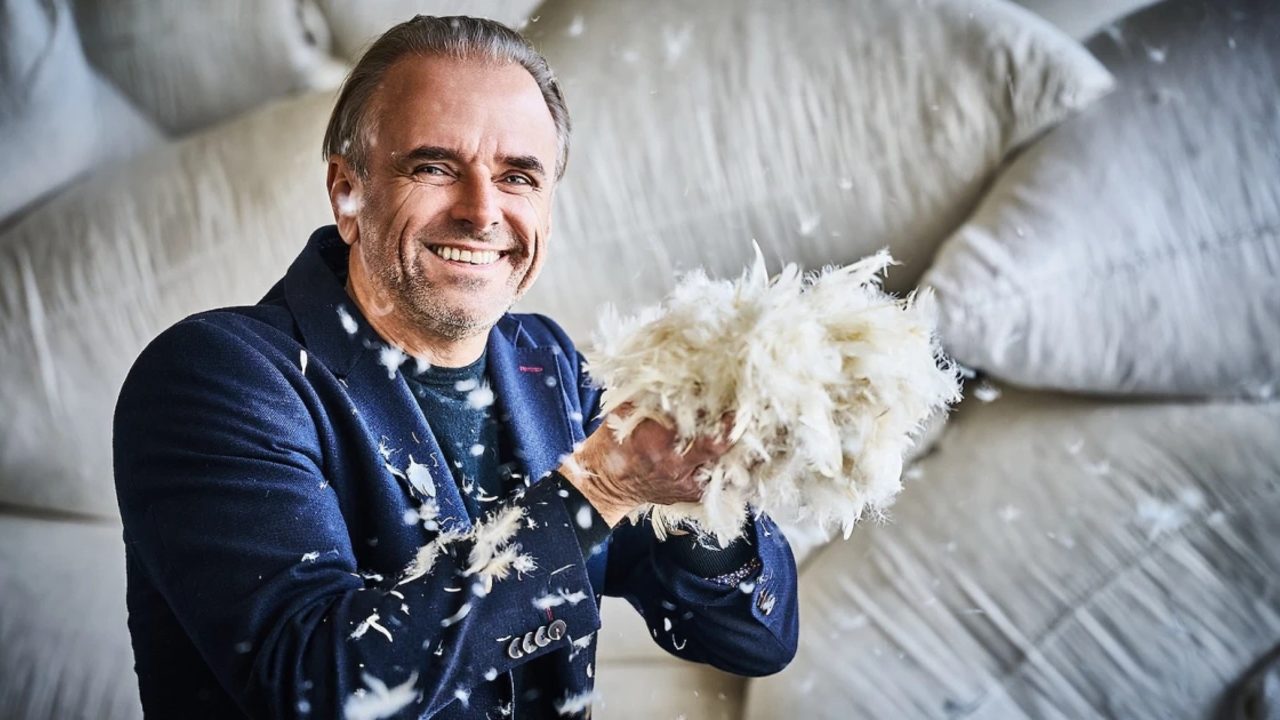
A modest company on the banks of the Vltava in Central Bohemia processes around 3,000 tonnes of duck and goose down a year. Its CEO, Tomáš Brindač, plans to lift turnover from almost 600 million to one billion crowns within five years.
At first glance, Kamýk Daunen of Kamýk nad Vltavou looks like an unremarkable business. Yet this is where down and feathers become hundreds of thousands of pillows and duvets for IKEA stores, hotels and other B2B partners. At the same time, the company is building its own premium brand, Kamýk Home. “We can see where the opportunities for growth are, and we want to make the most of them,” says Brindač.
The old riddle “which is heavier, feathers or iron?” takes on a new meaning here. According to the CEO, you can lift a 50-kilogram iron weight, but you can’t carry the same amount of down: a sack the size of a large mattress is simply impossible to get a grip on.
Betting on growth despite a downturn
By 2030, Kamýk Daunen wants to reach a processing volume of 5,000 tonnes of down a year. The company is ready to invest around 100 million crowns in its development: part of the money has already gone into a new warehouse, and the rest will fund a feather-washing line, a doubling of wastewater treatment capacity and a new sorting hall.
The investment comes at a difficult moment: in the last financial year, revenue fell by more than a fifth. The cause was global uncertainty, which brought trade in down as a raw material almost to a standstill in America and Asia (that part of the business accounts for roughly half of turnover). According to Brindač, the market is now picking up, and the outcome of the US midterm elections could strengthen that effect.
The “don’t scale back production” approach has already paid off. During covid and the energy crisis caused by the war in Ukraine, competitors cut output, but Kamýk Daunen did not. Demand for home goods was growing, and the company came close to a billion crowns in turnover.
The whole cycle under one roof
The firm’s main advantage is full control of the process: from processing so-called wet feathers from the slaughterhouse to producing duvets and pillows. It can pick the best raw material for its own products, which is a serious advantage compared with most players in the industry.
While the St Martin’s goose season is on, the company works with organic farmers and collects the feathers by the crate itself, putting them straight into production. The same goes for Christmas and Easter. The feathers are washed and dried, and then on the sorting lines streams of air separate out the softest down, ideal for bedding.
More than a million pillows a year go to IKEA, and this partnership accounts for about 40% of turnover. The company often makes up for capacity shortfalls at other European suppliers, and according to Brindač, IKEA’s forecasts tend to be slightly pessimistic, so Kamýk Daunen builds up stock in advance.
Luxury and handwork
Part of the output involves a great deal of manual labour. For example, bedding is prepared for premium Prague hotels, including the Hilton, Grand Hotel Bohemia, Diplomat and the boutique Mosaic House. For the luxury segment the company has its own brand, Kamýk Home, and the two lines sometimes intersect in interesting ways: a customer from the Netherlands, for instance, was sent the same bedding set she had slept in at a hotel.
By the Around Prague newsroom