European gas hits a four-year high as Hormuz blockade bites
USD 21,79
Popular
Gas in Europe has become the most expensive in four years: on the key TTF exchange in the Netherlands, the next-month contract rose by about 2% and reached as high as €86.79 during trading. The fuel is getting more expensive because of the conflict in the Middle East.
Why gas is getting more expensive
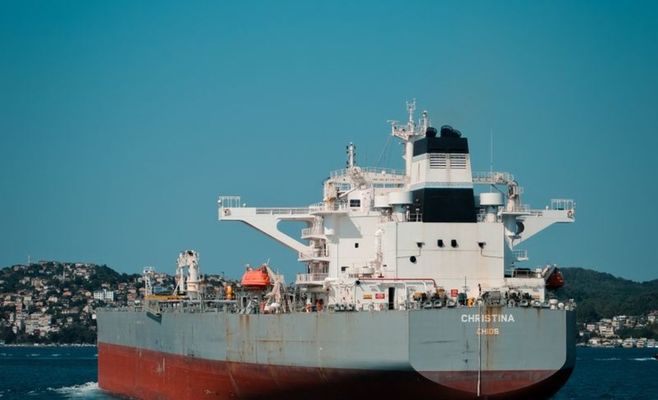
The conflict began in late February with US-Israeli strikes on Iran and has effectively paralyzed shipping in the Strait of Hormuz. Around a fifth of the world’s liquefied natural gas (LNG) exports normally pass through it.
“The market is coming to terms with the idea that a significant part of the Northern Hemisphere winter will have to be weathered with small LNG supplies from the Persian Gulf,” ING analysts said.
Storage is not full
According to Gas Infrastructure Europe, EU gas storage was just under 74% full on Monday. In Germany, Europe’s largest gas consumer, the figure barely reached 60%, while in Czechia it was almost 76%.
Analysts estimate that in the event of long and severe frosts, gas prices in Europe could rise by several tens of percent more. Martin Pacovský, investment director at Arete Energy, warns that if severe cold hits Germany, Czechia and other countries at the same time, Europe will start fighting hard for every shipment, “and the main weapon in that fight will be price.”
Will the gas last until spring
Dominik Rusinko, chief economist at Patria Finance, notes that Europe is locked in a tough battle with Asia for LNG supplies in order to top up storage at the last moment. Current storage levels are the lowest in fifteen years and noticeably below the long-term average of about 90%.
Even so, he believes Europe will get through the winter. In the company’s scenarios, from optimistic to pessimistic, storage could be 12–39% full by the end of March, depending on how intensively gas is drawn down. He says that even in the worst case there will be no physical gas shortage, and the risk of a repeat of the 2021–2022 energy crisis remains low, though not zero. A combination of a very harsh winter and a serious disruption to LNG supplies could make things worse.
In his assessment, Europe is now in a more comfortable position than before Russia’s full-scale invasion of Ukraine in February 2022: LNG infrastructure has grown in recent years, the range of suppliers has widened, dependence on Russian gas has fallen sharply, and part of demand has disappeared for good. So the main risk this winter is not the availability of gas but its price, which, the economist believes, may not have peaked yet, especially in the event of extreme frosts or a disruption to LNG supplies.
Source: novinky.cz