Minister Havlíček: Enough Gas for Winter, But Prices Set to Rise
USD 21,75
Popular
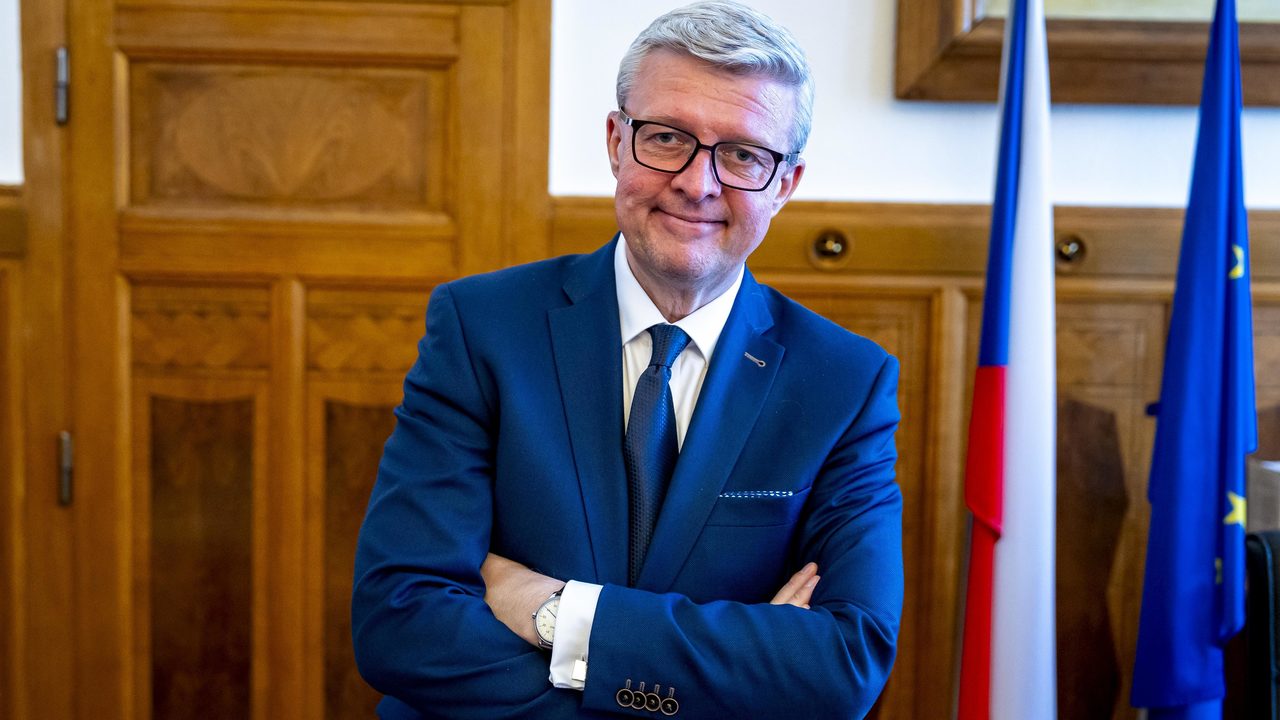
Gas and electricity prices on the exchange are climbing noticeably amid the US–Israel conflict with Iran, with gas once again costing roughly twice as much as it did at the end of February. That's according to Czech Minister of Industry and Trade Karel Havlíček, who said in an interview that there will be no gas shortage, but households will feel the price increase this winter.
According to him, while oil prices fluctuate relatively quickly — swinging between $100 and $85 a barrel — gas prices have remained stubbornly high, at €55–60 per megawatt-hour compared to around €30 previously. This increase will reach Europe as early as the next heating season — not because of a fuel shortage, but purely due to price, since gas for future periods is already being purchased at higher rates. This will also hit the electricity market in Central Europe, which takes its cue from German gas prices.
Storage facilities filling ahead of schedule
Because of high prices, underground gas storage facilities are currently emptier than in previous years. Nevertheless, according to the minister, Czechia ranks among the top seven countries in Europe for storage filling — the level is nearing 65%, with more than 80% of capacity already contracted. "No one needs to fear the winter," Havlíček said.
Some traders are holding off on purchases until later due to price, but the country is still ahead of the schedule set by government decree: the 60% filling target wasn't supposed to be reached until September, yet it's already been surpassed a month early. According to the minister, it's precisely this caution and smart purchasing that keep prices at manageable levels.
ČEZ seeking new LNG contracts
Next year, energy company ČEZ's five-year booking of liquefied natural gas capacity at the Dutch Eemshaven terminal is set to expire. Construction of the terminal in Stade, Germany, which is meant to partially replace these supplies, is running behind schedule. According to Havlíček, ČEZ has secured additional small-capacity contracts at Eemshaven to cover any possible delay in Stade.
Europe isn't facing a gas shortage — the situation is fundamentally different from 2021–2022, when there was a lack of terminals and other LNG infrastructure. Today the issue is specifically about price: ČEZ has processing contracts but lacks long-term, 10-to-15-year contracts for the gas itself. That's why the company is in active talks with the US and Azerbaijan, and, together with Prime Minister Andrej Babiš, is heading to Norway and Algeria to explore long-term supply options that could be combined with capacity in Stade and Eemshaven.
Fuel and nuclear power
The government has scrapped fuel price regulation but continues to monitor filling station margins. According to the minister, there's currently no need to reinstate a price cap at the pumps — the regulation was introduced as a targeted measure to prevent a situation in which diesel prices in Czechia would end up 10 crowns per liter higher than in Poland for three months. Authorities promised not to delay lifting the measure and did so as soon as neighboring countries followed suit. The exception is Poland, which has partially reinstated regulation; Czech authorities say they will closely monitor how Polish prices develop.
This summer's heat and drought caused cooling problems for nuclear units in Hungary and France, which lack the cooling towers found at the Czech plants of Dukovany and Temelín. According to the minister, Czech energy infrastructure is well prepared for such scenarios thanks to a balanced energy mix — the country has never fully relied on either the renewables lobby or the coal lobby.
Last month in the UK, ČEZ and Britain's Rolls-Royce SMR signed a memorandum on developing sites for small modular reactors. According to Havlíček, this means nuclear power will no longer be confined to traditional regions like Dukovany or Temelín — new projects are being considered based on industrial infrastructure, for example in northern Moravia or northern Bohemia.
Source: novinky.cz