ANO promises to clear drugs and homeless people from central Prague
USD 21,83
Popular
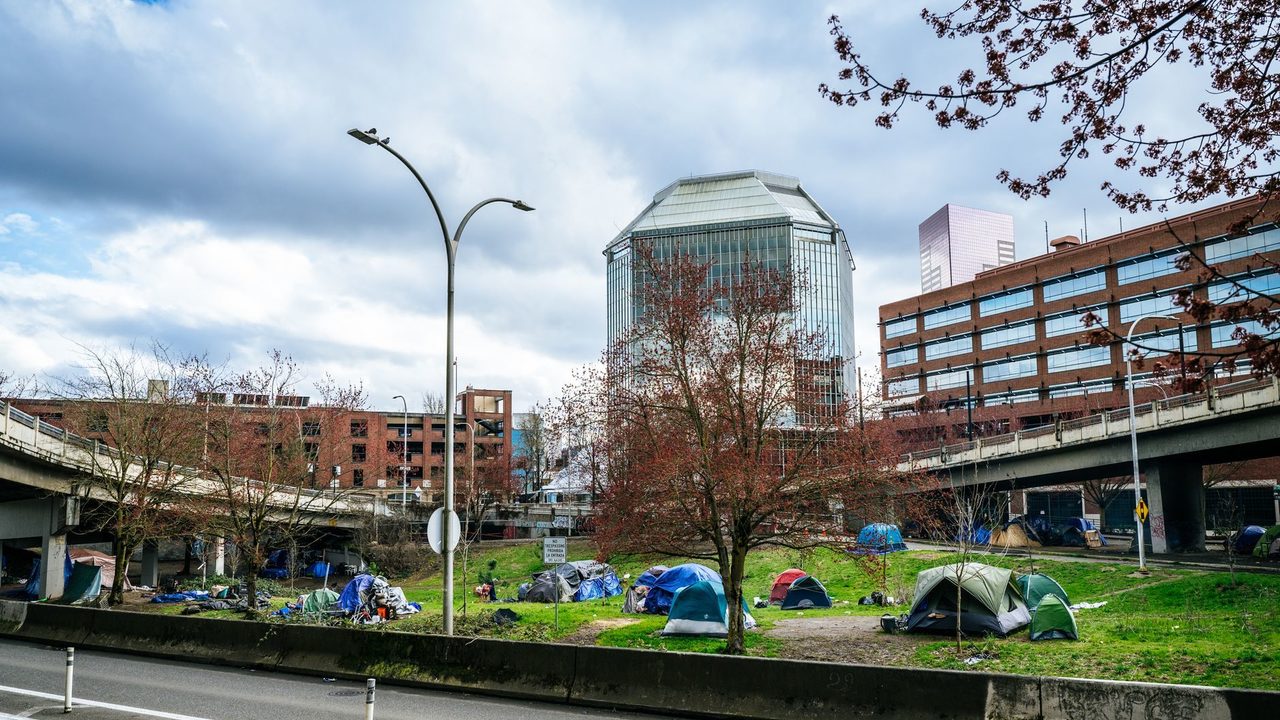
ANO leader Andrej Babiš, during a visit to central Prague, called the situation there “a disgrace to the city”: in his words, beggars, drug addicts and homeless people are a problem that the capital’s current leadership is not solving, even though City Hall should be dealing with it together with the government. Babiš raised a similar theme before the 2014 elections, which ANO went on to win, and Adriana Krnáčová became mayor of Prague.
Asked what he would do about homeless people in Prague now, Babiš said he wants to “gather them up”, persuade them to move into housing with meals and at the same time demand that they “work”. Prague ANO leader Jan Hušbauer, for his part, promises “an end to drugs on the streets”: his plan envisages zero tolerance of drug use in public places, but also expanded specialised services, joint teams of city police officers and social workers, enough shelter places and employment programmes for homeless people. Simply driving people out of problem areas, he says, is not a solution. The question is what a city can realistically achieve with such measures.
Limit it, yes — eliminate it, no
“Limiting the open drug scene and bringing people who use drugs into contact with support services is a good goal,” says addiction specialist Viktor Mravčík. In his words, individual measures do not work on their own: the municipality, police, social and addiction services must cooperate at the same time, alongside work on public space.
Pressure on the drug scene in a particular place, according to Mravčík, can only make it move to another district — the so-called “balloon effect”. “One-sided pressure on the street will not help by itself. Without additional services and measures, the problem will simply move elsewhere,” he explained.
The Czech Street Work Association takes a similar view: its representative Jan Louženský says that expecting a city to be able to remove homeless or addicted people from public space entirely is “unrealistic”. The police can act against unlawful behaviour, but the mere presence of a homeless person on the street is not grounds for removing them.
Olomouc: figures down, complaints remain
The limits of what city policy can do are also shown in practice by ANO politicians themselves, who already face this problem. Olomouc was headed from 2018 until the end of last year by Miroslav Žbánek (ANO), whose post was then taken by his party colleague Miroslava Ference.
The city combines the work of the police, the social department and non-profit organisations. More frequent checks brought results on some indicators: in the first seven months of 2024 the city police recorded 547 cases of illegal camping, and a year later only 204. Yet complaints about disorder and problematic behaviour have not stopped.
“It is impossible to get rid of them, because if a person does not commit a direct offence, we have no tools to push them out of the city,” Žbánek himself admitted back in 2024. Ján Buka, director of Olomouc’s Caritas, believes that moving social services to the outskirts would not help either: homeless people naturally gather where there are the most people and where they can get food, money or casual work. “The idea that if a charity works somewhere on the outskirts, all the homeless will follow it out of the centre is meaningless,” he noted.
Ústí nad Labem and Plzeň: a similar picture
ANO also has long experience running a city in Ústí nad Labem, where the party won the mayor’s post after the 2014 elections. Since 2018 the city has been continuously led by Petr Nedvědický.
Ústí does not bet on a single tool either: besides police control, it ran a Housing First project, the city supports addiction services, and it has a programme in which homeless people clean public spaces in exchange for food vouchers.
Even so, problems in public places persist and appear in new parts of the city: in recent months drug users have started moving, in particular, to the Central Park in Severní Terasa, where city police now have to intervene more often as a result.
Plzeň, which has been led since 2022 by Roman Zarzycki, is taking a similar path: the city is strengthening its city police and expanding services for homeless people at the same time. In 2023 the Patronus shelter with 26 places opened there, and the capacity of the night shelter and the low-threshold day centre also grew. Zarzycki himself is pushing for changes to nationwide rules that would give cities more options in cases of repeated public-order offences.
There is no single measure of success
The effectiveness of such measures cannot be judged by one number, Mravčík stresses: the number of drug offences, clients of contact centres or syringe kits handed out should only be considered together. “There is no single indicator, no single figure that would on its own say anything convincing,” he noted.
The experience of cities run by ANO politicians shows that a combination of police, social and other measures can curb certain specific problems in public space, but far from all of them disappear completely. The line, in the opinion of the experts interviewed, lies precisely in the expected result. A city can limit the open drug scene, bring its participants into contact with support services and respond to specific offences. But removing drugs or homeless people from public space entirely is unrealistic.
Around Prague, based on reporting by novinky.cz