Czech village registers 30 residents in ruined manor before vote
USD 21,83
Popular
In the Czech village of Chožov in the north of the country, 30 people have been registered as permanent residents at a single address ahead of municipal elections — a derelict manor house with no water, windows or part of its roof. The relocations are being organized by a man who drives people in on a minibus and promises them work and housing in the ruins.
A bus full of new residents
A white minibus regularly pulls up outside the local municipal office. Men step out, brought in by a man named Robert Süttö, who either escorts people personally into the accountant's office or brings their notarized powers of attorney. All of them register at the same address: a former manor in the local part of Třtěno, house No. 22 — a building in a derelict, uninhabitable state that is also subject to enforcement proceedings.
“As of Tuesday, 26 people were registered at this address; today four more were added, so we're now at 30,” said municipal accountant Jiřina Šifaldová. According to her, the new residents are moving in from Most, Chomutov, Litvínov and Bílina. Süttö claims the people will work on the property, renovate it and then live there — but the accountant doesn't believe him.
Süttö himself is reluctant to talk to reporters: “I brought them here for work. I want them to work and live with me,” he said, before refusing to answer further questions. Among the village's new “residents,” some admit they have no intention of living in the manor, while others joke about looking forward to a hot shower and a soft bed — without knowing where the building even is or that it has no running water at all. All five men who signed registration papers that day confirmed it was their first time in the village. Asked whether the move was connected to an attempt to influence the vote, only one of them answered, laughing: “I've never voted before, but I guess I will now.”
Mayor: this could affect the outcome of the vote
Chožov's sitting mayor, Jaroslav Koubek, who has led the municipality for eight years and is himself running in the election, believes the registrations are an attempt to sway the results. “No one can prove to me that this isn't happening for money and because of the election. We have around 440 voters here, and 30 new ones is a number that can change quite a lot,” he said. According to him, the manor simply cannot be used as a home: the roof leaks, there are no windows, and there's neither running water nor sewage — at most, someone could sleep outside on a mattress.
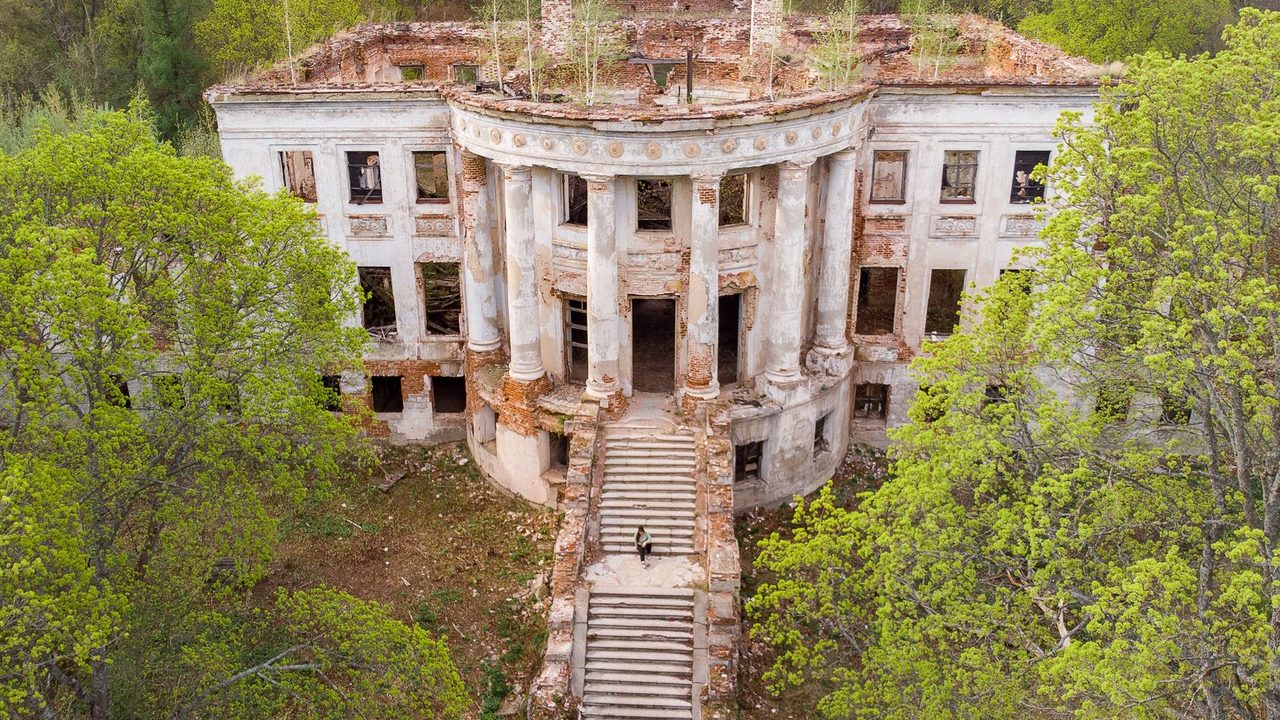
An inspection of the building confirmed that it is indeed a historic manor dating back to the mid-18th century, officially protected as a cultural monument, but already in a dilapidated state: the walls are cracked, part of the roof has collapsed, almost all the windows are missing their panes, and the interior now serves as a workshop and storage space. It's hard to imagine 30 people actually living there.
Owner: these are my relatives and business partners
The building belongs to 50-year-old businessman Ivo Diviš, the former director of the Most motor racing circuit. After the previous municipal election, he already tried to have the results annulled in court, claiming that an election commissioner verbally attacked him outside the polling station — but the courts rejected his claim. Diviš is burdened with debts of one and a half million crowns and is closely linked to the “Better Countryside” movement, an association of independent candidates, although he himself is not on the candidate list.
The movement's list includes his girlfriend, his parents and a former colleague — and all of them list the same uninhabitable manor as their permanent address. “There's no one on their list who actually lives in our village or has any real connection to it,” says Mayor Koubek. Diviš himself insists the registration of the 30 “new tenants” has nothing to do with the election: he says they're his relatives, Süttö's employees and business partners with investment plans to develop the region. A few sentences later, though, he admits he wants to influence life in the municipality precisely through the “Better Countryside” movement and wants to place more than 300 employees in the region. By the end of the conversation, the businessman accused the reporter of running the whole investigation as a hit job.
Top candidate withdrew from the race
The movement's top candidate was supposed to be 27-year-old Vít Pavlovský, who failed to win a seat in another town in a previous election. On August 8, he transferred his permanent registration to the same manor and stated in his documents that he sits on the board of the Most Chamber of Commerce — but according to the chamber's director, he had already stopped being a board member on June 4 and remained only a regular member. In the end, Pavlovský withdrew from the race altogether: “When I found out that Mr. Diviš has huge debts, problems with his business, and can't be trusted, I decided to pull out of his political project,” he explained, without giving specific facts.
After his withdrawal, the effective top candidate became architect Martin Hujer, with his mother — a deputy headmistress at a Prague grammar school — in fifth place. They haven't yet registered permanent residence at the manor but plan to do so in the coming days, a requirement for running in the municipality. “I got divorced and needed somewhere to live. I know the place isn't ready to live in yet — I was told it would be finished by a certain date,” she said, without naming the date. The list's third candidate registered in the village from Bílina in early August, while the fourth, sixth and seventh registered from other towns in the region in early September. The last two spots on the list go to Diviš's parents, who have been registered at the manor for more than a year but don't actually live there.
“They're all registered there only on paper,” Mayor Koubek sums up. He can't say for certain what's behind it all: “It's hard to say why Mr. Diviš and Süttö are organizing all this. Maybe they want to cause trouble on the council afterwards. Or maybe it's about money — the municipality has an annual budget of 10.5 million crowns and 30 million in the bank, which we're gradually using to repair buildings and pavements.”
Source: seznamzpravy.cz