Science & Space By

An AI Called LUMINA Is Being Taught to Pick Safe Landing Sites on the Moon
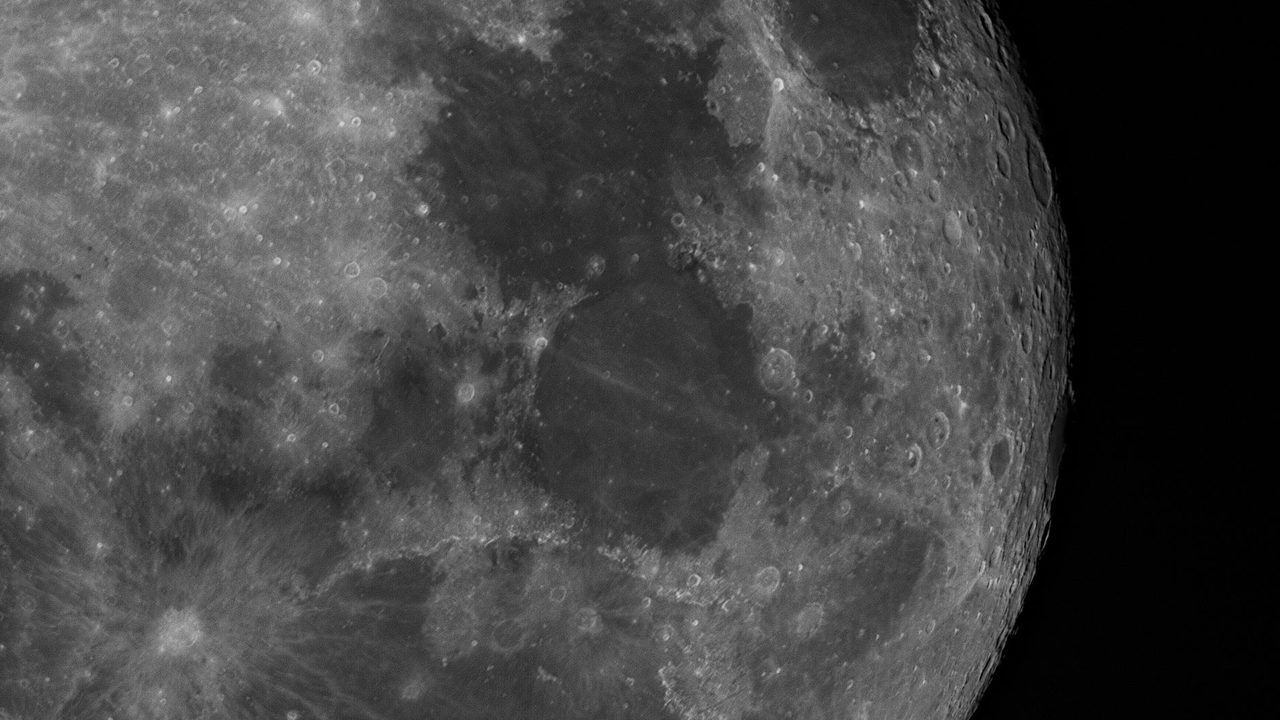
Researchers at The Ohio State University have introduced an artificial intelligence framework designed to help mission planners decide where on the Moon to land and where to build a lasting base, according to Universe Today. The tool, called LUMINA, was presented in a study at the 58th Annual Meeting of the Division for Planetary Sciences of the American Astronomical Society.

The work arrives as NASA plans to return astronauts to the lunar surface in 2028, the first time since Apollo 17 in 1972. The agency has said it wants to build a permanent human presence there over time.

What is LUMINA?

LUMINA is what the team calls an agentic AI framework. In plain terms, it is software meant to evaluate possible landing sites on the lunar surface, with a particular focus on useful resources such as water ice, as well as each site's potential scientific value.

What information does it look at?

Universe Today reports that LUMINA does not rely only on pictures taken from orbit. It also draws on data about topography and terrain hazards, geology, surface properties and scientific value. It can compare candidate sites against one another, which is meant to help planners find places that give a mission the best chance of succeeding and supporting both people and science.

Where did the idea come from?

The framework builds on earlier work by the same group, a model called the Large Language-and-Vision Assistant for Lunar Exploration, or LLaVA-LE. That model can analyze and describe orbital images of the Moon. Universe Today says it is available on arXiv and GitHub and was presented at the CVPR2026 AI4Space Workshop in June 2026.

Who is behind it, and what do they say?

The lead author is Gokce Inal, a doctoral candidate in civil, environmental and geodetic engineering at Ohio State. Inal said AI systems will become critical tools for analyzing the huge number of images and datasets that future missions will produce. The project, Inal said, is meant to be “a bridge between those two worlds, AI and planetary science.”

Inal also said NASA's Artemis program opens important opportunities for the research. As new lunar data becomes available, Inal said, the results can improve systems like LUMINA and support mission planning.

Why does it matter?

Choosing a base location is tied to survival. Universe Today points to a technology area known as in-situ resource utilization, or ISRU, which means using local materials instead of shipping everything from Earth. Water ice on the Moon could supply drinking water, bathing water and fuel, and oxygen could be made from it through electrolysis. Lunar soil, known as regolith, could potentially be used to grow plants and for construction.

The goal of ISRU, according to the report, is to cut the need for resupply from Earth and possibly end it. A tool that helps planners find sites with both safe terrain and accessible resources could therefore shape where such efforts begin.

The approach also fits into NASA's Moon to Mars Architecture, an evolving framework for developing and testing technologies that people would use to live and work on the Moon and later on missions to Mars. Those technologies include power systems, transportation, habitation and life support, robotics and construction, communications and ISRU.

Could it be used beyond the Moon?

The researchers say they do not want to stop at the Moon. They envision LUMINA contributing to the study of other planetary bodies, specifically Mars.

What is still unknown?

The study describes a framework and its demonstrated ability to identify promising sites. How much it will shape real mission decisions in the coming years and decades has not been established, and Universe Today says only time will tell. No landing site has been chosen on the basis of the tool.

Around Prague, based on reporting by Universe Today

Share: Telegram WhatsApp

More science news

Why Wolves Howl: It Is About Staying Close to the Pack, Not the Moon
Wolves howl mainly to stay connected with one another, not because they see the moon, according to researchers who spoke to Live Science. The sound helps scattered pack members find each other, warns
A Rival to Dark Matter Theory Passes Tests and Puts the Universe at 26.7 Billion Years
A rival to the standard picture of the universe has passed a series of tests, according to Universe Today. Researchers at the University of Ottawa say their model reproduces key observations without d
Two Mars Spacecraft Go Quiet at Once as NASA Chases Radio and Wheel Glitches
Two of NASA's Mars explorers have paused their science work because of technical problems, the agency announced Thursday, Nov. 19, according to Space.com. The Perseverance rover is dealing with a radi
Climate Talks Stall Over Fossil Fuels and Money as COP31 Runs Through the Night
Negotiations at the COP31 UN climate summit in Turkey are deadlocked after running through the night, the BBC reported. Countries have not been able to agree on a new global climate deal, and two figh
SpaceX Launches Secret Payload for Space Force as Falcon 9 Booster Flies an 11th Time
SpaceX launched a classified mission for the U.S. Space Force on Nov. 20, sending an undisclosed payload to orbit from California's central coast, Space.com reported. The rocket's first stage returned
X-Ray Telescope Bound for Mercury Wakes Up After 8 Years and Sees the Crab Nebula
An X-ray telescope that has traveled to Mercury for eight years has made its first observation of a distant object, and it is working better than scientists expected, according to ScienceDaily, citing

Related news

Wolves howl mainly to stay connected with one another, not because they see the moon, according to researchers who spoke to Live Science. The sound helps scattered pack members find each other, warns rival packs and builds a sense of group
A rival to the standard picture of the universe has passed a series of tests, according to Universe Today. Researchers at the University of Ottawa say their model reproduces key observations without dark matter or dark energy, and it implie
Two of NASA's Mars explorers have paused their science work because of technical problems, the agency announced Thursday, Nov. 19, according to Space.com. The Perseverance rover is dealing with a radio fault, and the Mars Odyssey orbiter ha
Negotiations at the COP31 UN climate summit in Turkey are deadlocked after running through the night, the BBC reported. Countries have not been able to agree on a new global climate deal, and two fights are holding things up: whether the te
SpaceX launched a classified mission for the U.S. Space Force on Nov. 20, sending an undisclosed payload to orbit from California's central coast, Space.com reported. The rocket's first stage returned safely, but the public did not see the
An X-ray telescope that has traveled to Mercury for eight years has made its first observation of a distant object, and it is working better than scientists expected, according to ScienceDaily, citing the University of Leicester. The instru
A theoretical physicist has described a more general version of one of the strangest objects permitted by Einstein’s equations: the Black Saturn, a black hole shaped like a donut with a second black hole sitting in its center. The work, rep
Severe premenstrual syndrome may not be a single pattern of symptoms. Researchers at Uppsala University in Sweden have identified three distinct symptom timelines in premenstrual dysphoric disorder, or PMDD, according to ScienceAlert. The f
Scientists have found chemical marks on DNA in the brains of people with post-traumatic stress disorder that do not appear in people without the condition, and that also look different from the marks seen in depression, Live Science reporte
Researchers at MIT say they have found a way to keep machine-learning models of chaotic systems from drifting into predictions that could never happen in the real world. According to MIT News, the method builds physical limits directly into
NASA has selected 302 projects from small businesses for up to $171 million in early-stage funding, the agency announced. The awards target technology for exploring the Moon and Mars, including work tied to Artemis and a planned U.S. Moon B
Astronomers looking for planets have found a triple star system only 28 light-years from Earth that one of the researchers says should not exist. According to Universe Today, the team went searching for an exoplanet around a nearby red dwar