Science & Space By

Dying Stars May Have Slowed, Not Sped Up, the Clearing of the Early Universe’s Fog
A new study suggests that exploding stars may not have helped lift the fog that once filled the young universe. According to Live Science, astronomers who examined nearby galaxies found that the ones with the strongest supernova-driven winds let the least ionizing ultraviolet light escape, the opposite of what many models assume.

The work, published Oct. 15 in the journal Nature Astronomy, points instead to the intense light and winds of newborn stars as the more likely engine behind the event known as the Epoch of Reionization.

How the early universe cleared up

Around 400,000 years after the Big Bang, the universe cooled enough for atoms to form, mostly hydrogen. Those neutral atoms made space opaque to ultraviolet light. Later, once the first stars formed and gathered into galaxies, bursts of radiation ionized the hydrogen, splitting it into protons and electrons and letting light travel freely across space.

The researchers call this the last major phase transition in the universe. Lead author Cody Carr, an astronomer at the University of Michigan, said in a statement that scientists know it happened but do not have complete answers about which objects caused it or how it unfolded.

What the Hubble observations showed

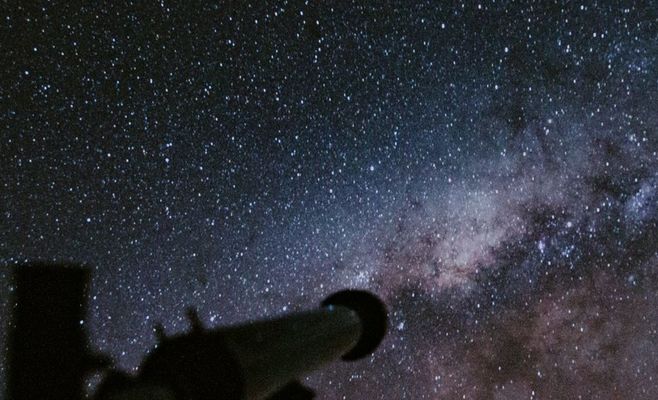
Because the earliest galaxies are too distant to study in this detail, the team used the Hubble Space Telescope to look at local stand-ins: six star-forming, wind-launching galaxies about 3.5 billion light-years away. These compact starburst galaxies are generally smaller than 6,500 light-years across and form about 10 solar masses’ worth of stars per year.

Their spectra, the light-based fingerprints of their gas, revealed the origin, chemical makeup, speed and direction of the winds blowing through them. The team found a two-phase process:

The oldest galaxies in the sample, which therefore had the fastest supernova-generated winds, let the least ionizing radiation out.

Why it matters

For readers, this is a story about how the universe got its present, transparent look. Astrophysicists had previously thought the fog-clearing effect depended on supernovas. Carr told Live Science that the most interesting result is that the strongest emitters of this light do not have fast galactic winds, which challenges the idea that galaxies need fast supernova-driven winds for the light to escape.

He also said the findings disagree with most cosmological simulations, which typically show the escape of this light peaking after supernova-driven winds begin. In other words, according to the study, supernovas did not drive reionization and may even have dampened it, leaving the intense light of newborn stars as the most viable source.

The result is a single study based on six galaxies, so it does not settle the question. It does suggest that parts of the standard picture of cosmic evolution may need revisiting.

What comes next

The team says future research could gather additional galaxy samples and make higher-resolution observations across other wavelengths, which would show whether the pattern seen in these six galaxies holds more broadly.

Around Prague, based on reporting by Live Science
Share: Telegram WhatsApp

More science news

BepiColombo Fires Its Engine to Settle Into Orbit Around Mercury
A European-Japanese spacecraft is due to enter orbit around Mercury on Nov. 21, more than eight years after it left Earth, Space.com reported. The BepiColombo mission, run jointly by the European Spac
Why Wolves Howl: It Is About Staying Close to the Pack, Not the Moon
Wolves howl mainly to stay connected with one another, not because they see the moon, according to researchers who spoke to Live Science. The sound helps scattered pack members find each other, warns
A Rival to Dark Matter Theory Passes Tests and Puts the Universe at 26.7 Billion Years
A rival to the standard picture of the universe has passed a series of tests, according to Universe Today. Researchers at the University of Ottawa say their model reproduces key observations without d
Two Mars Spacecraft Go Quiet at Once as NASA Chases Radio and Wheel Glitches
Two of NASA's Mars explorers have paused their science work because of technical problems, the agency announced Thursday, Nov. 19, according to Space.com. The Perseverance rover is dealing with a radi
Climate Talks Stall Over Fossil Fuels and Money as COP31 Runs Through the Night
Negotiations at the COP31 UN climate summit in Turkey are deadlocked after running through the night, the BBC reported. Countries have not been able to agree on a new global climate deal, and two figh
SpaceX Launches Secret Payload for Space Force as Falcon 9 Booster Flies an 11th Time
SpaceX launched a classified mission for the U.S. Space Force on Nov. 20, sending an undisclosed payload to orbit from California's central coast, Space.com reported. The rocket's first stage returned

Related news

A European-Japanese spacecraft is due to enter orbit around Mercury on Nov. 21, more than eight years after it left Earth, Space.com reported. The BepiColombo mission, run jointly by the European Space Agency (ESA) and the Japanese Aerospac
Wolves howl mainly to stay connected with one another, not because they see the moon, according to researchers who spoke to Live Science. The sound helps scattered pack members find each other, warns rival packs and builds a sense of group
A rival to the standard picture of the universe has passed a series of tests, according to Universe Today. Researchers at the University of Ottawa say their model reproduces key observations without dark matter or dark energy, and it implie
Two of NASA's Mars explorers have paused their science work because of technical problems, the agency announced Thursday, Nov. 19, according to Space.com. The Perseverance rover is dealing with a radio fault, and the Mars Odyssey orbiter ha
Negotiations at the COP31 UN climate summit in Turkey are deadlocked after running through the night, the BBC reported. Countries have not been able to agree on a new global climate deal, and two fights are holding things up: whether the te
SpaceX launched a classified mission for the U.S. Space Force on Nov. 20, sending an undisclosed payload to orbit from California's central coast, Space.com reported. The rocket's first stage returned safely, but the public did not see the
An X-ray telescope that has traveled to Mercury for eight years has made its first observation of a distant object, and it is working better than scientists expected, according to ScienceDaily, citing the University of Leicester. The instru
A theoretical physicist has described a more general version of one of the strangest objects permitted by Einstein’s equations: the Black Saturn, a black hole shaped like a donut with a second black hole sitting in its center. The work, rep
Severe premenstrual syndrome may not be a single pattern of symptoms. Researchers at Uppsala University in Sweden have identified three distinct symptom timelines in premenstrual dysphoric disorder, or PMDD, according to ScienceAlert. The f
Scientists have found chemical marks on DNA in the brains of people with post-traumatic stress disorder that do not appear in people without the condition, and that also look different from the marks seen in depression, Live Science reporte
Researchers at MIT say they have found a way to keep machine-learning models of chaotic systems from drifting into predictions that could never happen in the real world. According to MIT News, the method builds physical limits directly into
NASA has selected 302 projects from small businesses for up to $171 million in early-stage funding, the agency announced. The awards target technology for exploring the Moon and Mars, including work tied to Artemis and a planned U.S. Moon B