Czechia Is the EU's Champion of Fragmentation: Why Its Villages Aren't Merging, Even Though It Could Save Billions
USD 21,73
Popular
Czechia has 6,258 municipalities — an absolute European record for the number of settlements per capita — with the average Czech village home to just around 1,700 residents. Three-quarters of Czech "obce" (municipalities) have fewer than a thousand inhabitants, making the country the most administratively fragmented in the EU.
According to the now-defunct National Budget Council (NERV), in 2023 the upkeep of municipal and regional governments cost taxpayers roughly 185 billion crowns. The larger the municipality, the lower the per-capita cost of running it. NERV experts calculated that if the state set a minimum threshold of a thousand residents and merged smaller municipalities into larger units, the budget could save around 10 billion crowns a year.
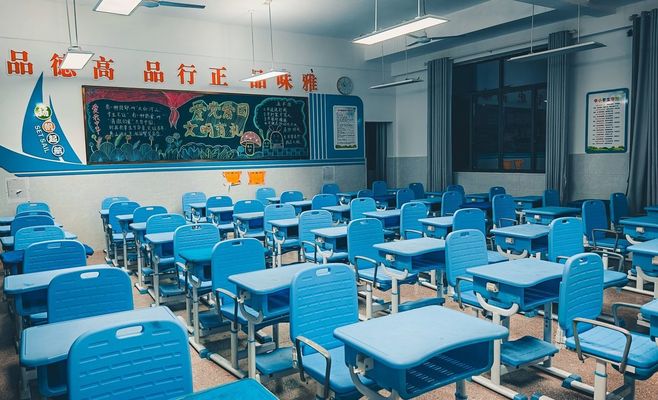
Fragmentation hits school education hardest. Kindergartens and schools in Czechia are established by the municipalities themselves, but only about 3,000 of them actually run their own schools — the rest have none at all. According to Jakub Stuchlík, an analyst at PAQ Research, amid a sharp demographic decline, small municipalities often fail to coordinate with their neighbours and don't even know how many children have been born nearby or where they'll need to travel to school, leading to chaotic school and kindergarten closures.
The problem is especially acute in the suburbs of Prague and Brno, where people are actively relocating: local authorities simply can't keep up with the growing demand, and building a new kindergarten is often financially out of reach for a small municipality — even with grants from the Ministry of Education.
The last municipal merger in Czechia took place back in 2002 in the Rakovník region, when the village of Hostokryje (about 130 residents) was joined to neighbouring Senomaty (then around 900 residents). There have been no mergers since — mayors resist, fearing, as Stuchlík puts it, the loss of local identity and control over their own investments.
Hana Malá, spokesperson for the Interior Ministry's communications department, explains that Czechs still carry the negative historical memory of the so-called "hub municipalities" (střediskové obce) of the 1970s–80s, when the central authorities of socialist Czechoslovakia forcibly merged territories, with the "hub" municipality often benefiting at the expense of its annexed neighbours. Similar territorial reforms took place in other EU countries — Germany, Austria, Greece, Cyprus and Sweden — and everywhere, locals feared being "dissolved" into a larger new entity.
Alexandra Kocková, a representative of the Union of Towns and Municipalities of the Czech Republic, believes the issue isn't the sheer number of municipalities: the state keeps demanding more and more from them without offering either money or skilled staff in return. In her view, the solution isn't to eliminate municipalities but to create conditions for effective cooperation between them — small municipalities are, after all, indispensable in crisis management, since mayors know their residents well and help emergency services during crises.
Analyst Stuchlík considers the level of the so-called "municipalities with extended powers" — towns and municipalities that also administer state functions for neighbouring areas, of which there are 205 in Czechia — a sensible scale for cooperation. It's at this level, he says, that economies of scale kick in and planning — for kindergarten places, for example — starts to make sense. But shifting all powers of small municipalities entirely to this level isn't right either — residents of small villages would then lose any say over the makeup of the larger municipality's representation, and consequently over decisions affecting their own schools and social services.
The Interior Ministry sees more promise in the so-called "municipal commonwealths" (svazky obcí), which have operated in Czechia since 2024, modelled on the French system of inter-municipal cooperation. Municipalities retain their independence but jointly manage specific areas — such as social services, administration or waste management — by forming shared teams of specialists that no single small municipality could afford on its own.
One cited success story is the Šternbersko Microregion, which in 2025 evolved from a voluntary association into a full-fledged commonwealth of 22 municipalities. According to Pavel Roubínek, mayor of the municipality of Šternov in the Olomouc region and chair of the microregion, the commonwealth acted as the client and developer for a bicycle path costing tens of millions of crowns, securing funding through the IROP programme — something that would have been extremely difficult for individual municipalities to manage on their own given the administrative burden.
Still, the commonwealth model has its limits: such alliances can only be formed within the territory of a single "municipality with extended powers," and a municipality may join only one such commonwealth. So far, only about 18% of all Czech municipalities have joined commonwealths, forming 57 such structures. The areas of cooperation vary widely from region to region — in some places it's waste management, in others education. Stuchlík believes the state should define a minimum mandatory set of tasks for such commonwealths and ensure appropriate funding for them, including through the redistribution of tax revenue.
Read also: Brno: what to see and where to go
Source: seznamzpravy.cz