Society By

"We'll become a nation of the toothless": Czechs clash over dental costs after filling reform
"We'll become a nation of the toothless": Czechs clash over dental costs after filling reform

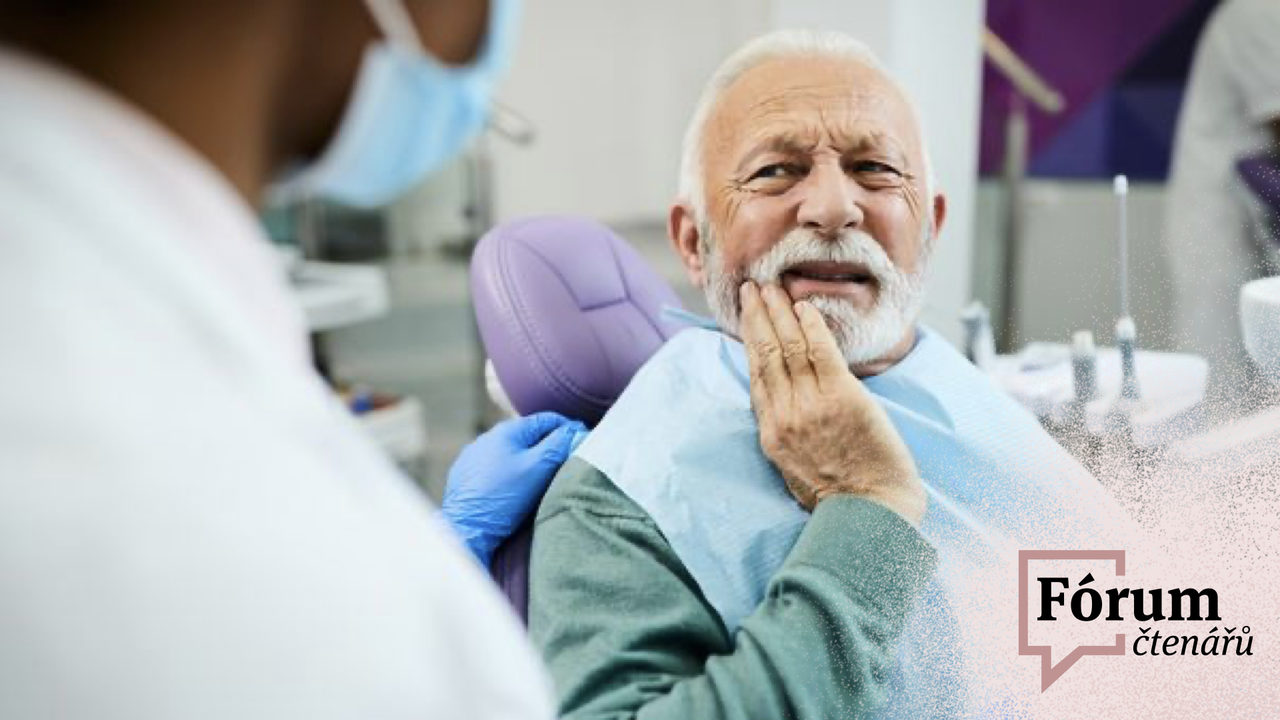
Since January 2026, the rules for paying for dental fillings in Czechia have changed: insurance companies now fully cover the basic single-layer white filling, whereas previously patients who opted for white composite over amalgam had to pay for it entirely out of pocket. The news has sparked a lively debate among readers, many of whom are raising concerns about the real cost of dental treatment and the fairness of the health insurance system as a whole.

According to dentist Bára Malíková, in more complex cases of tooth decay it can make sense to pay extra and, combined with the insurer's contribution, get a higher-quality multi-layer filling. However, the doctor stresses, the best way to avoid pain and costly procedures is regular preventive care.

What has actually changed

As readers point out in the comments, full coverage doesn't apply equally to every case. For children and teenagers under 18, white photocomposite fillings are covered in full — both on baby teeth and permanent ones. For adults, only the basic single-layer filling remains free, provided it's suitable for the specific case of decay. If the damage is larger or deeper and requires a higher-quality multi-layer filling, in 2026 the insurer contributes 900 crowns, with the patient covering the rest according to the clinic's price list.

Full coverage only applies at dentists who have a contract with the patient's insurance company. For adults, a free filling on the same tooth is generally available no more than once every two years — the specific type of filling is determined by the dentist based on the size and depth of the damage.

Readers on prices and fairness

Many participants in the discussion point out that the real cost of a dental visit — not just fillings — runs into the thousands of crowns, which is simply not affordable for everyone. One reader, Radana Broučková, notes: "Root canal treatment on back teeth isn't covered by insurance at all, even though that's exactly where it's needed most. You leave the dentist having spent at least 15,000 crowns — not everyone can afford that. We'll end up as a nation of the toothless, even though everyone is required to pay health insurance."

Other readers complain that, in practice, nothing has really changed since the New Year: clinics' price lists have stayed the same, with only the 900-crown insurance contribution added on top — meaning, in their view, patients are paying just as much for fillings as before. There's also an opposing view: some commenters argue that the cost of treating teeth ruined by poor hygiene shouldn't fall on the state and on working taxpayers.

Another point of contention is the comparison between amalgam and white fillings. Some readers lament that amalgam lasted for decades and was free, whereas white fillings, in their experience, often need replacing after just 2-3 years, and repeated drilling eventually leads to the tooth being extracted. Others in the discussion explain that the move away from amalgam isn't due to an EU decision, but to scientific evidence that the mercury it contains does leach into the body — drawing a parallel with the history of the DDT pesticide ban.

Some commenters also raise a broader question: why dentistry and treatments such as root canals remain among the few areas of medicine where patients pay so much out of pocket, while treatment for other conditions — from cancer to surgery — is covered by insurance almost entirely.

Read also: Giving birth in Czechia as a foreigner: insurance and maternity hospitals 2026

Around Prague, based on reporting by seznamzpravy.cz

Share: Telegram WhatsApp

More U.S. news

Dancing With the Stars Finale: 86 Million Votes, Live Voting and What Comes Next
The Dancing With the Stars season 35 finale was a ratings-style milestone as well as a coronation. According to The Hollywood Reporter, co-hosts Alfonso Ribeiro and Julianne Hough said 86 million vote
Why Is Gold Falling Today? Gold Drops Below $3,500 for First Time Since 2025
Gold slipped below $3,500 an ounce on Wednesday, 25 November, for the first time since September 2025. Spot gold fell as much as 2% to about $3,485, according to Longbridge, after a 2.2% drop on Tuesd
Tariff Refund Check: Can Individuals Get Money Back? Who Is Getting Refunds
No, individuals cannot claim a tariff refund themselves. The refunds ordered after the Supreme Court struck down President Trump's emergency tariffs are paid to the importers that paid the duties at t
Why Did Trump Want Jensen Huang Back at Nvidia? What We Know About His Return
Eleven days after resigning as Nvidia's chief executive, Jensen Huang is back. Nvidia's board voted unanimously on Monday, 23 November, to restore him as president, CEO and board director, a day after
Will There Be a Government Shutdown in December 2026? The Dec. 11 Deadline Explained
Possibly, but Congress still has time to avoid it. The stopgap funding bill passed earlier this year keeps the federal government open only until Friday, 11 December 2026. If lawmakers pass neither ne
Why Is the Army Detonating Lead Azide in Iowa? Time, Evacuation Zone and What It Is
The US Army plans to detonate about five tons of degraded lead azide at the Iowa Army Ammunition Plant near Middletown, Iowa, on Wednesday, 25 November, at 9 a.m. Central time. The Army says the explo

Related news

The weight-loss drug Wegovy in tablet form may appear in Czech pharmacies no earlier than the first quarter of next year. It was approved in Czechia back in July, so according to the State Institute for Drug Control, all that remains is sup
A private primary school, ScioŠkola, for 200 children will be built in Brandýs nad Labem–Stará Boleslav. The town council approved the project in early November. Tuition will cost CZK 130,000–150,000 per child per school year, and the first
Children, students and pensioners in Czechia will keep riding public transport at a 50% discount rather than 75%: Andrej Babiš's government is delaying the promised return of the former discount because the budget is short of money. Even fr
Open days at secondary schools in Prague and the surrounding area let prospective students see a school up close before the 2027 entrance exams. Applications are due from Feb. 1 to Feb. 20, so it is worth choosing a school now. What you can
The reopening of the Pisárek tunnels in Brno after repairs may be delayed: without the client’s knowledge, the contractor asked the regional authority to extend the closure by nine days. The work began in mid-October and was supposed to fin
On Tuesday, Nov. 17, large stores in Czechia will not close: hypermarkets, shopping centers and hobby markets will keep their regular hours. The Struggle for Freedom and Democracy Day holiday is not among the dates covered by the sales ban.
Since November, the mobile information centres of the Prague Integrated Transport system (PID) in the Central Bohemian Region have accepted cashless payments only. In return, people get longer opening hours and more visits, but rights advoc
From Nov. 1 to the end of March, drivers in Czechia need winter tires or all-season tires with the “Alpine symbol” — a mountain with three peaks and a snowflake on the sidewall. On-the-spot fines can reach 1,500 crowns, and after a serious
On the evening of Monday, 2 November, social service workers walked through Plzeň with candles from the main railway station to the spot where a homeless woman died two years ago. It was their way of drawing attention to the disastrous cons
The Czech Ministry of Labour and Social Affairs (MPSV) wants to scrap the child-rearing pension supplement (výchovné) entirely from 1 January 2027 and replace it with a notional income for the time spent caring for a child. MPs passed the c
The law on the so-called child certificate, due to take effect in Czechia in January 2027, has drawn criticism from lawyers. They support the underlying idea of better protecting children from people convicted of serious crimes, but argue t
On Tuesday, 3 November, traffic in central Prague will be severely restricted: student marches are due to start at around 2 p.m., and at 4:36 p.m. a rally in support of Czech Television and Czech Radio begins on Wenceslas Square. Police adv