Czech infant formula scandal: health panel argued over doctors’ ties
USD 21,62
Popular
The Czech health minister’s advisory commission on infant and toddler nutrition spent almost three hours arguing about doctors’ ties to infant formula makers and devoted just 15 minutes to the contamination of the formula itself. This follows from a recording of the April meeting obtained by journalists. Proposals to tighten the safety of infant nutrition did not pass.
The scandal has been in the global headlines for four months
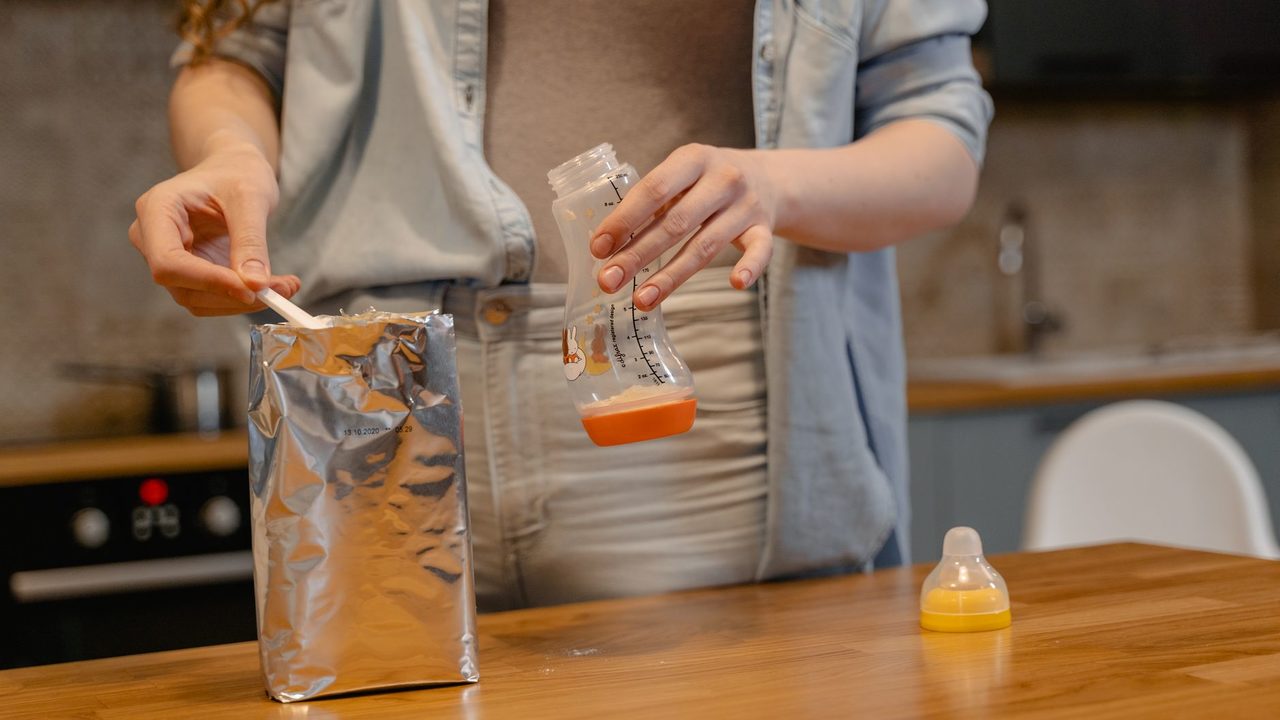
It was the end of April 2026. For the fourth month, the world had been living in the shadow of the contaminated infant formula scandal: manufacturers were recalling hundreds of batches from the market because of the toxin cereulide, which can cause vomiting and diarrhoea and damage the liver and kidneys. According to the World Health Organization (WHO), 144 suspected and confirmed cases of infant poisoning had already been registered by then, and the statistics covered only the period up to February 2026.
Parents, meanwhile, were left in the dark about whether their children had consumed the contaminated formula and to what extent. A commission under Minister Adam Vojtěch (ANO) could logically have been expected to take up the safety of infant nutrition right away. The recording shows otherwise: by the time contamination was discussed, key members of the commission had already left the meeting.
What the doctors argued about
The main question was whether doctors and representatives of professional societies who receive money from manufacturers for training and congresses can sit on the commission and decide impartially, including on rules that restrict those companies’ marketing.
The doctors argue that without company support, training and trips to international congresses would be unaffordable for many, and they deny that these relationships influence them. Concrete sums were mentioned for the first time: according to Kristina Zarubová, a representative of the Czech Pediatric Society, a replacement would have to be found on the scale of “tens of millions of crowns”. Alena Šebková, chair of the association of practising paediatricians, summed it up: “We learn for the sake of our patients, and this is simply a spanner in the works.”
Danone acknowledged partnerships with all the professional medical societies: the pediatric and neonatological societies and the organisation of practising paediatricians. Nestlé declined to comment on its cooperation because of the ongoing police investigation linked specifically to cereulide contamination.
What the WHO and international organisations say
The WHO’s position is different: in advisory bodies, it is not enough to check members’ personal financial interests; the ties of the organisations they represent must also be considered, since the recommendations affect millions of parents. International organisations also explain the logic of the industry itself: dairy companies invest in medical professionals in order to influence parents through them. In a major series on manufacturers’ practices, The Lancet writes that such cooperation “creates relationships that the industry uses for its strategy and for advancing its interests”.
As early as 2022, WHO Director-General Tedros Ghebreyesus called the marketing of breast-milk substitutes “one of the most underestimated risks to the health of infants and children” and urged governments to follow the International Code of Marketing strictly. In his words, manufacturers have no right to sponsor health workers. The UN Committee on the Rights of the Child likewise reminds states that they are obliged to comply with the Code and to enshrine it in national legislation.
How the commission’s rules changed
In summer 2025, the Ministry of Health urgently called on medical societies to give up sponsorship from manufacturers so that their representatives could join the commission: “Such a decision would significantly strengthen public trust in their independence.” The doctors were indignant about a “witch hunt”.
However, Minister Vlastimil Válek (TOP 09), shortly before leaving office at the end of 2025, gave in to the doctors and changed the commission’s statute. The ministry’s current leadership then altered the conflict-of-interest declaration: the five-page document drawn up on WHO recommendations has been reduced to a single page with a general statement that members have no personal, professional or financial interests that could affect their independence.
Since 2023, the commission’s meeting minutes have always been public, but there are still no minutes of the April meeting, the only one this year. The ministry’s new leadership has also required commission members to sign a non-disclosure obligation.
Source: seznamzpravy.cz