Who Won and Who Lost at the World Cup: FIFA and Beckham in Profit, Hotels and Fans Out of Pocket
USD 21,75
Popular
The largest World Cup in history has generated enormous profits for some and notable losses for others — that's the conclusion of a financial analysis of the tournament conducted by the British broadcaster BBC.
The biggest financial winner has been FIFA itself. According to senior Deutsche Bank Research analyst Marion Labour, the international football body's total revenue for the four-year cycle since the last World Cup is approaching $13 billion — roughly 270 billion Czech crowns. By comparison, the previous tournament in Qatar brought in a then-record $7.6 billion, and this year's edition is expected to surpass that figure. FIFA's main revenue streams are TV rights, licensing, sponsorship deals and ticket sales. For the first time, the organisation also entered the resale market through its own official platform, charging a 15% commission on both buyers and sellers.
FIFA is banking on further revenue growth, especially if it manages to expand the tournament to 64 national teams — potentially including China and India, which alone would add around two billion people to the potential market.
Fans, on the other hand, ended up among the losers. Ticket prices were high and kept climbing for the most anticipated matches thanks to so-called "dynamic pricing" — a practice used not only in American sports but also, for instance, at Czech ski resorts. Ahead of the final, some tickets were being offered for two million dollars. The base price for a final ticket was $32,970. Even US President Donald Trump admitted he wouldn't pay a thousand dollars for a ticket to the USA's opening match against Paraguay.
Flights, accommodation and food added further strain on fans' wallets. There was also outrage over a sharp hike in New Jersey Transit train fares from Manhattan to MetLife Stadium — from the usual $12.90 for a round trip to $150. Following public backlash, the price was lowered, but it still remained above the usual level.
Television and sponsors came out ahead. TV rights cost astronomical sums, but ratings and advertiser interest were correspondingly strong. One notable innovation was the so-called "hydration break" — a three-minute pause in the middle of each half. FIFA's president insisted the decision was made purely for sporting reasons and that the organisation earns no extra revenue from it. For broadcasters and advertisers, however, it proved a golden opportunity: Fox Sports, which reportedly paid $485 million for US broadcast rights, sold the break as being "sponsored" by a particular brand. A 30-second ad spot on Fox during the tournament cost between $200,000 and $300,000, rising to as much as $750,000 during the US team's knockout-stage matches.
Major brands spent freely too: Adidas reportedly spent nearly $70 million on an ad campaign featuring Lamine Yamal, Jude Bellingham and Lionel Messi.
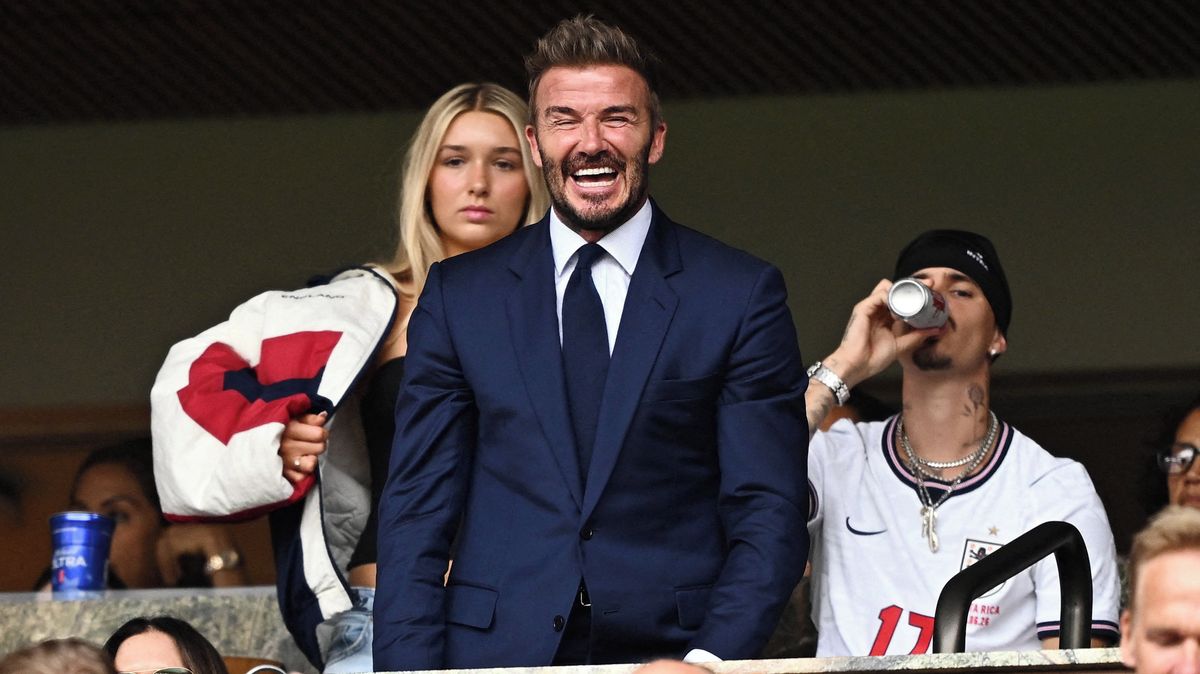
David Beckham was among the winners. That same Adidas campaign featured an AI-generated version of Beckham, who apparently had no time to appear in person. The former footballer showed up in ads for Pepsi, McDonald's, Stella Artois beer, Home Depot and Bank of America. Despite retiring from playing back in 2013, Beckham was arguably the most in-demand advertising face of this World Cup. He also owns Inter Miami, a club valued at nearly $1.5 billion — the most valuable franchise in MLS — with Lionel Messi's presence on the roster only boosting its worth further.
Host cities took a hit. Sixteen cities across the US, Canada and Mexico welcomed crowds of tourists — Boston, for example, was reportedly "drunk dry" by Scottish fans, as commentators put it. FIFA had projected the tournament would generate up to $17 billion for the US economy alone and create 185,000 jobs, mostly in services and hospitality. However, Oxford expert Alexandre Bouzier notes that such forecasts rarely hold up in the long run: the jobs created tend to be temporary and low-paid, while host cities often lose some of their regular tourists, who try to avoid the crowds.
According to Bouzier, cities mostly benefit long-term from infrastructure upgrades — as happened, for example, in London's Stratford district following the 2012 Olympics. But since this year's World Cup largely relied on existing stadiums and venues, no such effect is expected. On the plus side, there's also no risk of the kind of debt run up from building costly sports facilities, as has happened with some past Olympics.
Bookmakers made out handsomely. The 2026 World Cup could become the biggest betting event in sports history: according to Macquarie, total wagers will reach $50 billion — averaging $500 million (over 10 billion crowns) per match. Analyst Chad Beynon points to a shift in the very structure of betting: whereas fans used to bet on match outcomes beforehand, in-play betting — where bettors react live to what's happening on the pitch — now plays a much bigger role. Flutter Entertainment, which owns bookmaking brands Paddy Power, Betfair and Sky Bet, expects betting volume to double compared with the previous tournament, driven mainly by growth in Brazil and the US.
Hotels, by contrast, missed out on expected profits. Hotel associations report that anticipated demand failed to materialise, with bookings this year lagging behind last year's. The British Columbia Hotel Association says June and July figures are "significantly behind previous years," despite Vancouver hosting seven tournament matches — the event, it says, doesn't fill hotels for forty straight days but only creates demand spikes on specific dates. The situation is similar in the US: the American Hotel and Lodging Association (AHLA) has even accused FIFA of pre-booking excessive numbers of rooms to create artificial demand — a claim FIFA denies. Deutsche Bank analyst Marion Labour notes a similar pattern occurred at the 1998 World Cup in France, where hotel occupancy also fell short of expectations.
And, of course, the strongest national teams came out ahead. The tournament winner will receive $50 million, the runner-up $33 million, the third-place finisher $29 million, and the fourth-place team will console itself with $27 million. Even teams eliminated in the quarterfinals will pocket $19 million each.
Source: seznamzpravy.cz