What Iowa's Planned Lead Azide Blast Means for Residents Near an Army Plant
USD 22,22
Popular
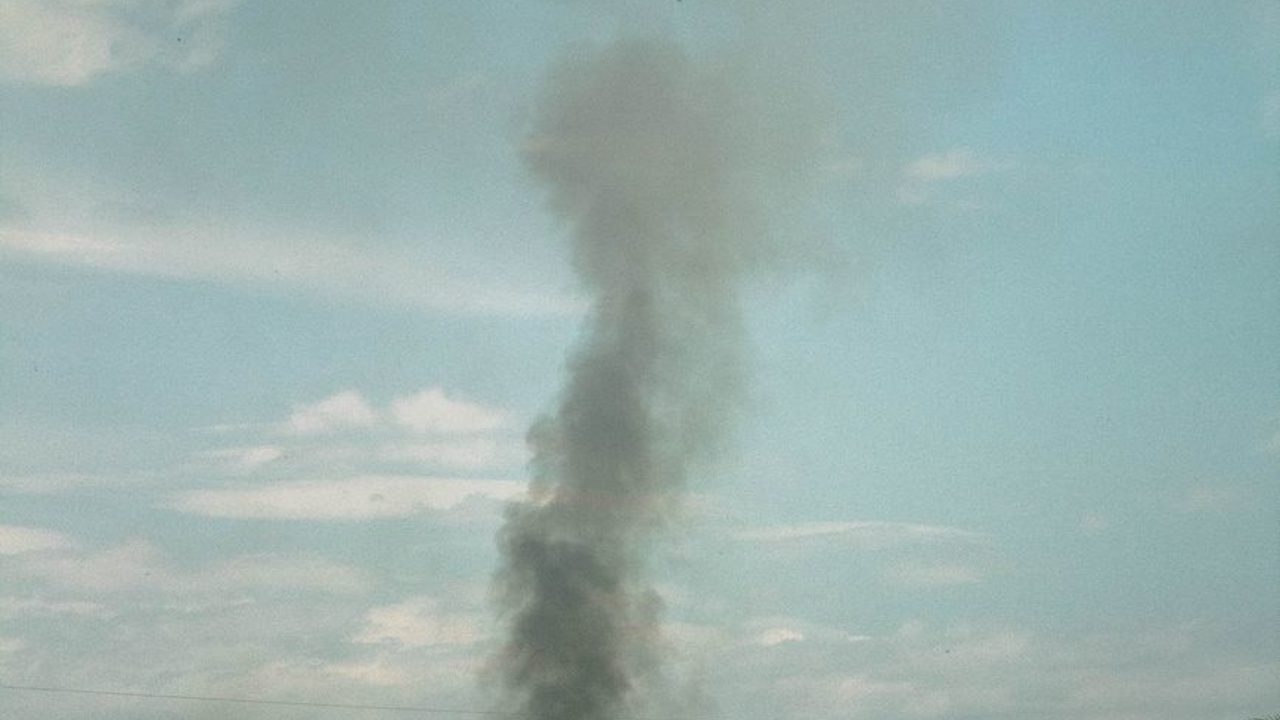
The U.S. Army plans to detonate about 5 tons of lead azide, a chemical used to set off munitions, at the Iowa Army Ammunition Plant on Friday. Officials are asking residents of the nearby town of Middletown to leave for part of the day, according to ABC News and Fox News.
The blast is expected to send a plume containing some lead particles into the air, and maps show it could drift north toward other communities. Some schools in its path have canceled classes.
What it means for people in Middletown
Fox News reported that the Army is advising Middletown residents to leave their homes between 8 a.m. and 2 p.m. local time Friday. ABC News said officials recommend that residents of the neighborhood begin vacating that morning, and that anyone who cannot leave should stay inside with windows and doors closed.
The Army said residents will hear a loud noise and feel vibrations from two quick, consecutive detonations. ABC News reported that the vibrations could break old windows in town. The resulting dust is expected to linger for no more than one hour, depending on wind speed.
Nearly 400 people live in Middletown, but both outlets reported that thousands more live in the path of the plume. Communities as far as 100 miles away were notified.
What it means for towns downwind
Mediapolis, less than 20 miles northeast of the plant, learned of its possible exposure only on Sunday, when the plume map placed it in the center of the dust area, ABC News reported. The school district there announced Tuesday that it will close Friday, with no events or sports practices. The public library will also close, and the fire department plans to hose down playgrounds that could be covered in lead particles.
The Environmental Protection Agency will run a command center in Mediapolis to sample air, soil and water during and after the detonation, according to city officials. The city plans to do its own testing as well. Deputy City Clerk Amy Stucker told ABC News that the biggest problem has been a lack of information.
Why the Army says it has to detonate the chemical
The Army says the lead azide has become too dangerous to move. ABC News reported that barrels of the compound had been stored at the plant for more than 20 years in earth-covered containers, sitting in a bath of ethanol and water to keep it stable. During a routine check earlier this year, workers found that some of the water had evaporated and the chemical had crystallized, which makes it more sensitive to friction and shock.
The EPA approved an emergency permit on Nov. 13. It said the risk of spontaneous explosion posed an imminent and substantial threat to human health and the environment, Fox News reported. The EPA said the Army concluded the material cannot be safely handled or moved and cannot be treated by any method other than detonation in place.
An Army official said the possibility of an accidental explosion rises in cold weather. Fox News said the material is in 68 drums. Residents first learned in March that the Army needed to dispose of the barrels, after the plant paused operations for a review and the degraded material was found.
How the Army plans to limit the lead
The barrels are surrounded by concrete and buried under soil, with sand barriers about two stories high around them, according to both outlets. Before and during the blast, the soil will be soaked with water and misters will spray the air to keep most of the lead on Army property.
The Army said its modeling shows lead particles in the air may be elevated but well below the level at which the EPA would require protective actions. The Army also recommends that residents wash cars and clean windowsills and outdoor surfaces, ABC News reported. Some residents have questioned on social media whether that will be enough.
Patrick O'Shaughnessy, a professor of occupational and environmental health at the University of Iowa, told ABC News it is encouraging that the Army and the EPA are working to limit the dust, but it is still unknown how much will end up in the air and on surfaces. He said lead is a neurological toxicant that can harm brain activity and development, especially in young children, and that he is particularly concerned about toddlers who put everything in their mouths.
Around Prague, based on reporting by ABC News, Fox News, The Guardian