French school protests: leaking roofs, rats and underfunded schools

USD 21,75
Popular
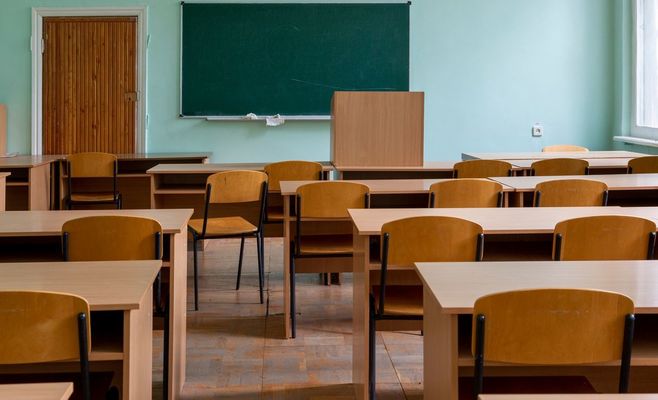
The wave of student protests sweeping across France began with complaints about the state of schools on the outskirts of Paris: ceilings leak, rodents roam, toilets break down, and the corridors smell of sewage. Teachers and pupils speak of years of decline, from nursery schools to universities.
The spark in Créteil
Pupils from central Paris who are blocking their lycées often admit that conditions are not so bad for them. Pupils and teachers from the outskirts tell a very different story: besides crumbling buildings, they complain of a shortage of teachers, overcrowded classrooms where it is hard to fit in, and frequently cancelled lessons.
“Our schools are like something out of Yugoslavia,” says 20-year-old Léon from the suburb of Créteil. He now studies at a university, where the situation is slightly better, but in secondary schools, he says, it is dire. “It is unacceptable that an economy as big as France's has such bad schools,” he explains of why he joined the large demonstrations in central Paris.
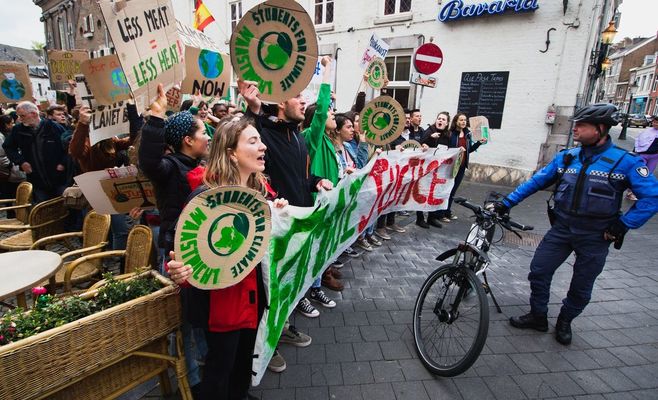
The spark of the protests was struck in Créteil itself. Teachers at the Antoine de Saint-Exupéry lycée, fed up with the unsuitable conditions, went on strike on Thursday, 17 September. A few days later pupils joined them and began blocking schools under the slogan “Education is a right, not a privilege”.
Leaking ceilings and staff shortages
Students from Saint-Denis, in the north of the Paris area, describe a similar picture. “We are in one of the poorest regions in terms of investment in schools. The roof leaks, there are rats, there isn't enough heating. There aren't enough teachers, or even chairs,” say students at Paris 8 University. They came to study in a café near the local town hall because the university is currently closed due to the protests.
“We have to study in crumbling buildings. They put pressure on us, saying just go there. But we can't, it's dangerous. And yet we have to go,” says one of the students.
Trade unions point to deep inequality between schools. “The state invests less money in the suburbs than elsewhere. There is segregation and the pushing of disadvantaged areas to the margins. By our calculations, spending per pupil here is 30% lower than the national average,” says Louise Paternoster, co-chair of the CGT Éducation union in the Seine-Saint-Denis département. She herself teaches at one of the local nursery schools. “We had rats and other rodents. And contaminated water also dripped from the ceilings into the dormitories where the children rest,” she recalls.
According to the OECD, a child from a disadvantaged area in France has less chance of breaking out of their socio-economic circle than in most other developed countries.
Teacher Anaïs Giroux from the same département says that during the heat her classroom reached almost 35 degrees, and the windows cannot be opened because many are broken. Her school was recently renovated, but because of a lack of money the work was done poorly. At the start of the school year her class was assigned a room next to the toilets for medical reasons, and they have been closed for three weeks. “During the renovation the septic tank and sewage were connected incorrectly. Waste flowed back into the toilets, and the whole second floor of the school smelled of faeces,” she complains.
The most acute shortage is of medical and social support staff: nurses, social workers, psychologists and assistants. And, Giroux adds, there is also a shortage of teachers themselves: in some schools there has been no teacher for a particular subject since the start of the year, or no one to cover for a sick colleague.
As far back as 2019, the FCPE parents' association estimated that pupils in Seine-Saint-Denis had missed a fifth of their lessons for lack of replacement teachers, and almost a full year of classes over their entire schooling. The Ministry of Education cannot confirm that specific estimate, but acknowledges that around a tenth of lessons are not held during the school year for various reasons, and that this problem urgently needs to be solved.
Young people as the driving force
Teachers and union activists have long been pushing for change: they made the same demands back in 2024, but the authorities paid no attention. Now pupils have joined them, and at last they are being heard. “We adults are very glad that pupils are mobilising with us. It gives hope that when young people speak, the government may listen to us more,” says Giroux.
It is not only teachers from the outskirts who are complaining, but also those from central Paris. “President Emmanuel Macron has turned us into a low-skilled profession. We should be respected, we are raising a new generation of French people. Instead, they give us no extra money for equipment or salaries, and nobody wants to come here. The prestige of the profession has fallen,” says Raphaëlle, a teacher at the Dorian municipal school.
Where the protests lead will become clear in the coming days: at least two large demonstrations are already planned for next week. “The younger generation is like a spring: if you keep pressing on it, one day it will spring back and hit you right in the face,” believes Paternoster.
Read also: Work in Prague and Czechia
Source: seznamzpravy.cz