Adam Prskavec: viral videos turned into a 61 million CZK business

USD 21,75
Popular
Viral videos about English have grown into a business with tens of thousands of paying customers. Adam Prskavec, head of Kuba English, wants to repeat that success outside Czechia: in 2025 the project's turnover reached almost 61 million crowns.
Kuba English began as one of many online projects that took off in the pandemic boom in remote learning. It is named after the English teacher Jakub Časlava, whose funny videos gathered hundreds of thousands of followers. Today it is no longer just popular videos but a full-fledged startup: besides videos, the platform has its own podcasts, courses and, above all, a mobile app launched in 2024. In it, the user is accompanied by an AI avatar that gives instant feedback, holds interactive conversations and builds a personal plan — for travel, work or everyday life.
According to Prskavec, the app has more than 65,000 paying customers, of whom about 14,000 are active users who hold an average of six conversations a week. The business is growing without an outside investor: the team has put over 30 million crowns into development and marketing from its own reinvested profit. “Czech business today is healthy and lets us put most of the energy and money back into the product. We don't want to turn Kuba English into yet another vocabulary app,” says Prskavec.
The company is also moving into corporate training: in a single month the new system for employers brought in more than 250,000 crowns. At the same time, the Frenchtess app for learning French is being launched. Prskavec's idea is to build an “army of apps”, each resting on one bright personality, just as Kuba English rests on Časlava and English. To do this, the company is looking for local creators for other languages under a franchise model.
Not everything is going smoothly. The first foreign expansion, into Spain, has so far fallen short of expectations: the conversion into paying customers is low, and the project has written off a loss of about half a million crowns. Prskavec admits the company will not cling to a market where it is not working, and has given itself until the end of February to assess how the market behaves during the sales season and the period of New Year's resolutions. The same approach will be applied in Poland, then in France and Germany, since Časlava knows all of these languages.
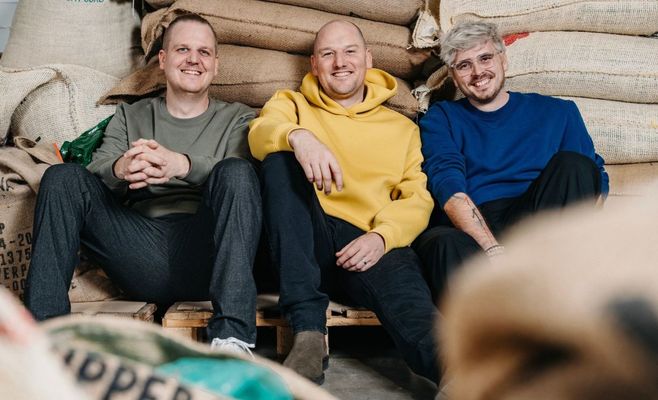
The road to the current business was full of twists. An idea of three friends that grew out of social media turned into a company, but “at the start you go into it naively optimistic: we thought we would be three musketeers fighting for each other,” Prskavec recalls. Expectations and levels of involvement turned out to be different, and one of the partners left the firm. The relationships, Prskavec says, “suffered, but we had to go through it.” It was then that it emerged that the copyright to the app itself, which was first built by an external agency, had not been fully settled legally.