Dieter Schwarz: Germany's richest man invests billions in AI
USD 21,66
Popular
Lidl and Kaufland owner Dieter Schwarz turns 87 in September, but instead of a quiet retirement he is launching a sweeping technology expansion: his group of companies is building a new campus for its Schwarz Digits division and investing aggressively in cloud computing and artificial intelligence to compete with the United States and China.
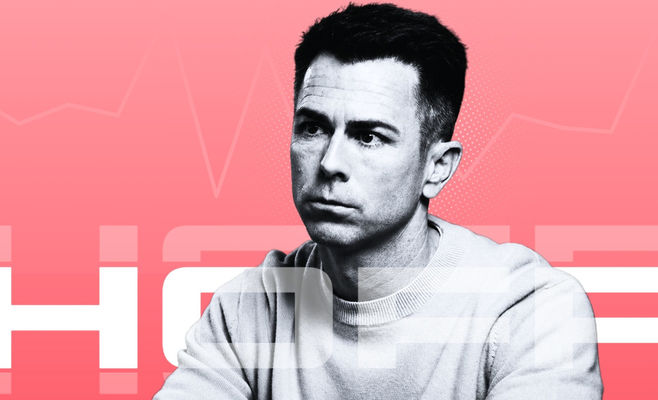
Schwarz is one of the most secretive figures in German business: there are almost no photos of him and he almost never speaks publicly, and according to Deutsche Welle he can still walk unrecognized through his hometown of Heilbronn. Even so, his fortune is estimated at around $60 billion (about 1.3 trillion crowns), making him Germany's richest man according to Forbes.
His Schwarz Group is Europe's largest retail group: last year's revenue came to nearly €185 billion (4.5 trillion crowns), and the company employs more than 600,000 people worldwide. Now, however, the business is expanding in an unexpected direction.
On 21 July, a new headquarters for the Schwarz Digits technology division opened in Bad Friedrichshall, in the north of Baden-Württemberg — a campus for 3,500 employees with five curved glass buildings arranged like honeycomb cells around a pond, complete with a nursery, a restaurant and a fitness centre. “It's a clear statement: we don't need to hide from Google or from anyone else,” Bernd Wagner, who heads the cloud business and sales, told Deutsche Welle.
The construction cost has not been disclosed, but the goal is clear: to attract and retain IT talent that would otherwise head to Silicon Valley, and to strengthen the technological sovereignty of Germany and Europe at a time when the biggest breakthroughs in AI are happening in the US and China.
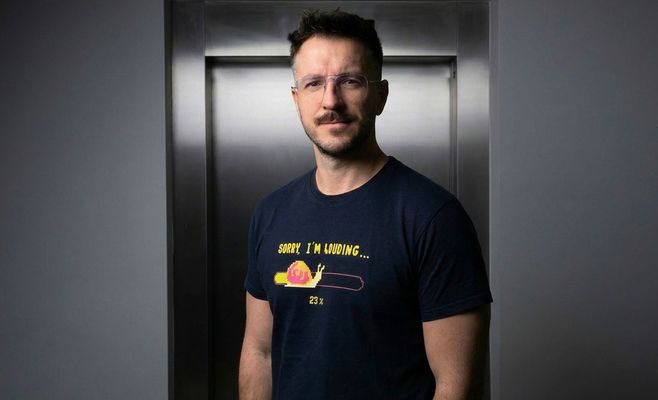
Schwarz Group's path into cloud technology began not with a profit calculation but with an internal need to protect its data. “We didn't want to depend on third parties,” Christian Müller, then Schwarz Digits' co-founder and now, since July this year, its sole CEO, said two years ago. Unable to find a provider that could guarantee exactly where its data would be stored, the company decided to build its own cloud.
In 2023, Schwarz Digits was spun off into a separate division and signed up clients such as SAP, football club Bayern Munich and the Port of Hamburg. Today the division generates €2.2 billion (about 53 billion crowns) in annual revenue, with customers including the Dutch government, German federal ministries and the DFB football association. Its main selling point is digital sovereignty: a guarantee that data stays in Germany and Austria.
Artificial intelligence was gradually added to the cloud business. In 2023, Schwarz Digits took a stake in the German startup Aleph Alpha, joining an investment round worth several hundred million euros. The company develops its own large language models but, unlike OpenAI and ChatGPT, focuses on corporate and government clients. Schwarz Group itself has internally banned employees from using ChatGPT, citing the risk of leaking sensitive data.