Czech textile factory transformed by ceramicist Robert Šimek
USD 21,59
Popular
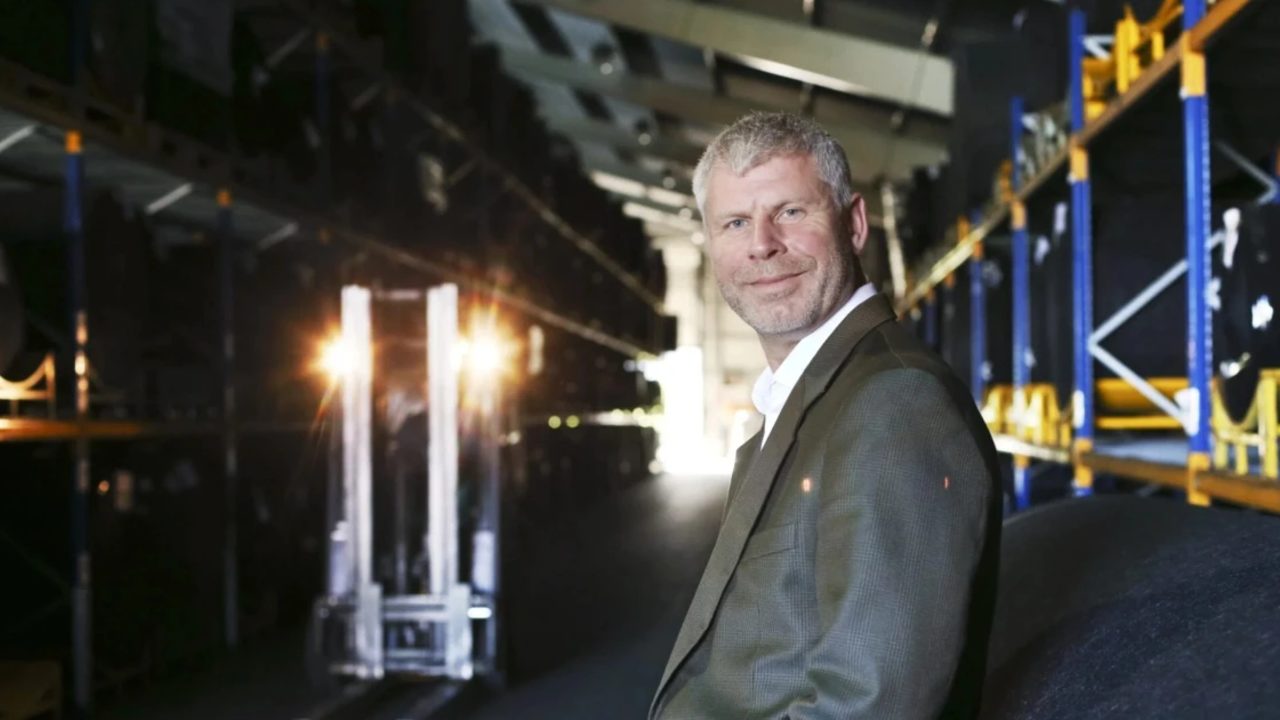
The Czech company Retex, based in Moravský Krumlov, produces technical materials from recycled textile that are used in Porsche and Dacia cars, trains, washing machines, the green roofs of New York skyscrapers, and parks in Santiago. The company, with a turnover of three-quarters of a billion crowns, was driven to its technological breakthrough by Robert Šimek — a ceramics specialist who took over the traditional textile factory in 2017 without knowing anything about textiles.
The story of Retex is a rare example of how a high-tech business can be built out of an old industry with Soviet-era roots (the factory was founded in 1949). Before Šimek arrived, the company depended on a single major automotive client for almost 80% of its business — an extremely risky model that could have collapsed at any moment.
Šimek, a ceramics engineer by training, spent fourteen years running sanitary-ware production at the Swiss concern Roca, which owns the Laufen brand well known in Czechia. It was there that he lived through the 2008 financial crisis, which taught him how dangerous a one-sided business model can be. He left the corporation in 2012, disagreeing with its internal policy, and years later took the helm at Retex — a company from a completely different industry.
It was precisely this outsider's perspective that helped him see untapped technological potential in an ordinary textile factory. As soon as he joined the company, he changed its strategy: instead of cheap mass production, he bet on developing new materials and diversifying the client base.
The transformation required massive investment in production lines — the company bought equipment worth hundreds of millions of crowns, yet still managed to halve its debt burden. Retex built its own development department of six specialists and learned to combine up to eight layers of material in a single production cycle — a capability unavailable to standard textile manufacturing.
The real test came with the pandemic: the company's turnover fell by almost half within a few weeks. This was followed by a sharp rise in raw material prices in 2021, the war in Ukraine, and pressure from carmakers on the entire supply chain, which some suppliers failed to withstand. Thanks to the diversification and technological base it had built in advance, Retex managed to hold on and keep growing, turning recycled textile waste into a high-value-added product for global markets.