Czech entrepreneur turns old Soviet base into theme park
USD 21,66
Popular
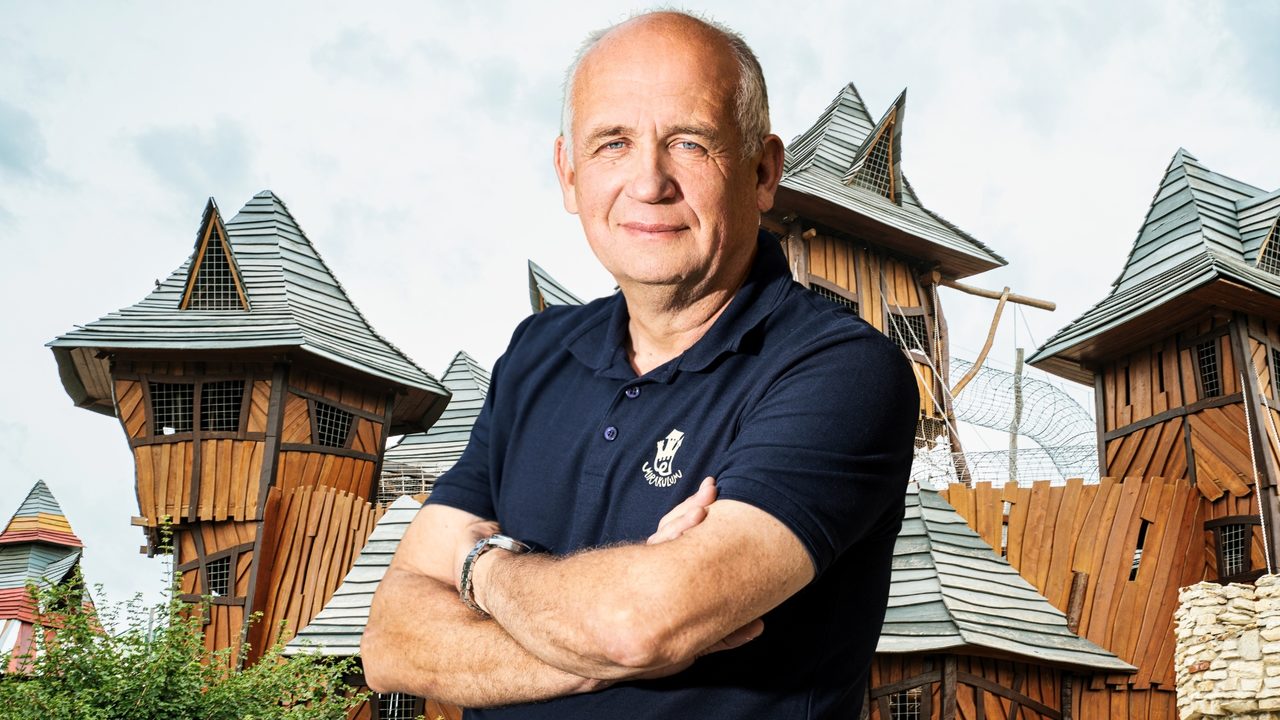
Jiří Antoš was once a furniture maker, then founded a company producing children's playgrounds, and on the former grounds of a Soviet tank regiment in Milovice he built the family amusement park Mirakulum, which draws 370,000 visitors a year. In 2024 the business brought in nearly 240 million crowns in revenue and around 30 million crowns in profit.
Antoš spent his childhood on the outskirts of Prague among meadows and ponds, where he and his friends built tandem bikes out of old bicycle frames and rode various animals, including a pig — which once ended with a broken arm. Decades later he created a place where thousands of children have fun, though he never originally planned anything of the sort: he bought the former Soviet base in Milovice to use as a warehouse.
Antoš trained as a joiner and, before the revolution, restored antique furniture for castles and manor houses. A serious accident that happened while he was teaching his wife to drive a Trabant put him out of action for a long time, and by the time he recovered, Czechoslovakia had already settled into the new capitalist order. “I was offered a disability pension, but instead I started a furniture business making spruce-wood furniture — demand for it was high back then,” he recalls.
The business started in a small workshop at his house in Prague, then moved into rented premises, and once the company had grown to 45 employees, the partners bought their own site — in Turnov, since Prague was unaffordable by then.
In 1997, after a falling-out, the partners went their separate ways, and Antoš bought out his partner's share, continuing the business alone. The company kept growing, warehouses appeared in that same Milovice, and the furniture was shipped to Western Europe, the United States and Japan.
Antoš stayed in the furniture business until 2008, after which he left it for good. “Profits were falling because the koruna was getting stronger, and this type of furniture had stopped being an attractive export product. I started looking for something new — ideally still connected with wood, because that's all I know how to do — and on the Czech market, so I'd no longer be dependent on the exchange rate,” the entrepreneur recounts. His choice fell on playgrounds made of acacia wood, chiefly for its resistance to fungus. He launched the production in 2006 and ran it alongside the furniture business for several years.
After winding down the furniture production, he was left with the former Soviet tank regiment grounds in Milovice, which he had bought years earlier for warehousing. “I bought all the barracks of the tank regiment, and the surrounding land came with the package. For a long time I didn't need any of it — I didn't even think about it,” laughs the 66-year-old businessman.
He remembered that land years later, while pondering what to do with a site that had suddenly become unnecessary. “A friend suggested I go take a look at a family park near Görlitz in Germany, so I took my wife and kids there — and we were all thrilled. That's when it occurred to me to build something similar back home,” Antoš describes.
The plot where Mirakulum now stands was in a “crazy” state — twenty years of impassable overgrowth on the site of ruined military buildings. A pyrotechnic survey even turned up cartridges and an anti-tank shell there — fortunately a training one, marked in Cyrillic. “It took two years to put everything in order and open the park in 2012, even though many people, including Milovice councillors, didn't believe it would happen,” Antoš continues.
Today the Mirakulum company, which merged with playground manufacturer TR Antoš a few years ago, employs around a hundred people. “I expect last year's figures to be similar,” says the founder, adding that he still sometimes comes out to the sites himself.