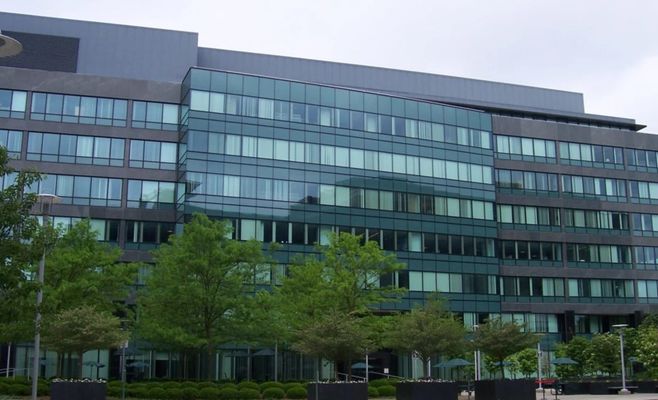
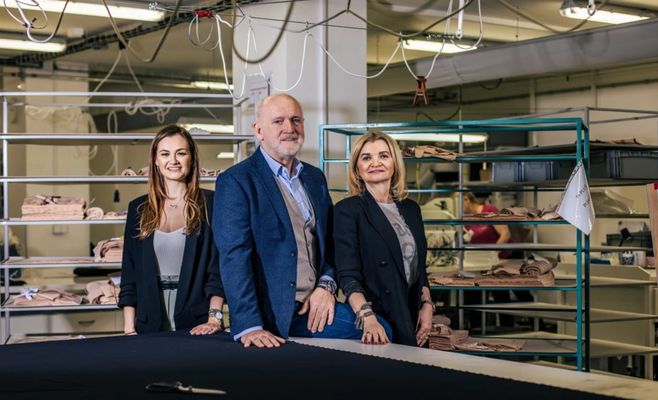
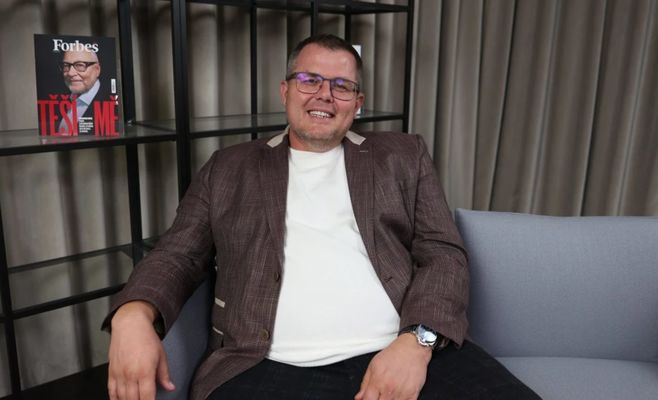
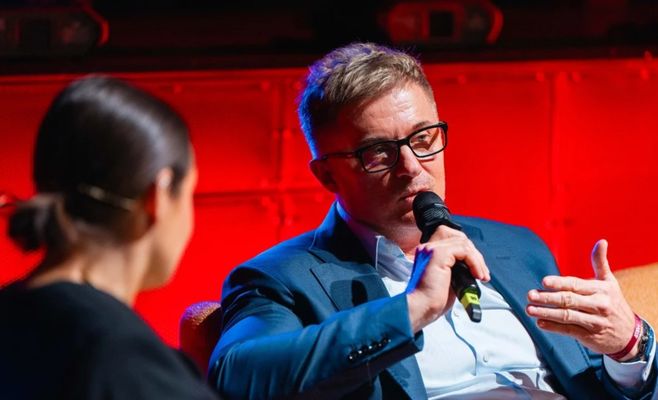
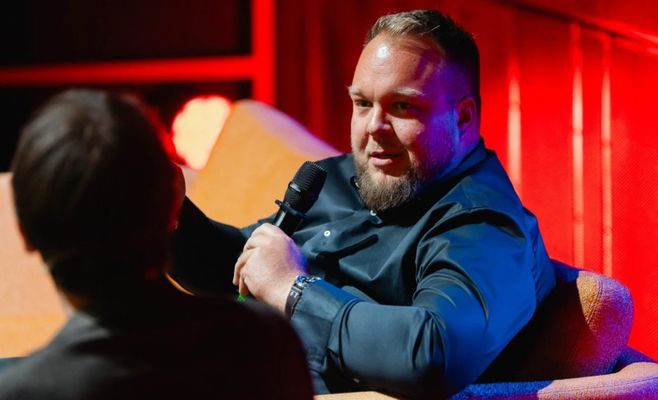
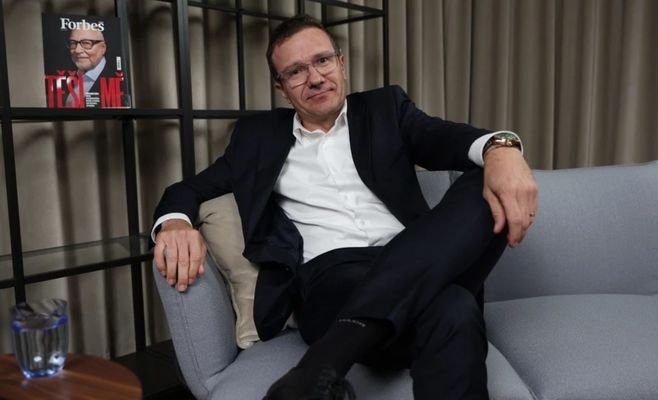
Jiří Rösner and the Jungheinrich plant in Chomutov, Czechia
USD 21,76
Popular
Jiří Rösner, CEO of the Jungheinrich plant in Chomutov, has built the world’s most modern forklift factory in Chomutov. The Czech operation of Germany’s Jungheinrich group has grown by more than one hundred percent a year for the fourth year in a row, and its revenue has risen from 600 million to 4.5 billion crowns in two years.
“We are running a marathon at sprint pace. And we have a team that runs it with us,” says Rösner, a Forbes Top CEO laureate, in an interview from a podcast series dedicated to that list.
Production in Chomutov was launched in 2023, when turnover was around 600 million crowns. By 2025 it had grown to 4.5 billion. This year the plant is again aiming to double and wants to pass the 8 billion crown revenue mark.
What they make. Jungheinrich is the second-largest maker of warehouse and lifting equipment in Europe and the third-largest in the world. Chomutov produces reach trucks: forklifts with a retractable mast designed for handling pallets in narrow warehouse aisles and at great heights. “You will find forklifts from Chomutov on every continent except Antarctica — from large factories and logistics centres to e-commerce,” Rösner says.
Under his leadership the plant created an innovative system that allows standard and custom-built forklifts to be made on the same line. According to the director, this noticeably shortened delivery times, raised productivity and lowered both production and sales prices. The know-how is now being transferred to the group’s other plants around the world.
Technology. Growth is driven by automation: 80% of welding is done automatically, automation is used in painting, and the company plans to introduce it on a large scale in logistics. Quality is monitored by artificial intelligence, which analyses photographs to catch human errors in time. “At first we tried to dictate to people how to become more efficient. Today they mostly come to us with ideas for what can be improved,” Rösner notes.
Almost zero waste. Following ideas from the workforce, the company is also moving towards Rösner’s goal: by 2030 the plant should produce zero municipal waste. Women on the team proposed supporting the use of eco-friendly feminine hygiene products, and last year the plant gave up disposable cups by giving every employee a thermal mug. As a result, the plant, with four hundred employees, produces only about 30 kilograms of municipal waste a month. For comparison, an average family of four produces 150–185 kilograms.
Toilets use rainwater from tanks under the production hall, only green energy is purchased, and the roof is planned to be covered with photovoltaic panels so that the factory becomes fully energy self-sufficient. A bio-composter for all food waste will soon appear at the plant. The site is crossed by biocorridors with insect “houses” and beehives, which take up almost as much area as the production building itself. “I have the most beautiful view from my office. I look at a wooded area where rabbits, hares and pheasants run around. It is still an industrial zone, but at least the piece of nature we took, we gave back,” Rösner says.
A leader and a team. Rösner has been a CEO at various companies for thirteen years, and in the Jungheinrich group for his fifth year. “I am very demanding of myself and of others. As a technically, data- and analytically minded leader, I build a team around me that compensates for my weaknesses. It came about naturally that today the management is half women, which is not very usual in heavy engineering,” he says.
Rösner is building the factory as a chance for a region that, because of the winding down of heavy industry and brown coal mining, faces economic, social and environmental problems: the idea of bringing high-value-added production here appealed to him at once.
By the Around Prague newsroom