People By

Marek Vala stole an idea from thieves: Czech startup Pealock collapses
Marek Vala stole an idea from thieves: how Czech startup Pealock didn

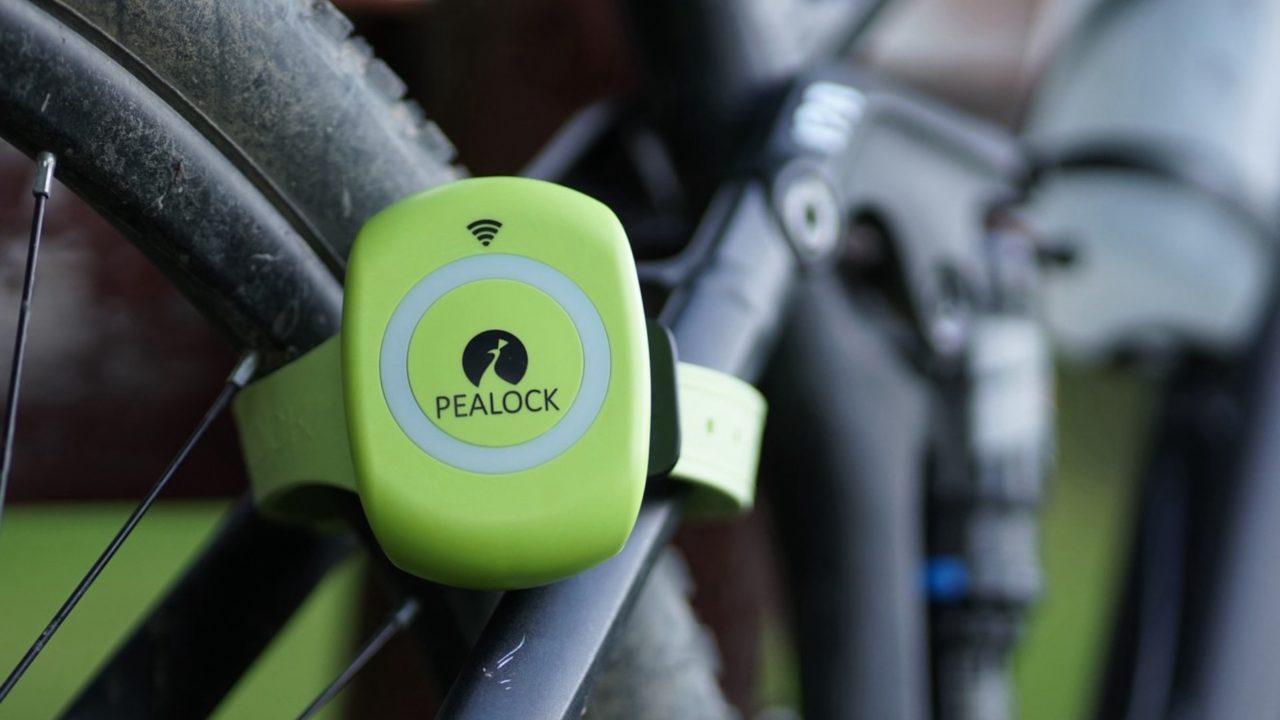
The founder of Czech startup Pealock, Marek Vala, built his business on smart electronic locks for bicycles, skis and other sports equipment, drawing on a personal experience — his own skis, worth more than 20,000 crowns, were once stolen in Austria, and his insurer refused to pay out because he hadn't used a lock. Six years later, the company, which had raised millions of crowns from investors, went bankrupt: this year a court opened insolvency proceedings against its assets.

Vala started the Pealock story in 2019. The project got off to a strong start with a Kickstarter campaign that raised about 700,000 crowns, and in 2021 it landed its first major investment — 11 million crowns from the N1 fund and 3D-printer maker Prusa Research. In 2023 it was joined by investors EIT Urban Mobility and Zlín entrepreneur Čestmír Vančura, a former co-owner of Kovárny Viva.

At its peak, the company sold about eight thousand locks and revenue reached almost nine million crowns. But further growth didn't materialize. According to the 36-year-old founder, the collapse resulted from a combination of factors: weak investor interest in hardware startups, which need more capital and have a longer investment horizon than software projects.

The second blow was the halt of its expansion into Germany, where Pealock, Vala says, had a solid position — but as cash reserves dwindled, the company decided to focus on the Czech market, where acquiring customers was cheaper. The plan was to return to foreign expansion after a new investment round, but the company failed to raise enough money.

Also contributing was the cooling of demand in the bike industry after the COVID-19 pandemic, as well as the nature of the product itself — a lock isn't something people buy regularly, and attempts to expand the product line never matched the effect of the flagship item. Falling turnover, in turn, made it harder to attract new investors: the company could only secure small amounts for operating costs and stock purchases.

The final factor was a thin margin: Pealock manufactured in Czechia, unwilling to move production to Asia for the sake of quality control, while also funding its own hardware, firmware and mobile app development in-house. A single lock sold for about five thousand crowns — the market wouldn't allow a higher price.

Things kept getting worse from 2023: over two years the company's assets shrank fivefold and its equity nearly vanished. Despite revenue of more than four million crowns in its last reporting period, the business couldn't be saved — early this year Pealock entered insolvency proceedings. For Marek Vala, the key priority in the process has been preserving the value of the customer database, since the company also offered paid GPS tracking services through a partnership with operator Vodafone.


Share: Telegram WhatsApp

Related news

While classic Czech beer is gradually losing ground, non-alcoholic versions are experiencing a real boom — and it's on this wave that Tomáš Peterka, co-owner of the marketing agency Konektime, decided to launch a fundamentally new project:
Chef Christian Chu turned the Prague restaurant Levitate from a loss-making project on the verge of closing into a Michelin-starred one — and admits that, for the sake of success, he was ready to sell his car and his apartment, and that wor
Former professional footballer Martin Kolkop couldn't find a decent tennis coach for his son — and instead of giving up, he built the platform TennisCoach, which in just a couple of clicks arranges a court, a coach, a racket, and even a rid
Productboard co-founder Daniel Hejl admits it honestly: after the pandemic-era boom and the market cooldown that followed, the company might not have survived the hard times. What saved it was a radical overhaul — a complete abandonment of
Vilém Raček and Tomáš Kadlec were once professional golfers, and later worked as golf coaches. Today they run one of Moravia's most prominent artisan bakeries — William Thomas Artisan Bakery, which over a decade has grown from a garage proj
Lucie Urválková, chief financial officer and deputy chair of the board at the Uniqa financial group in Czechia and Slovakia, is summing up a record year: the company's pre-tax profit topped 2.6 billion crowns, while assets under management
Chinese memory maker CXMT carried out the largest Asian IPO of the year, raising 200 billion crowns, and on its very first day of trading on the Shanghai exchange its shares soared by 466%. The biggest beneficiary was the company's chairman
Vít Kutnar, owner of DEK, the largest Czech building-materials retailer, is selling three software companies — ÚRS CZ, Callida and First Information Systems — to the investment firm MidEuropa. According to an estimate by the e15 news server
The Czech medtech startup Carebot, led by CEO Matěj Misař, has secured the largest investment in its history — more than €1.5 million (over 36 million crowns). At the same time, the company unveiled a new AI solution for analysing mammogram
Entrepreneur Simona Kijonková, best known for selling the logistics company Zásilkovna for billions of crowns, has donated 6 million crowns to the Czech Technical University's (ČVUT) Future Fund — the largest single contribution her foundat
Czech entrepreneur Jiří Diblík sold his startup to the American unicorn Spring Health for millions of dollars, only to leave the company barely a year later, walking away from a sizeable chunk of his deferred bonus — so he could go back to
Yang Zhilin is the 34-year-old founder of the Chinese startup Moonshot AI, whose Kimi K3 model outperformed Silicon Valley's top offerings at coding and sent shockwaves through the entire AI world. His company is now preparing a new funding