Czech couple's AI-powered word game Přihořívá wins thousands of fans
USD 21,52
Popular
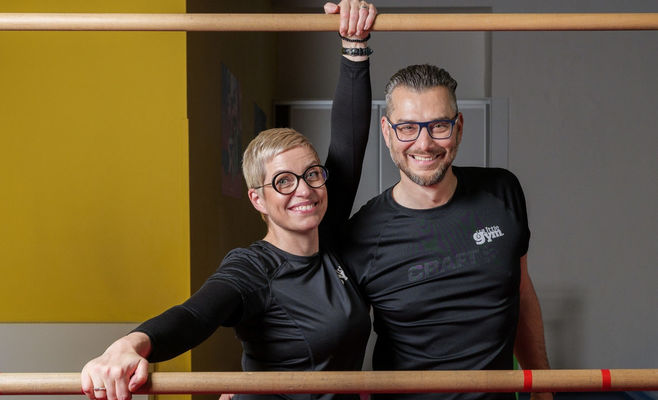
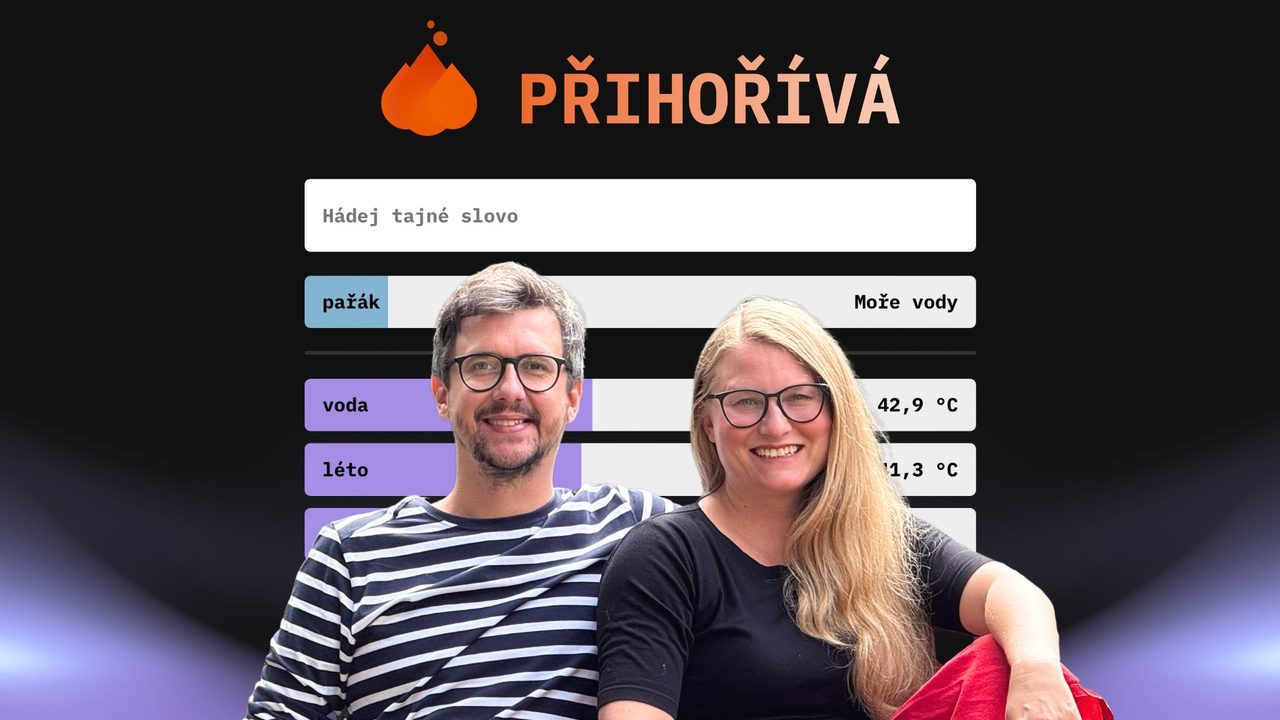
Czech couple Josef and Mariana Zaharov have turned a New Year's Eve pastime with friends into one of the most talked-about online games in Czechia. Their project Přihořívá, in which players guess a word with the help of hints generated by artificial intelligence, has attracted more than 17,000 registered users within a few months and has survived only thanks to voluntary donations from fans.
The idea was born by chance: on New Year's Eve 2024, the couple was playing a Brazilian word game with friends in which you have to guess a secret word, and the app shows the percentage of semantic closeness between the clue and the answer. There was just one problem — the game existed only in English. Unable to find a Czech equivalent, the Zaharovs decided to make one themselves.
Josef Zaharov, who trained as an applied informatics specialist, works as a UX designer at Prusa Research, so writing the code for the app was no trouble for him. He put together the first version back at the start of last year, but the language models of the time understood the semantic links between Czech words too poorly — the AI responded so inaccurately that it irritated players more than it engaged them. The project had to be shelved.
Work resumed this year, once newer models had learned to handle Czech more reliably. The game was hooked up to Gemini, and the foreign format was adapted for a Czech audience: instead of a percentage match, the developers introduced the familiar childhood mechanic of the game “hot and cold” — closeness to the correct answer is now expressed as a “temperature.” According to Mariana Zaharov, the couple found this playful approach more engaging than dry numbers.
The game's real breakthrough in popularity came from the podcast Kvíz Please — after its hosts played Přihořívá in one of their episodes, the number of players jumped from hundreds to thousands overnight. A similar effect later repeated thanks to bloggers and mentions on the radio.
However, the growing audience brought an unexpected problem: unlike many similar games that calculate word relationships in advance, Přihořívá evaluates every player's guess in real time using AI, which costs money. As the number of users grew, expenses rose sharply, and the creators put a QR code for voluntary donations on the site — without much hope that it would help.
The response surprised even them: from March through the summer, around 430 people transferred a combined total of several tens of thousands of crowns, with some setting up recurring payments. According to the couple, it was these donations that saved the project — without them, the game would have had to shut down as early as April. Keeping the service running now costs about 15,000 crowns a month, but, as the Zaharovs note, the project is no longer operating at a loss.