Czech investor Vladan Heinitz says old valuation models failed

USD 21,52
Popular
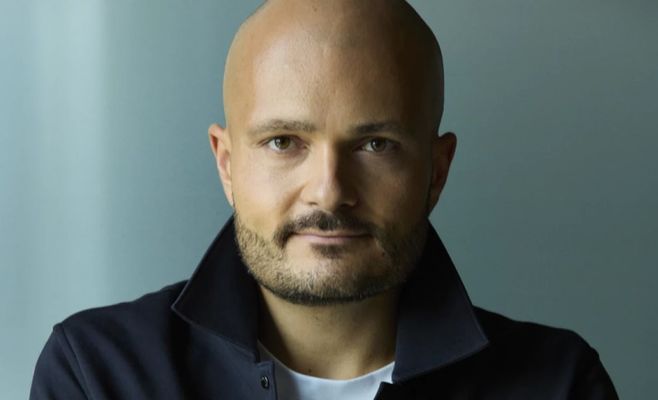
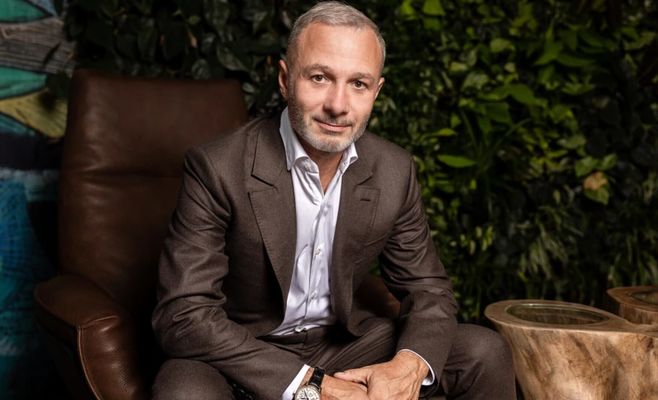
Czech entrepreneur and investor Vladan Heinitz has proposed rethinking how companies are valued in the age of artificial intelligence. In his view, the classic model, based on past results and forecasts of future revenue, is hopelessly outdated and needs to be replaced with a new set of parameters.
Heinitz knows exactly what he's talking about: he has taken part in business sale deals many times, both as a seller and as a buyer. And each time, the valuation rested on two pillars — the company's track record and its projected revenue. But today, the investor notes, this approach is collapsing before our eyes, especially in software and services companies.
As evidence, he cites data from the Multiples portal: the median valuation of publicly traded horizontal SaaS companies fell in August 2026 to around 2.2 times their annual revenue — compared with the tenfold multiple the market had grown used to in 2020–2021. The spread between sectors is enormous: devops companies are valued at 8.7 times revenue, while adtech gets just 0.9. The phenomenon has already been dubbed the “SaaS apocalypse”: the market has wiped hundreds of billions, if not trillions, of dollars off software companies' value — not because they stopped growing, but because investors stopped believing the forecasts.
According to Heinitz, an era is approaching in which large companies will collapse much faster, while startups will rapidly grow into mid-sized businesses thanks to AI, which allows scaling through systems rather than through hiring people. He cites research by the consulting firm Huron: the average tenure of a company in the S&P 500 index has shrunk from 23 years in 1965 to 20 years in 1990, and is heading toward 15 years.
At the same time, small companies are showing explosive growth without bloated headcounts. The startup Cursor (later acquired by SpaceX) went from its first million to a hundred million dollars in annual revenue in about a year. Sweden's Lovable achieved the same result with just 45 employees. Ten years ago, a leap like that would have required hundreds of staff and several rounds of investment.
Heinitz also points to the new logic behind M&A deals: large players are increasingly buying not a product or profit, but a team and its ability to adapt. Microsoft, for example, paid around $650 million for Inflection to get Mustafa Suleyman and his team of researchers. Google paid $2.7 billion for a non-exclusive license to Character.AI and its two founders, and a year later paid another $2.4 billion to lure Windsurf CEO Varun Mohan and the core of his research team into DeepMind. None of these deals, the investor stresses, can be explained by traditional EBITDA multiples or revenue forecasts — what was being bought was precisely the team's ability to create something new.
In Heinitz's view, financial models have yet to learn how to measure this kind of flexibility and adaptability. It may well be from thinking like this that a new set of seven criteria emerges for judging a company's future potential — including revenue growth per employee and a business's ability to “kill” underperforming products and directions in time.