Economist Debunks the Biggest Financial Myths About Holidays
USD 21,69
Popular
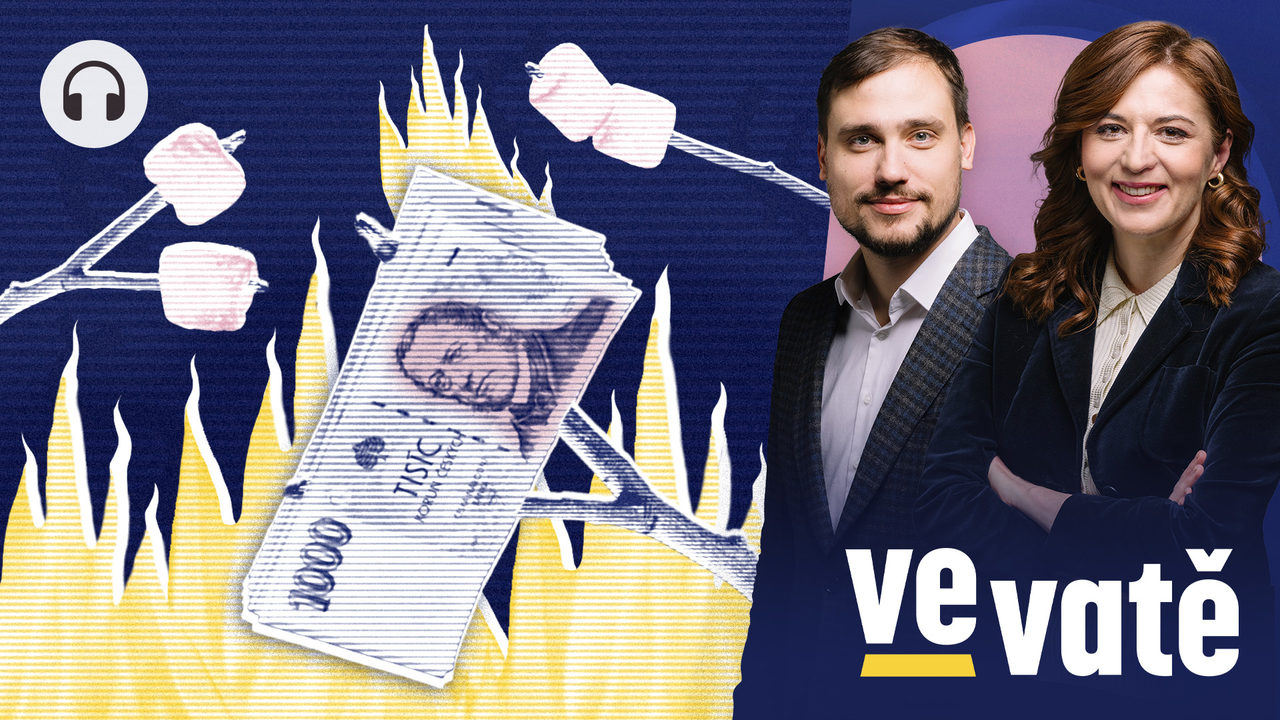
Economist Dominik Stroukal from the Prague University of Economics and Business (Metropolitan University Prague) broke down common misconceptions about holiday spending on the Ve vatě podcast, explaining why tourists often overpay without even realizing it.
According to him, people lose their everyday spending caution while on holiday: at home, someone might hesitate over whether to buy an 80-crown coffee, yet on vacation they'll pay 15 euros for a sun lounger without a second thought. Add ice cream, cocktails, taxis and excursions, and these small expenses quietly add up to thousands of crowns extra.
Stroukal points to economist Richard Thaler's theory of "mental accounting": people compare extra spending not to their everyday purchases, but to the overall cost of the trip. If the holiday already cost 80,000 crowns, another 500 crowns doesn't feel like much — just as paying extra for an upgraded seat in a two-million-crown car feels less significant than the same upgrade fee on a cheap car.
The trouble is that people only factor in the base cost of the holiday — the hotel and flight price — while ignoring everything else. As a result, total spending can end up a quarter higher than planned. "One excursion, the occasional ice cream, something at the airport, something on the plane — together that can add up to 25 percent on top. And that's a hefty markup," the economist notes.
All-inclusive isn't always a bargain
A similar psychological trap applies to all-inclusive packages. Having paid upfront, tourists feel pressure to squeeze maximum value out of the deal. At the same time, according to Stroukal, paying for things separately triggers what's known as the "pain of paying" — every time someone pays for a coffee or a drink individually, they feel the expense. With a flat-rate package, that feeling disappears.
"Even knowing that paying item by item would be cheaper, we still go for the package deal just to avoid the pain of each separate payment. And we're even happy about it," he says. Tourists also tend to overestimate how much food and drink they can actually consume — appetites are big for the first couple of days, but soon enough people are quite content with a salad after having gorged on Indian curry.
Why four euros feels cheaper than a hundred crowns
Another trap involves foreign currency — abroad, people lose their sense of what things really cost. Stroukal calls this the nominal value effect: four euros visually looks like a smaller amount than one hundred crowns, even though the real value is similar. "We're not stupid — we know we need to multiply by roughly 25, but even after doing that math in our heads, we still feel like four is cheaper than 100," he explains. That's why he recommends tracking not individual small purchases, but total daily spending.
Last-minute deals don't work for every ticket
The myth that the best prices appear right before departure isn't always true — it's important to distinguish between a plane ticket and a package holiday. Airfare prices typically rise as the departure date approaches: tourists tend to plan trips well in advance, while business travelers often need to fly on short notice and are less price-sensitive.
According to research cited by the economist, international flights are on average cheapest roughly 49 or more days before departure. With package holidays, the opposite can be true: the tour operator has already paid for the plane seat and hotel room, so it's more profitable to sell the remaining spot at a discount than to leave it empty. So a last-minute strategy can work for a package deal, but not for a standalone flight ticket.
Hidden fees and currency exchange
A ticket advertised at 999 crowns usually ends up considerably more expensive once you add baggage, seat selection, insurance, and a transfer from the remote airport that budget airlines typically fly into. The issue isn't the extra fees themselves, but the fact that many buyers aren't aware of them in advance.
A classic tourist mistake is converting currency at the payment terminal. If the terminal offers to charge you in crowns or your home currency, always choose the local currency instead. With so-called dynamic currency conversion (DCC), the exchange rate is set not by your bank or payment network but by the terminal operator — and the rate is usually worse, sometimes by more than 10%. The same rule applies to ATMs: if a machine offers to convert the amount into crowns on the spot, it's better to decline and let your own bank handle the conversion.
A "No fee" sign at currency exchanges or ATMs is no guarantee of a good deal — zero commission can mask an unfavorable exchange rate. What matters is comparing the final amount, not just the advertised fee. At ATMs, it's safer to stick with major bank networks rather than unfamiliar operators, especially in touristy areas.
Duty-free shopping at the airport isn't always a bargain either — tax-free doesn't mean cheap, especially since the airport shop is effectively a local monopoly.
Despite all these warnings, Stroukal doesn't recommend turning your holiday into a crown-by-crown accounting exercise — a vacation has a value that can't be captured by price alone. The key is to distinguish deliberate spending on comfort from losses caused by carelessness or simply not knowing better.
Read also: Giving Birth in Czechia as a Foreigner: Insurance and Maternity Hospitals 2026
Source: seznamzpravy.cz