Petra Wünschová, founder of Prague's Locika centre, dies at 52
USD 21,69
Popular
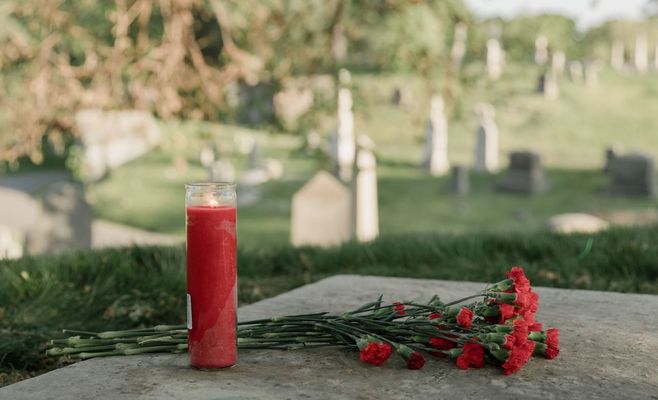
Petra Wünschová, a Czech psychologist, art therapist and founder of Prague's Locika centre — the first organization in Czechia to systematically help children who have survived domestic violence and abuse — died on 28 September 2026 at the age of 52, after a long illness. Over the years the centre has directly supported around 4,600 children, and thanks to Wünschová's long campaign, corporal punishment of children has been legally banned in Czechia since 1 January 2026.
The Locika centre: helping children and working with the system
Petra Wünschová worked as a child therapist and art therapist. From 2001 she worked with children whose development had been damaged by domestic violence, meeting them at a shelter for abuse survivors. It was their stories that led her to found the Locika centre in Prague in 2015. Since its founding, the centre has directly helped 4,600 beaten and abused children. But its impact reached far wider: the centre's staff and its founder herself carried out education and training work for the police, the child protection authorities (OSPOD), teachers and judges. The centre also ran the first Children's Advocacy Office in Czechia, which accompanies child victims of violence through the criminal process so that investigations and interviews do not traumatize them again.
A long fight to ban beatings in the family
Wünschová did not limit herself to the most egregious cases that reached the courts. Her goal was to change the whole approach to raising children in Czech families and to ensure that hitting a child stopped being seen as an acceptable method of upbringing. It took her many years to secure an amendment to the civil code enshrining a ban on physical punishment — above all because of the reluctance of lawmakers, who considered smacking children a private family matter the state should not interfere in. She invariably explained calmly that the point of the law was not to jail parents for a slap made in a moment of anger, but to break a collective trauma that had been passed down in society for decades. The amendment was eventually passed, and since 1 January 2026 corporal punishment and degrading treatment of children in their upbringing has been officially banned in Czechia. “In essence, we're trying to achieve something similar to what happened with smoking. My generation still smoked over coffee in the office. To my adult children, that already seems unthinkable,” she explained in an interview with Heroine magazine.
Advice to parents: learn to manage anger
Other Czech psychologists, as well as parent bloggers promoting a more respectful, non-violent approach to children, drew on Wünschová's work. She advised parents who lose their temper with their children and cannot hold back to turn directly to the Locika centre or to other organizations offering anger-management and parenting courses. “At Locika, we want a parent who has hit a child, or who often loses their temper and shouts at them, to recognize themselves that this is wrong and choose therapy or call a support line. In the early stages, it takes very little to prevent irreversible damage to the relationship with the child,” she stressed.
For roughly the last year, Wünschová fought a serious illness but continued to be a voice for children who need help, speaking in particular about the shortage of specialists in children's mental health. Her voice was always heard whenever the weakest needed a defender. “Petra was an extraordinary person who fundamentally changed the fact that people in Czechia began to speak openly about violence against children — and, above all, that children who have survived it now receive timely professional help. She lives on in the thousands of children's stories she touched, in the people she inspired, and in the changes she achieved,” colleagues from the Locika centre wrote. Psychiatrist Petr Pöthe put it this way: “I don't know anyone who has done more to protect vulnerable and traumatized children in our country — and, arguably, in the context of the whole EU — than Petra Wünschová.”
Source: seznamzpravy.cz