ANO wants to take billions of crowns from Prague and other cities
USD 21,68
Popular
The governing ANO movement is preparing a plan that could strip the Czech Republic's four largest cities — Prague, Brno, Ostrava and Plzeň — of a significant share of their budgets. According to sources within the movement, their share of tax revenue could be cut by tens of billions of crowns a year: some of the money could go to the regions, while the rest would stay with the state to help reduce the budget deficit.
Why the big cities were singled out
"The current system is unfair — the big cities really do have a great deal of money. This definitely needs to change, and we're discussing it with the Ministry of Finance too. But we're only at the start of this debate," said ANO MP Patrik Pařil, a member of parliament's budget committee.
The bulk of municipal and regional revenue comes from a legally guaranteed share of selected taxes that cities receive over the course of the year, with the amount depending mainly on population size. This year that adds up to roughly 400 billion crowns. Industry Minister Karel Havlíček put it this way: "We've never hidden the fact that this issue needs to be opened up. The big cities are sitting on enormous sums of money — the four largest ones really do have a lot, while the rest have little."
Prague — the main target
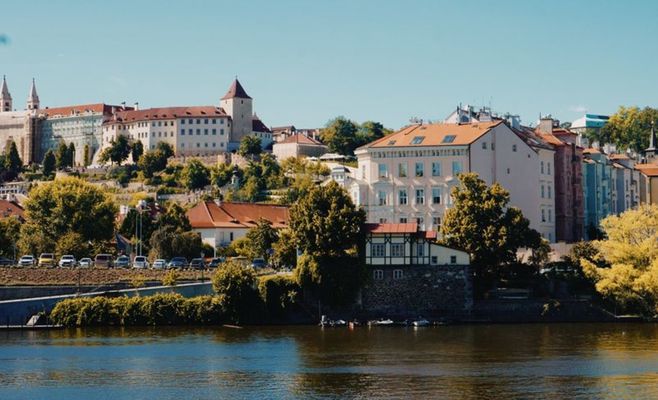
ANO politicians are most set against Prague: in their view, the capital has built up huge reserves and high revenues it can't spend fast enough. According to available information, Prague could lose up to 25 billion crowns — roughly equal to the surplus with which the city ends the year.
"Prague has an unreasonable amount of money that it doesn't spend — it's simply unable to spend it. We're working to make the distribution fairer," Finance Minister Alena Schillerová said on Saturday on Czech television. Asked how far preparations for the changes had progressed, she declined to answer: "Right now we have other concerns. But the fact that hundreds of billions are sitting idle there is a fact."
According to her, changes to the tax-distribution system are also being prepared by an ANO regional governor, Radim Holiš, though he did not answer his phone. ANO's reluctance to discuss details is hardly surprising: little time remains before the municipal elections, in which the movement is hoping for a strong result. For instance, ANO's candidate for Prague mayor, Jan Hušbauer, promises voters from billboards that "Prague's money belongs to Praguers" — even as his own party prepares a plan to take part of that money from the capital.
How the money is divided up
Taking money away from big cities is legally straightforward — it simply requires lowering the coefficient in the tax-distribution law that gives them more funding than smaller towns, and then deciding where to redirect the freed-up money. For Plzeň, Ostrava and Brno, for example, that coefficient is 2.2961, while for Prague it is 4.0641 — almost twice as high.
The regions could use the extra money too — a revision of their revenues was already planned two years ago, but the prepared amendments failed to pass. On top of that, starting this year the government is no longer adding funds for regions to repair roads. The state budget itself also needs a boost: next year's deficit is planned at 386 billion crowns, and the government has promised to cut it by 80 billion the year after — money that will have to come from somewhere.
It is estimated that this year around 270 billion crowns in taxes will flow into the budgets of cities and towns, with roughly another 125 billion going to the regions. Of that, Prague alone is due to receive 97 billion crowns this year, with its revenue projected to rise to 103 billion next year. Statistically, per capita, Prague receives 1.9 times the average for Czech municipalities and regions, and its reserves have reached 200 billion crowns.
Prague officials and experts push back, arguing that the capital has to save up for major infrastructure projects — such as the metro or the Prague ring road. By comparison, Brno's ring road is being built and largely financed by the state.
Opposition: "This is a robbery of the cities"
Candidates for Prague mayor from other parties are already convinced that Babiš's government will take money away from the capital. "Every now and then someone from ANO lets slip that Prague should get less tax money. And then there are the remarks from Prime Minister Babiš and Minister Schillerová about the billions sitting in Prague's accounts — that's no longer just needling. As far as I'm concerned, they've declared war on Prague," says Tomáš Portlík of the ODS party.
ANO's plans are also opposed by the parliamentary opposition, although it does admit that the tax-distribution system hasn't changed in twenty years and that reform is overdue. "Alena Schillerová has nowhere left to find money, Andrej Babiš is pushing her to fund pointless promises, and instead of reform the government is getting ready to fleece cities and towns. Reform is needed, but this team's real goal is simply to concentrate power and money in the hands of the prime minister and his inner circle," said STAN MP Jan Papajanovský.
"A significant part of that money is savings earmarked for specific major investment projects. But apparently they're reluctant to touch those funds, and the politically least painful path is Prague. Taking money away from a handful of big cities is a haphazard decision," adds his party colleague, former Industry Minister Lukáš Vlček.
Finance Minister Schillerová has in the past also criticized the large reserves held by smaller municipalities: by July this year, towns and cities excluding Prague were holding a record 190 billion crowns in their accounts. However, the government is not currently planning to cut their funding either.
Smaller municipalities explain their savings by saying that any investment requires saving up in advance. According to analysts from the "Obce v datech" project, that isn't always the case: in just the last four years alone, municipal reserves grew by 47% — reaching 395 billion crowns by the end of 2025 — and the National Budget Council calculated that nine out of every ten crowns saved never turned into investment at all.
At the same time, the latest data shows that investment activity among local governments has picked up somewhat: in 2025, municipalities and regions as a whole ended the year with a surplus of just 16 billion crowns — noticeably less than in previous years, and only thanks to Prague. "Prague's finances accounted for a significant share of this result. Without it, municipalities as a whole would have ended the year in deficit," the Finance Ministry's report states.
Read also: Brno: what to see and where to go
Source: seznamzpravy.cz