France on the brink: protests, debt and record French bond yields
USD 21,70
Popular
Tension is rising in France: protests against high prices and a failing state have turned violent, and the yield on ten-year French government bonds rose on Monday to 4.93 percent, the highest since July 2002. Investors are worried not about tomorrow's payment but about debt spiralling out of control in the coming years.
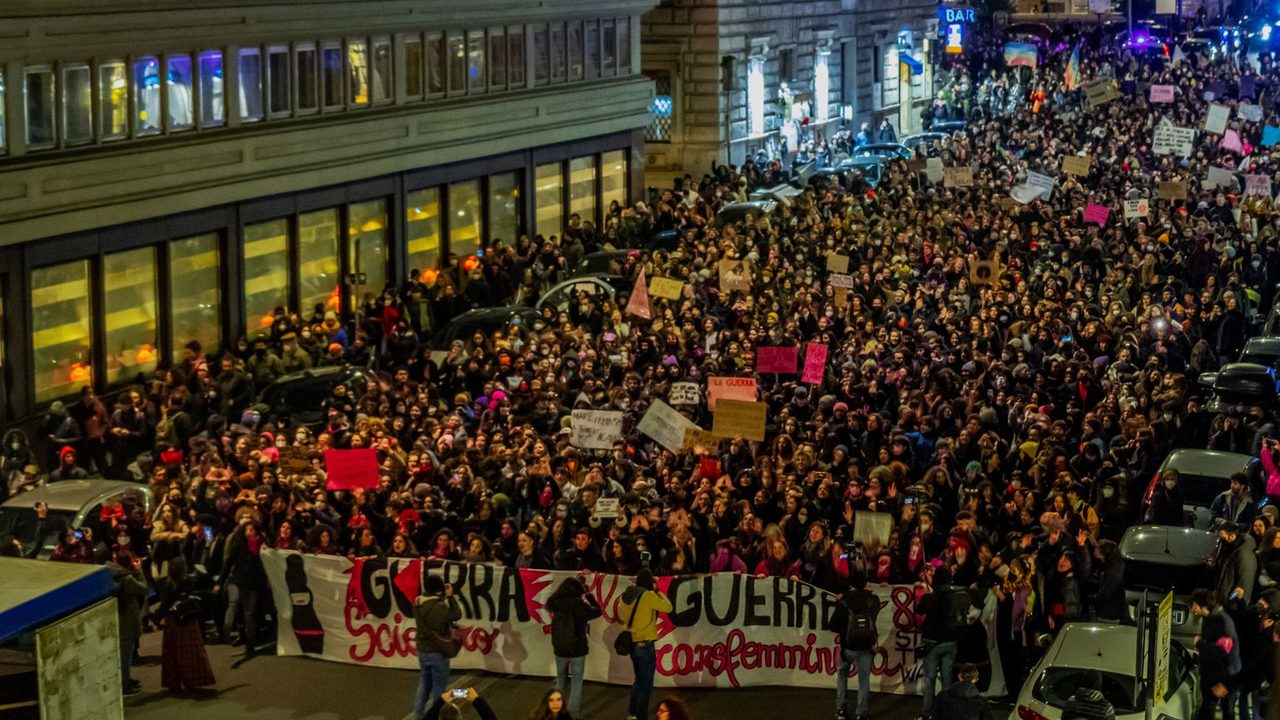
On Saturday, at around five in the afternoon, several hundred young people gathered outside the town hall in Limoges. Like hundreds of thousands of other disgruntled people in cities across France, they were protesting against the high cost of living and a state that does not work, and demanding higher wages and pensions. During the night, the historic town hall building, dating from 1883, burned down. Protesters also attacked police stations, looted shops and set cars on fire. “We know the people who drove the police away on Saturday and burned public buildings. They are the far left. On Saturday the state stopped working altogether,” said Limoges mayor Guillaume Guérin.
Where the discontent comes from
The current protests did not start over austerity. Since mid-September, French high-school students have been blockading their lycées: there are not enough teachers, classes are overcrowded, timetables are heavy and the buildings are not being repaired. According to media reports, more than 400 schools remained closed after one of the actions. At the same time, public-sector strikes have been under way against planned budget cuts. Part of the left, including the party La France Insoumise of presidential candidate Jean-Luc Mélenchon, has openly backed the students.
Young French people are protesting against a state that does not work, yet which, given the dire state of its finances, will have to cut spending sharply. According to analysts at Citi, the public deficit is just under 5.5 percent of GDP and is largely structural, meaning it persists even when the economy grows. The primary deficit (excluding interest payments) will be about 2.8 percent of GDP this year. The problem resembles the Czech one, but the Czech Republic owes far less.
European Central Bank President Christine Lagarde, herself a native of France, said the solution to the problems of the EU's second-largest economy lies within the country itself. “There are specific circumstances that make some countries suffer more, and France is exactly such a case. The main solution lies at home, in France, and is linked to fiscal policy,” she said at a conference in Bangkok, commenting on bond sell-offs around the world.
What frightens investors
France's debt is approaching 120 percent of GDP. It keeps growing as long as the average interest rate on the debt exceeds economic growth, and the larger it is, the faster it grows. Analysts expect the average rate to rise as cheap issues from before 2022 gradually drop out of the debt stock. In the baseline scenario, with a ten-year yield of 4.2 percent, debt-servicing costs will rise to 3.7 percent of GDP by the end of the decade and eventually approach 4.8 percent. A substantial share of tax revenue would go on these payments. The economy will not grow quickly in the coming years, so harsh savings will be needed, and discontent is likely to intensify.
The yield gap over German bonds widened by roughly another ten basis points to 1.48 percentage points, the highest since 2012. In March this premium was just 0.58 points. On Tuesday the market calmed slightly, with the yield holding around 4.92 percent.
Elections and the search for a rescue
The main test will be the presidential election on 18 April and 2 May next year. The new president will take office on 14 May and, owing to the parliamentary deadlock, is expected to dissolve the National Assembly immediately; parliamentary elections will take place no later than 20 June. The make-up of the lower house matters more than the choice of president, since the government in France is formed in parliament.
For the first time in history, a far-right politician, Marine Le Pen, could win, with chances close to 50 percent, and austerity is not among her priorities. Far-left candidate Jean-Luc Mélenchon has already suggested that France might stop paying its debts. His chances are the same as at the start of the year, and his endorsement of violence has, if anything, hurt him. All this is reflected in the euro: Société Générale strategist Kit Juckes noted that speculators hold their largest net short position on the euro since January 2016. A decision by Moody's is also approaching; its rating of France is two notches higher than those of S&P and Fitch, and a downgrade now could fuel panic.
If tensions grow, there is no rescue to be expected from anywhere. The International Monetary Fund could in theory lend the country about 50 billion euros a year, at most 150 billion, but that is not enough: gross debt issuance in 2027 will amount to 340 billion. “Our main conclusion: it is unlikely that the IMF would provide France with credible liquidity support. The fund's contribution would be marginal at best,” said Citi economist Arnaud Marès. The European Stability Mechanism and EU funds are backed by guarantees from member states and are also too small. That leaves the European Central Bank, but without a credible French commitment to cut the deficit its intervention is doomed, and other countries would call it monetary financing of a state.
The Limoges town hall is lost, but French finances can still be repaired. That, however, requires a political mandate that nobody has today and that is unlikely to appear for another eight months at the earliest. Until then, markets will stay nervous, and French protesters have already shown that patience is not their strong suit.
Around Prague, based on reporting by seznamzpravy.cz