Russians Are Turning Back to Cash — and It's Hurting Their Economy
USD 21,73
Popular
After several years of a steady shift toward cashless payments, Russians are once again stockpiling cash en masse. According to the BBC, which analyzed Central Bank of Russia data, the reasons include frequent mobile internet shutdowns that make it impossible to pay by card, as well as a growing tendency among businesses to dodge taxes amid mounting economic troubles linked to the war against Ukraine.
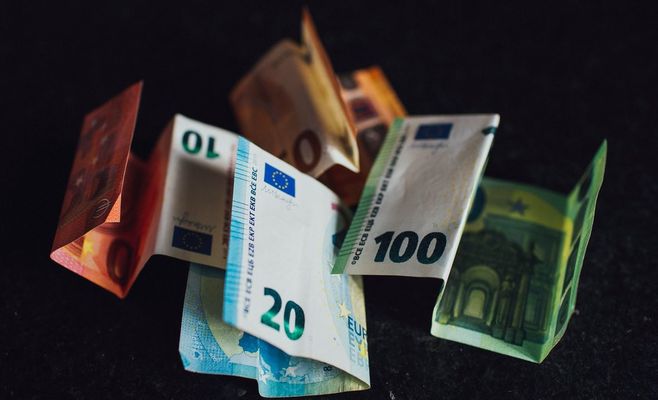
Since the start of the year, the amount of cash in circulation has risen by 1.56 trillion rubles (roughly 423 billion Czech crowns) — the largest increase for this period since the start of the COVID-19 pandemic.
Waves of Ukrainian drone attacks regularly force Russian authorities to shut down mobile internet across large parts of the country, ostensibly to counter the drones. As a result, millions of people are left unable to pay by card. "Having cash on hand gives you a sense of control and security. If there's an emergency in the city, I know I can buy the essentials even if the network goes down," a Moscow resident, who asked to remain anonymous, told the BBC.
This is far from the first surge in cash demand since the war began. Similar spikes were recorded after Vladimir Putin's announcement of partial mobilization in September 2022, and again during the Wagner Group mutiny in June 2023, when people also rushed to build up a financial cushion in the face of uncertainty.
But the trend is making it significantly harder for the state to collect taxes — precisely at a time when Russia badly needs money to finance the war amid a growing budget deficit. While rising oil prices following the recent US-Israel conflict with Iran have propped up the oil and gas sector, which accounts for roughly a quarter of budget revenues, growth across the broader Russian economy is slowing. In May, Russia's Ministry of Economic Development cut its GDP growth forecast for the year to just 0.4% — which would be the weakest result since 2022.
To shore up the budget, authorities raised VAT from 20% to 22% in January and lowered the threshold at which small and medium-sized businesses are required to pay it. Many companies, already struggling, now find themselves on the brink of bankruptcy.
Amid higher taxes and a slowing economy, pharmacies, restaurants, beauty salons and small shops are increasingly encouraging customers to pay in cash — so they can under-report part of their revenue. "The stalls at our market are closing one after another — running them just doesn't pay off anymore. Most of those still hanging on ask customers to pay cash, so less money passes through the till," said the owner of a clothing stall at a market in Pskov.
Sberbank's chief financial officer, Taras Skvortsov, warned last month that a growing number of companies are paying part of employees' wages unofficially — "in envelopes" — to avoid tax contributions. He called this a very worrying trend, one that points to a growing shadow economy. Skvortsov also noted that the rising volume of cash is not flowing back into the banking system but is instead being held by individuals and businesses.
A May survey by Opora Rossii, Russia's largest association of small and medium-sized businesses, found that about six percent of entrepreneurs are resorting to various "grey" schemes because of the higher tax burden — for example, not issuing receipts for cash payments. This allows them to understate their real turnover to stay below the VAT threshold, while "envelope" wages help them dodge payroll taxes.
The Soviet-era habit of stashing money "under the mattress" is making a comeback, despite high interest rates on bank deposits — the Central Bank is keeping rates elevated in an effort to curb inflation fueled by military spending. A one-year deposit of 100,000 rubles at Sberbank, for instance, currently yields 10% annually. Even so, according to the Central Bank, Russians withdrew 550 billion rubles from their accounts in May, including 200 billion from term deposits.
Source: seznamzpravy.cz