School injury compensation in Czech schools nearly doubles
USD 21,69
Popular
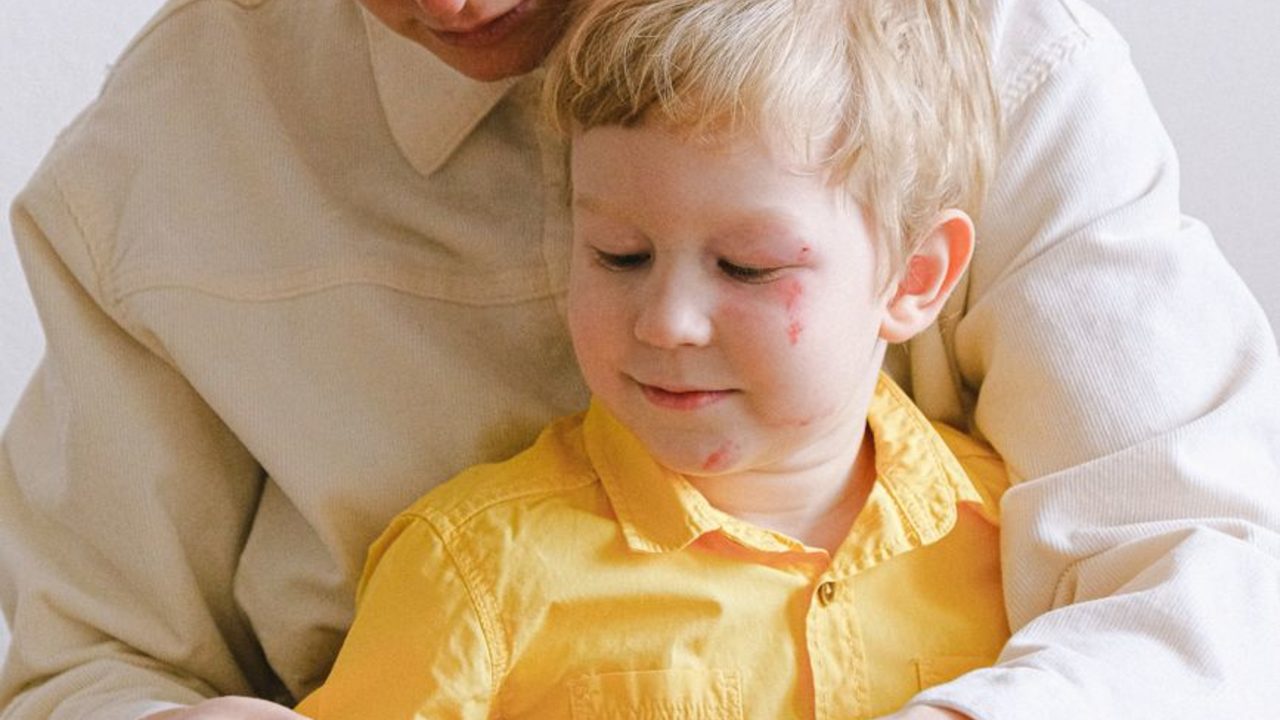
Czech schools and insurance companies are seeing a sharp rise in claims for pupils' injuries — from wasp stings to sunburn. While the overall number of childhood injuries has not grown, according to official statistics, the average payout per school incident has nearly doubled in recent years, and it is increasingly parents, rather than school staff, who file the claims.
Average payouts have almost doubled
According to the insurer Generali, so-called “pain and suffering” compensation for school injuries has almost doubled over the past five years. A similar trend is confirmed by figures from Kooperativa: the overall number of registered school injuries has tended to fall, while the average payout per case has risen sharply.
Kooperativa's figures show that in 2015 the insurer processed 19,702 injury claims with an average payout of around 5,750 crowns, while by 2018 this had fallen to 17,351 cases with an average payout of 7,000 crowns. The pandemic then changed the picture: many schools raised their own share of liability for damages, which reduced the number of claims filed while pushing up their average value. In 2023 the insurer recorded 11,924 cases with an average payout of 10,770 crowns, and in 2024 — 11,325 cases with an average payout of 12,200 crowns.
Petr Milata, a spokesperson for the ČSOB group, notes that it is difficult to pinpoint exactly what share of overall liability insurance payouts stems from school injuries specifically: people have become far more aware that compensation is available, he says, and are increasingly willing to pursue it.
Even a wasp sting now counts as an injury
According to Kooperativa spokesperson Milan Kaňa, insurers are increasingly receiving claims for harm that, until recently, hardly anyone would have called an injury. “We're talking, for example, about insect bites, allergic reactions or sunburn,” he says.
According to the Czech School Inspectorate, around 44% of all injury reports are drawn up at least partly at a parent's request — usually specifically so that a claim can be filed under accident insurance. The highest number of injuries, and the highest injury rate, are recorded in primary schools.
Kaňa attributes the rise in claims to people becoming better informed about their legal rights. Artificial intelligence, he says, also plays a notable role, helping parents word and justify their claims more precisely, which affects both the number and variety of cases reported. A further incentive is the rising “value” of each injury point: it is now more worthwhile for injured pupils to see a doctor even for seemingly minor injuries such as bruises.
Stanislava Moravcová, Generali's product manager for liability insurance, gives some real-life examples: a pupil tripped while putting away a chair and bruised her chest; a schoolboy sprained a finger during a PE lesson; a girl bruised her finger on a desk lid; and a child fell while skating and cut their lip — a wound no more than a centimetre long. According to Moravcová, even such minor injuries can qualify for compensation of several thousand crowns, provided the right documentation is submitted, with the amount depending on the points assigned to the specific injury.
Miroslav Buchar, headmaster of the Břečťanová primary school in Prague 10, confirms the trend: the number of injuries at the school has risen only marginally, but the number of compensation claims from parents has increased noticeably — parents now seek compensation even for the most minor bruises.
How compensation is calculated
School injuries are covered by the school's liability insurance, in the same way as workplace injuries. The payout is determined using a points system: the more serious the injury and its consequences, the more points are awarded to the injured pupil.
The value of one point is tied to the average national wage and this year stands at 481.71 crowns — compared with just 250 crowns in 2022. For example, a broken arm, rated at 40 points, entitles the pupil to compensation of 19,268 crowns under Generali's model example. For more serious injuries, long-term or permanent consequences are taken into account alongside “pain and suffering,” so the final payout can be considerably higher.
At primary schools, according to Generali, the standard liability cover limit is around five million crowns. However, the insurer notes, this amount is increasingly proving insufficient — so new policies are more often being taken out for 10–15 million crowns.
The size of the insurance premium depends not only on the coverage limit, but also on the number of pupils, the school's own share of liability for damages, and its claims history. Raising the liability limit from five to ten million crowns increases the premium by an average of only 30%, not double. School insurance must also cover school trips — for example, for a ski course in Austria, the policy's territorial coverage needs to be correctly specified in advance.
According to Kaňa, the rising sums of insurance cover are not so much linked to school injuries themselves — there is no separate sub-limit for them — as to a general rise in the number of insurance claims overall. At the same time, schools are increasingly raising their own share of liability for damages, which allows them to lower their insurance premium rate.
According to the health insurer VZP, children and teenagers under 18 most often suffer wrist and hand injuries (71,262 cases) and ankle and foot injuries (63,277 cases). Head injuries, meanwhile, prove the most costly to treat: despite a lower number of cases (60,247), treating them cost almost 186 million crowns.
Where children get injured most often
Children are most often injured during PE lessons — according to Kaňa, these are typically bruises, haematomas or fractures, with knees frequently affected. “In such cases, an underlying congenital or degenerative predisposition is often identified, meaning the incident may end up not being recognised as a school injury at all, or the payout is reduced,” he explains.
According to Petr Milata's calculations, PE lessons account for around 44% of all injuries in primary schools, and for more than half in secondary schools. The second most common site of injury is school corridors, where children are most often hurt due to inattention, pushing or running around. Most incidents are recorded at the start of the school year, when children return to the group after the holidays and after-school sports clubs resume.
According to Moravcová, road traffic accidents and swimming-related injuries are also common during school trips and outings. VZP data shows that, overall, boys are injured more often than girls: in 2025 the insurer had around 130,000 boys among its injured clients, compared with just under 102,000 girls. The highest number of injuries was recorded among thirteen-year-olds (16,753 cases), followed by fifteen- and fourteen-year-olds.
Read also: Ice rinks in Prague: where to skate, prices and opening dates
Source: seznamzpravy.cz