Czech firm Čepro bought CZK 19bn from Agrofert without tenders
USD 21,75
Popular
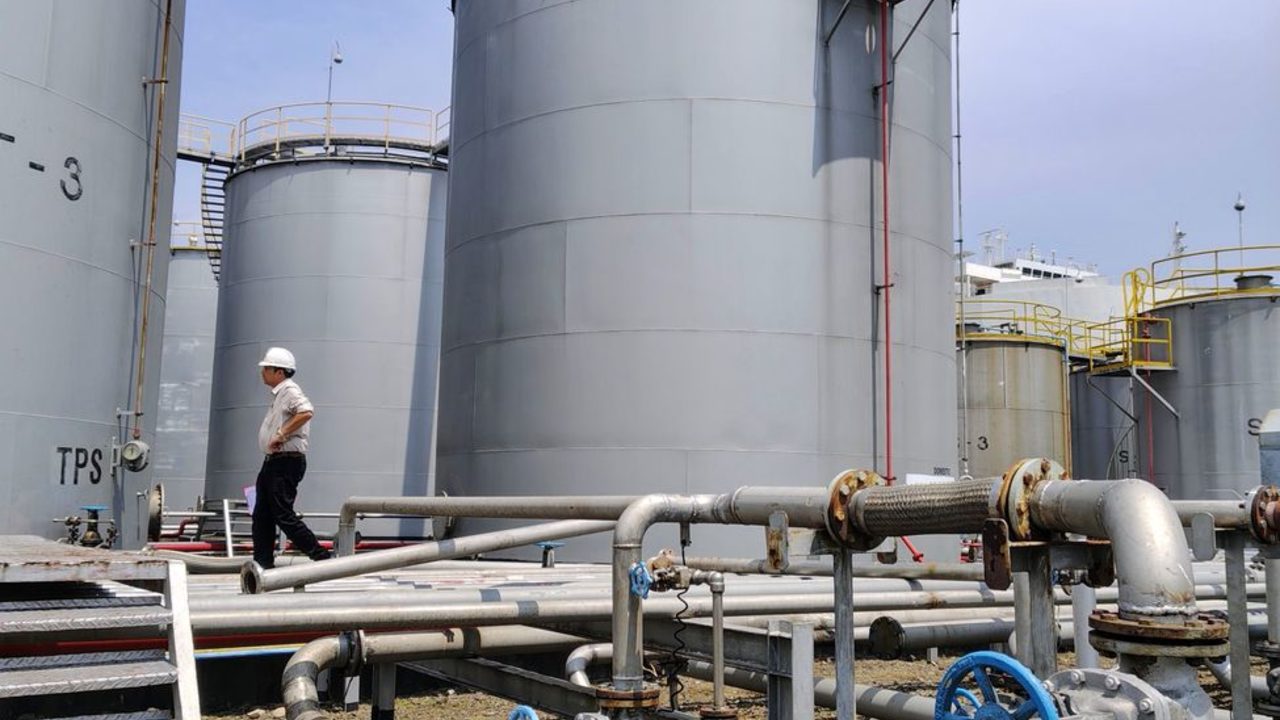
The state-owned company Čepro has been buying biocomponents for fuel from the Agrofert holding without tenders since 2017: by the end of last year the holding’s firms had received more than CZK 19 billion this way. According to a journalistic investigation, the money flowed without competition and without any possibility of public scrutiny, while Čepro insists that the public procurement law does not apply to it.
How Čepro sidestepped the ban
When the so-called “Babiš law”, which bars politicians’ firms from public contracts, came into force in 2017, Čepro switched regimes and began buying biocomponents from Agrofert without competition. The company got around the conflict-of-interest ban with the argument that the public procurement law does not apply to it. The practice continues to this day.
Of the CZK 19 billion mentioned, CZK 10.4 billion falls in the period when Andrej Babiš was prime minister for the first time and, according to final court rulings, was in a conflict of interest.
Because of this “switch”, Čepro’s contracts with Agrofert cannot be found in the public procurement bulletin or in the contract register. Purchases the company organises under its own rules are not checked by the antitrust office either. The holding’s firms Primagra, Preol, Ethanol Energy and GreenChem are the country’s largest producers of the biocomponents that Čepro blends into fuel. How much money they have received without competition since the current Babiš government took power and Alena Schillerová (ANO) again took charge of the finance ministry, Čepro declined to say.
“Čepro is not obliged to provide the up-to-date information you are requesting, and may do so voluntarily and retrospectively after the end of the accounting period,” said company spokesman Marek Roll. Čepro has long claimed that the freedom of information law does not apply to it either: in its words, it is not a public institution but an ordinary commercial company.
The dispute over the information law
The Office for Personal Data Protection did not accept this construction. When, acting on a complaint from the Pirates’ analysts, it examined whether Čepro must disclose information about its deals with Agrofert, it concluded that it must: a company whose sole shareholder is the Czech Republic, represented by the finance ministry, is an obliged entity under the information law.
No formal order followed, however: before the decision took effect, Čepro itself voluntarily published the data on its website. Roll maintains that the proceedings were stopped on procedural grounds and that the question of the company’s status was not assessed. He adds that even if the information law applied, Čepro would not become a public contracting authority and would not have to hold tenders. According to the company, only the antitrust office (ÚOHS) can change that.
The opinion Čepro relies on
Čepro builds its position on a 2021 opinion of the antitrust office, which rejected a complaint from the anti-corruption organisation Oživení. The document’s author is the office’s former deputy chair Eva Kubišová. Her departure had been announced by the office’s head, Petr Mlsna, a month and a half before the opinion was signed. Police suspected Kubišová of manipulating some of the office’s decisions together with then ANO politician Jiří Švachula. She had to leave the office. Mlsna had taken over the office six months earlier through a selection process that anti-corruption experts call opaque: Babiš agreed his candidacy with then president Miloš Zeman, who had called Mlsna his favourite even before the selection.
In November 2020, Kubišová also rejected another complaint – that, because of Babiš’s proven conflict of interest, Agrofert’s firms should not have been receiving multibillion-crown contracts, including from the state forests (Lesy ČR). She did not even open proceedings, giving no reasons.
On Čepro, she concluded that the state company does not have the features of a public contracting authority because it is not an irreplaceable company of public interest for the state. In her reasoning she relied on positions from the finance ministry, which was then, as now, headed by Alena Schillerová, and from the ministry of industry and trade under Karel Havlíček (both ANO). The finance ministry claimed that in the event of bankruptcy the state would supposedly not rescue Čepro. The industry ministry wrote that Čepro provides it with essentially commercial services, since the storage of state reserves could also be done by private firms. When the state once commissioned diesel storage from the private firm Viktoriagruppe, it ended with the fuel disappearing and a scandal that courts are still dealing with.
Yet the European Court of Justice ruled as early as 1998 that fulfilling strategic tasks the state wishes to secure is a weighty argument for public contracting authority status. Both ministries thus went against long-term strategic documents: even in its latest published document from 2024, the finance ministry describes Čepro as a strategic enterprise, and the state energy concept currently in force lists it among key companies.
What the authorities say and who will decide Mlsna’s fate
The previous government of Petr Fiala (ODS) did not review the practice. According to correspondence available to the journalists, the regional development ministry under Ivan Bartoš (Pirates), responsible for public procurement, wanted to open the issue, but the finance ministry under Zbyněk Stanjura (ODS) rejected the proposal.
Industry ministry spokesman Tadeáš Provazník replied that Čepro falls under the finance ministry, not his. Finance ministry spokesman Filip Běhal said: “Čepro is not a public contracting authority within the meaning of the public procurement law and therefore has no obligation to choose suppliers through tenders. The ÚOHS has also commented on this issue in the past.” Antitrust office spokesman Martin Švanda said the office cannot be expected to continuously reassess the status of all entities; such an assessment takes place when a specific purchase outside the procurement law regime is challenged in a particular case.
The future of the office’s head will again be decided by Prime Minister Andrej Babiš: Mlsna’s six-year term ends in early December. Anti-corruption organisations have already called on the government to announce an open selection process. Babiš did not answer the question of whether he plans to do so or wants Mlsna to continue for another term. By law, the government must agree on the name with the president, who appoints the head of the office. Castle spokesman Vojtěch Šeliga said the content of the consultations will not be publicly commented on.
Source: seznamzpravy.cz