Czech election analysis: ODS loses ground, ANO needs more than Babiš
USD 21,75
Popular
The Mayors and Independents (STAN) won the municipal and Senate elections, a political scientist believes. In his assessment, ODS has become a “punching bag”, while ANO can no longer build its success on the “Babiš effect” alone. The expert explains what lies behind this and how the results will affect Prague.
STAN takes over the role of main opposition
In both cases the victory goes to STAN, the political scientist says: this is a general trend in local politics and it matches the national polls. The governing ANO movement does not do well in the Senate, whereas STAN is increasingly acceptable to a significant part of Czechs. The sceptre of the main opposition party, he says, is simply passing to STAN.
The reason is not so much the quality of the programme or personnel as the fact that ODS does not know what to do with its identity. One wing is in favour of the euro, the other against it. Brno’s ODS leader Kamila Zlatušková cheerfully referred to the legacy of New York’s Marxist mayor, while the party’s leader in Prague, Tomáš Portlík, calls for a return to the good old days. ODS is “rootless”, whereas STAN is more coherent in worldview, programme and ideas. In addition, ODS is paying for its years in power, while STAN stands closer to the centre and can speak to voters who would never have chosen a right-wing party as such.
The Senate and the second round
ANO has 13 candidates out of 24 in the Senate runoff, often from second place. Babiš himself fears the “everyone against ANO” method, which once worked against ODS as well, the political scientist recalled. The outcome is hard to predict: like the national polls, it will be determined by local circumstances.
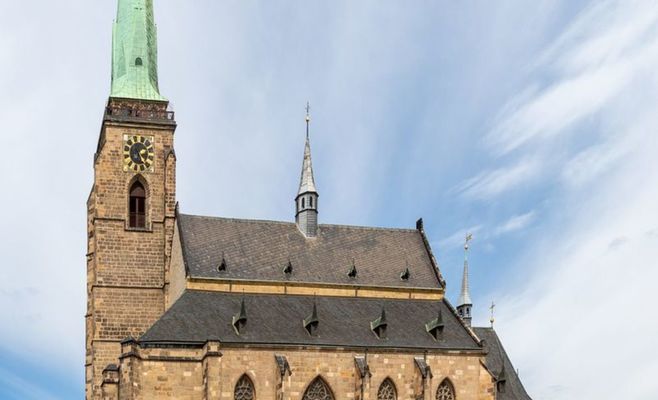
He calls the contest in the Plzeň district an interesting one, where incumbent ODS senator Lumír Aschenbrenner unexpectedly failed to defend his seat. Aschenbrenner has said he will not support Karel Řehka, even though Řehka is running for the allied STAN movement; in the second round he faces ANO candidate Lucie Kantorová. So the opposition may well not vote as a united front, and it will differ from district to district.
The political scientist links Aschenbrenner’s words to criticism within ODS: some members and supporters have long felt that the party blends in too much with the rest of the opposition and should show its own brand more clearly. In Prague, ODS did not hesitate to cede the mayor’s post to STAN, but it remains in the administration. The only way forward, in the expert’s view, is to build its own brand and offer a different face and a different programme. ODS chairman Martin Kupka received a mandate from the party congress to define the party clearly and give it a new profile; it was once known for its economic competence. Today it is no longer clear where STAN ends and ODS begins — and the same applies to TOP 09 and the Christian Democrats.
Prague, the regions and the “Babiš effect”
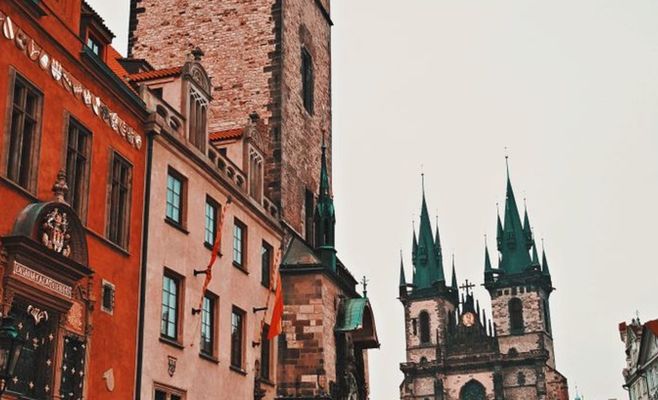
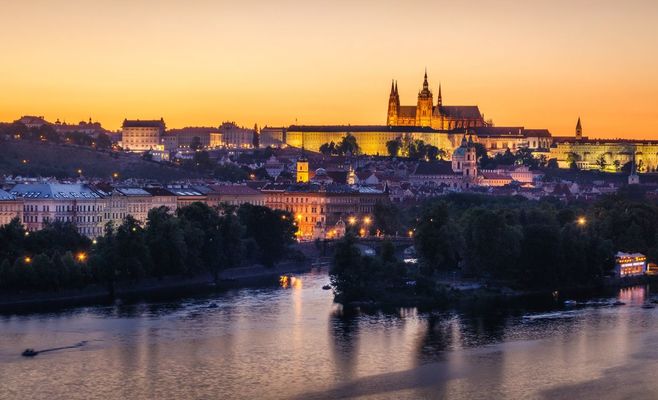
In Prague, ODS and STAN have an equal number of seats — seventeen each — but STAN won. The political scientist calls it a miracle that things turned out this way: at first it seemed it would be worse. According to Miloš Zeman, it is good that the Pirates also weakened in the capital, and the new coalition, as Portlík said, may “shake up” Prague. For ODS the capital has always been a showcase: it has lost the post of Prague mayor, will lose it in Brno, it is unclear how things will go in Ostrava, and in Plzeň it will certainly not have the mayor. That means that in the four largest cities, where ODS usually did well, the party lost everywhere.
As for relations with the government: Prime Minister and ANO chairman Andrej Babiš listed at Saturday’s press conference what the state funds in Prague. Tactically it would be advantageous to invite ANO people into the coalition too, to get a direct line to the government, but voters would not understand it. Correct relations and pragmatic work with the cabinet may be enough, something that was missing under the previous leadership with its strong Pirate influence. At stake is funding for the inner ring road, Letná plain and hospital capacity. Whether the future mayor Hlaváček will build constructive relations with the government, the political scientist is not yet ready to say.
He also points out that Praguers seem to have completely forgotten the Dozimetr affair. Four years ago STAN barely cleared the five-percent threshold (7.7% of the vote), entered the city leadership, and now it is winning the elections. This speaks both to a short memory and to a shift in Czech politics: Praguers vote more on national than on Prague motives.
In other cities different factors decide. ANO succeeded in Plzeň but failed in Ústí nad Labem. Babiš explains this by the work of the ANO-led city administration, and he is right about that, the political scientist believes; it is just unclear why the party did nothing about it earlier: events in Chomutov, where police led their mayor away from his office, were a warning for the Ústí region. Especially in northern Bohemia, voters look at who exactly represents ANO; if it is people with a dubious past or those nobody in the municipality knows, they ask why they should vote for them. For ANO this is a warning and a call for much better personnel policy — the centre should not rely on the “Babiš effect” alone.
One cannot depend on one person forever, the political scientist added: ODS once counted on a “Klaus effect” in the same way, and it did not last forever. This is even more visible for SPD, whose voter base is visibly shrinking. Without a strong membership base or at least capable people in the regions, a solid position at the local level cannot be built.
Read also: Брно: что посмотреть и куда сходить
Source: denik.cz