Braided Hair From a 2,800-Year-Old Siberian Tomb Shows Cannabis Use
USD 21,65
Popular
Chemical traces in preserved human hair from a 2,800-year-old royal tomb in Siberia are the earliest securely dated direct evidence of people using cannabis for its intoxicating effects, according to a study published Thursday, Nov. 5, in the journal Science. The researchers suggest the plant may have been part of a funeral ritual that involved sacrifice, though that remains an interpretation, not a proven fact.
The tomb, known as Tunnug 1, also held more than 1,000 whole cannabis seeds. Together, the seeds and the hair chemistry indicate that the people buried there were exposed to psychoactive cannabis, likely on purpose, ScienceAlert reported.
What was found inside the Tunnug mound
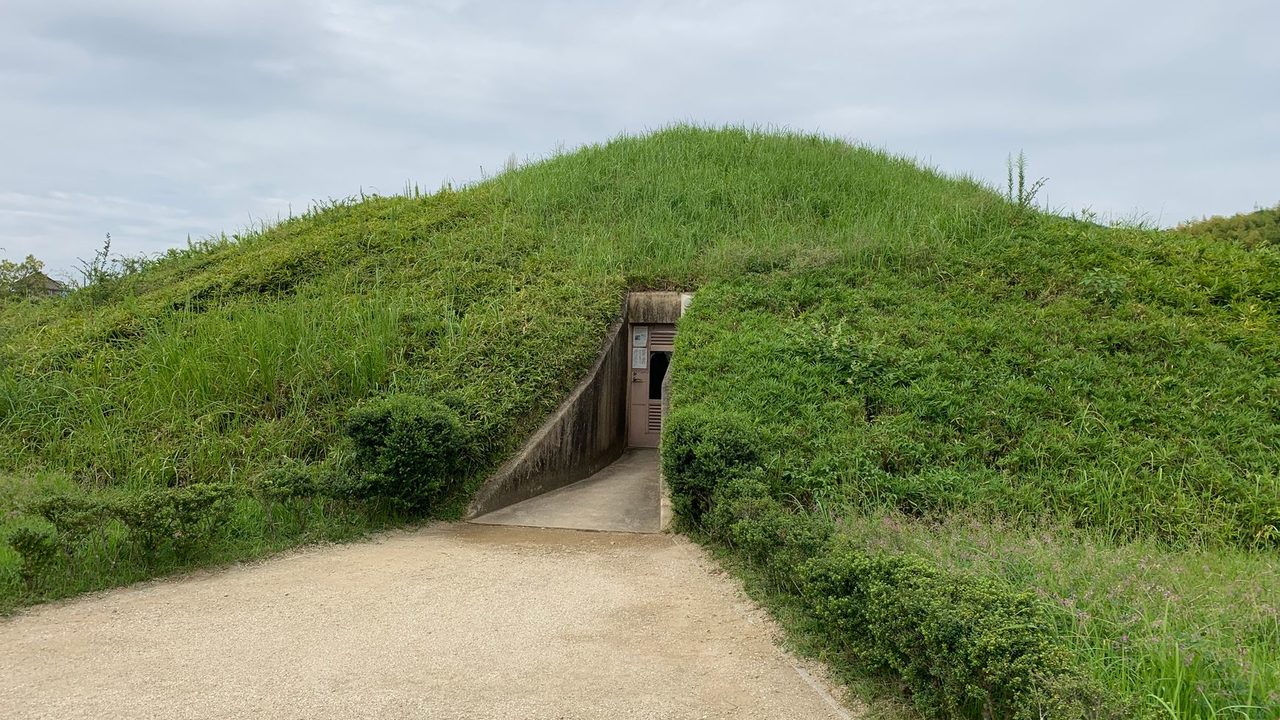
Tunnug 1 lies in the Uyuk Valley of southern Siberia, a region sometimes called the Valley of the Kings because of its many Scythian burial mounds. ScienceAlert described it as one of the oldest known royal tombs linked to the Scythians, horse-riding peoples whose cultures later spread across much of the Eurasian steppes. The mound measures roughly 140 meters (460 feet) across.
Inside were wooden burial structures holding log coffins, along with bronze ornaments, beads, weapons and horse-riding equipment. Horse skeletons lay on top of the structures. According to Live Science, they formed a "spectral cavalcade," a Scythian funeral tradition involving the sacrifice of horses and humans. The new study focused on six people buried in four wooden structures.
Live Science reported that researchers also found around 500 partial seeds in addition to the whole ones, and that carbon dating placed the seeds between 800 and 760 B.C. Live Science identified them as Cannabis ruderalis, a wild type. ScienceAlert noted that they resemble wild cannabis, not modern domesticated varieties.
How hair revealed what seeds could not
Seeds alone cannot show whether a plant was used for its psychoactive effects, since cannabis varies in how much intoxicating chemistry it produces. So the team turned to hair, which resists decay and can trap traces of substances that circulated in the body. ScienceAlert said the hair from the tomb was so well preserved that it was still bound in braids.
Using mass spectrometry, the researchers found signals matching cannabinol in every hair sample tested. Cannabinol forms as THC, the main intoxicating ingredient in cannabis, breaks down over time. They also found much weaker signals consistent with THC itself.
What the evidence cannot tell us
The findings leave several questions open. According to ScienceAlert, it is unknown whether the cannabis was eaten, smoked, inhaled through passive exposure or taken in a drink. Live Science reported that the tests could not determine how much of the drug people consumed.
The sacrifice theory is the researchers' proposal for why cannabis was there. Study first author Gino Caspari said the burials were accompanied by extensive horse sacrifices and, most likely, human sacrifices. The study authors wrote that this context could have made cannabis a useful way to calm people chosen for the rituals.
Reports differ on Caspari's affiliation. ScienceAlert placed him at the University of Bern in Switzerland, while Live Science listed the Max Planck Institute of Geoanthropology in Jena, Germany.
What this means for the history of cannabis
Cannabis likely originated in Asia, and the study says it was cultivated thousands of years ago for ropes and textiles, and about 6,000 years ago as an oilseed crop. When people first recognized its psychoactive properties has been unclear. In the fifth century B.C., the Greek historian Herodotus wrote that Scythian nomads inhaled the fumes of burning hemp seeds. Earlier evidence of cannabis use came from a cemetery in China dated to about 500 B.C., and Live Science reported that the new study pushes the date back by three centuries.
The authors write that early cannabis use shows how ancient societies experimented with the psychoactive qualities of plants and built them into ritual. The result is a single study of one tomb, so it does not by itself show how widespread such practices were.
What researchers plan next
Caspari said the team has begun sequencing some of the plant samples. ScienceAlert reported that the aim is to learn whether the plants were cultivated and how cannabis spread across the ancient world.
Read next
Underwater Volcano Powers Generator Past Break-Even for 8.7 Seconds
NASA's Swift Telescope Burns Up Over Sumatra After 22 Years in Orbit
Altar Stone Mystery Deepens as New Study Rules Out Scotland Origin
Around Prague, based on reporting by ScienceAlert, Live Science