Science & Space By

Astronomers Spot Vaporized Rock Around a Baby Star 1500 Light-Years Away
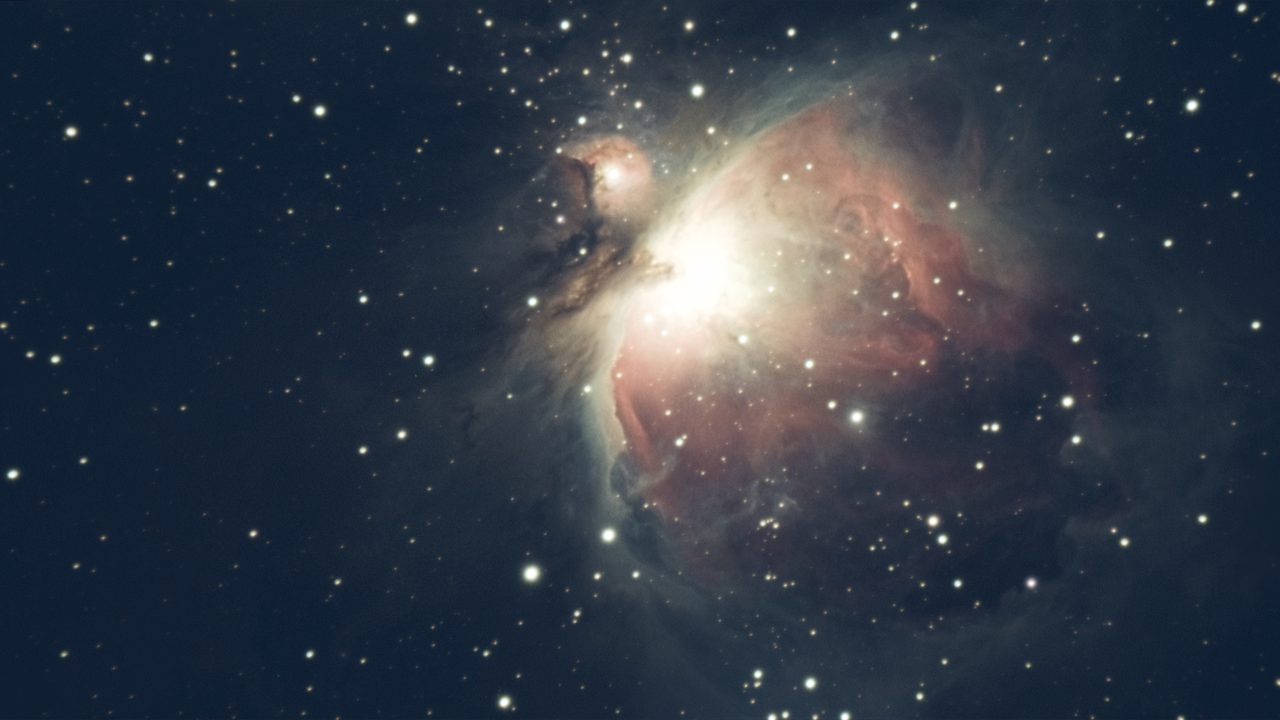
Astronomers have detected titanium oxide in gas form around a young, massive star for the first time, Universe Today reported. The find gives a rare look at the earliest stage of a solar system, before any planets or asteroids have formed.

The star is a protostar called Orion Source I, about 1500 light-years from Earth. The results were published in The Astrophysical Journal Letters in 2026.

What exactly did astronomers find?

They found titanium oxide that has turned from solid rock into gas. Orion Source I is luminous enough to evaporate rock around it, so researchers can watch the material change state and study it with spectroscopy, a method that reveals what a substance is made of.

The gas sits close to the star, at the base of the outflow of material streaming away from it. That region is hotter and more extreme than the outer disk, which is why rock can vaporize there.

Why is vaporized rock a big deal?

Models of solar system formation have long held that certain rocky materials that stay stable at high temperatures act as seeds. They make up the dust in the disk around a young star and later form the basis for rocky planets such as Earth and Mars. Calcium, aluminum and titanium are examples. Materials that vaporize easily, such as water, join young solar system objects only later.

What has been unclear is where those seeds form. Samples from our own solar system suggest they form at high temperatures, and they are the oldest solids known in it. The new detection gives more direct evidence of vaporized rock at the dawn of a new star system.

What do the researchers say?

Adam Ginsburg, an associate professor at the University of Florida and a co-author of the paper, said this object is in a unique situation because its star is bright enough to evaporate the rock. He said researchers can now do spectroscopy and work out what the rock is made of.

He added that the team can measure how much titanium oxide is present and start comparing it with how our own solar system formed. In our solar system, he noted, scientists can measure ratios between different rocks and elements because they can bring samples into a lab.

The star has not yet reached the main sequence stage of a star’s life cycle and is still gathering material from the molecular cloud around it.

Has this star surprised astronomers before?

Yes. In 2019, salty compounds were detected in the disk around Orion Source I. That salt was found mainly in the outer disk, while the titanium oxide sits closer in.

Why does it matter?

This is not a discovery that changes daily life, but it speaks to a basic question: how do rocky worlds like ours begin? Seeing the raw ingredients in a place where they are being vaporized lets astronomers compare a forming system with the evidence preserved in our own. Understanding where this material comes from is an important step for researchers piecing together how a new solar system comes together, and it offers a glimpse into the early history of our own star and its rocky neighbors.

Around Prague, based on reporting by Universe Today
Share: Telegram WhatsApp

More science news

Could Quantum Gravity Blur Cause and Effect? Physicists Show It Might Fuzz the Light Cone
Quantum fluctuations of gravity could blur the line between events that can influence each other and those that cannot, according to a mathematical study by physicists Giordano Cintia, Federico Piazza
Moon Rocks From China Show How Four Giant Impacts Carved Its Largest Crater
Rock samples from China's Chang'e-6 mission, combined with data from the earlier Chang'e-4 mission, have produced a timeline of the impacts that shaped the South Pole-Aitken (SPA) basin, one of the la
Space-Grown Greens, Hot Sauce and Turkey: Thanksgiving Aboard the ISS
Astronauts on the International Space Station will mark Thanksgiving with a mix of classic dishes and plants grown in orbit, Space.com reported. NASA astronaut Anil Menon plans to build his holiday me
A Scorpion the Size of a Dog Stalked Land and Water 415 Million Years Ago
A fossil scorpion that lived around 415 million years ago may be the largest ever to have existed. ScienceAlert reported that a new analysis of British fossils identifies the animal, named Praearcturu
Euclid Telescope Spots Record-Breaking Quasar From 630 Million Years After the Big Bang
The Euclid space telescope has found the most distant and ancient quasar ever seen, Space.com reported. It is a blazing beacon powered by a supermassive black hole with 360 million times the mass of t
Peregrine Falcons, the Planet's Fastest Animal, Could Gain U.K. Habitat by 2080
Popular Science reported that the same warming could shrink the suitable land for several other birds of prey. The research was led by Connor Panter, a researcher at the University of Nottingham’s Sch

Related news

Quantum fluctuations of gravity could blur the line between events that can influence each other and those that cannot, according to a mathematical study by physicists Giordano Cintia, Federico Piazza and Samuel Ramos of the Center for Theo
Rock samples from China's Chang'e-6 mission, combined with data from the earlier Chang'e-4 mission, have produced a timeline of the impacts that shaped the South Pole-Aitken (SPA) basin, one of the largest, oldest and deepest craters on the
Astronauts on the International Space Station will mark Thanksgiving with a mix of classic dishes and plants grown in orbit, Space.com reported. NASA astronaut Anil Menon plans to build his holiday meal around greens that he and his crewmat
A fossil scorpion that lived around 415 million years ago may be the largest ever to have existed. ScienceAlert reported that a new analysis of British fossils identifies the animal, named Praearcturus gigas, as a predator that stretched pa
The Euclid space telescope has found the most distant and ancient quasar ever seen, Space.com reported. It is a blazing beacon powered by a supermassive black hole with 360 million times the mass of the sun. The black hole is seen as it was
Popular Science reported that the same warming could shrink the suitable land for several other birds of prey. The research was led by Connor Panter, a researcher at the University of Nottingham’s School of Geography. It is a reminder that
The European Space Agency's Hera spacecraft has reached the asteroid that NASA hit on purpose four years ago, and its first images show a crater roughly the size of a sports stadium, ScienceAlert reported. The scar stretches across the enti
Engineers could use the Moon’s own terrain as a radiation shield for a future nuclear reactor, according to a new paper from researchers at Los Alamos, NASA Glenn, Oak Ridge, Idaho National Lab and Lockheed Martin, as reported by Universe T
A new benchmark built from physicists' own unpublished work suggests that leading AI models have become far more capable at theoretical physics than many researchers expected. According to Ars Technica, one top model, GPT-6 Astra, could sol
Voyager 1 has become the first human-made object to reach a distance of one light-day from Earth, but the milestone comes with a problem. NASA has confirmed that the 49-year-old probe is still sending a carrier signal to Earth through the D
New photos from the European Space Agency's Hera spacecraft show that NASA's 2022 DART impact left a stadium-sized crater on the asteroid Dimorphos, according to Reuters. The images give scientists their first close look at what the collisi
The Beaver Moon that peaked Tuesday morning is the first of four straight supermoons, but the label is looser than it sounds. According to Smithsonian Magazine, "supermoon" is not an official astronomical term, so whether a given full moon