Science & Space By

Could Quantum Gravity Blur Cause and Effect? Physicists Show It Might Fuzz the Light Cone
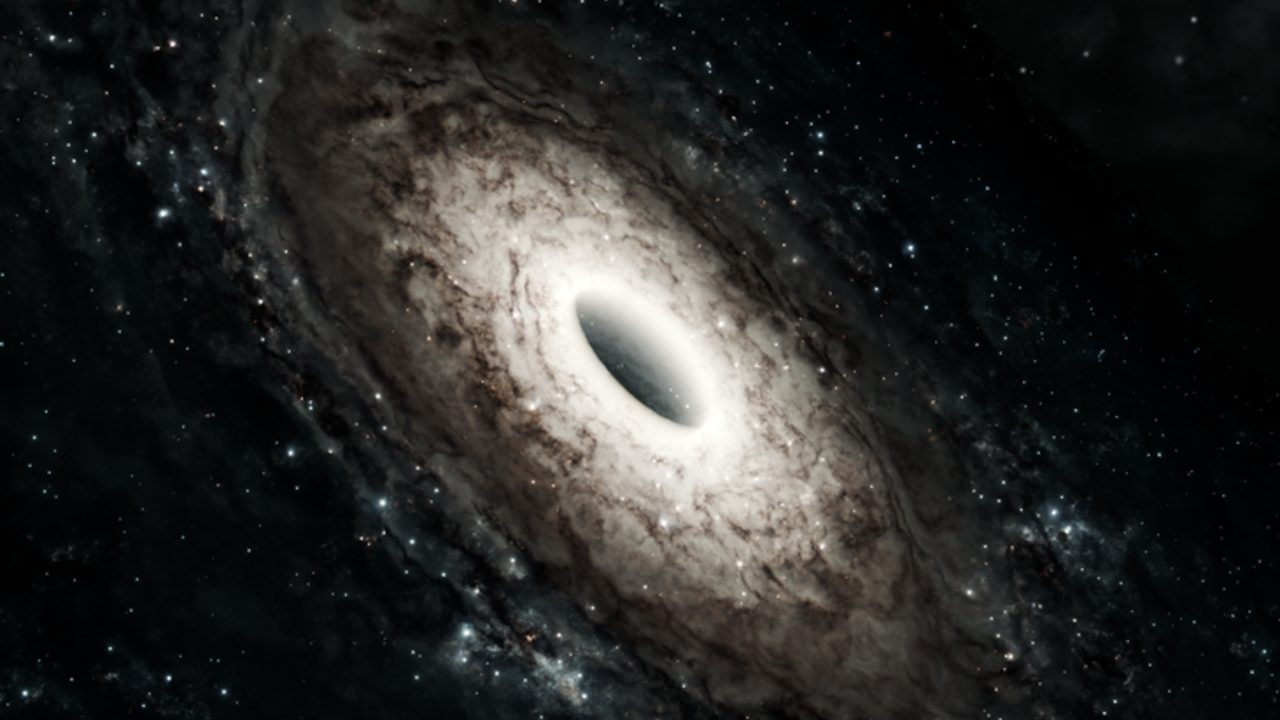
Quantum fluctuations of gravity could blur the line between events that can influence each other and those that cannot, according to a mathematical study by physicists Giordano Cintia, Federico Piazza and Samuel Ramos of the Center for Theoretical Physics in France, as reported by ScienceAlert. The result comes from calculations, not an experiment.

Why cause and effect is strict in classical physics

In classical physics, nothing can travel faster than light in a vacuum, including information. That limits which events can affect one another. If the Sun were suddenly snuffed out, we could not know for 8 minutes, the time its last light takes to reach Earth.

The same logic rules out some cause-and-effect claims entirely. ScienceAlert gives the example of a star that explodes 1,000 light-years away: a sneeze a second later cannot have been caused by the supernova, because its light will not reach Earth for another 1,000 years, minus one second.

Physicists draw these limits as a light cone, an imaginary boundary through spacetime around an event. Events inside the future light cone can be influenced by the original event, and those outside cannot. In Einstein's general relativity, mass and energy curve spacetime and distort the cones, but their edges stay precisely defined.

What the new calculation found

Quantum mechanics works differently. Particles and fields can exist in superpositions, described by probabilities. If gravity is quantum, as physicists suspect, the geometry of spacetime should follow the same rules.

To picture the setup, imagine two observers, one in Marseille and one in Paris, or one on the Moon and one on Mars. One sends a photon to the other. In classical physics, knowing the spacetime geometry, the departure time and the speed of light, the arrival time can be calculated precisely. If the geometry itself is uncertain, so is the arrival time.

The team used quantum field theory to calculate how fluctuations in that geometry would affect a light-speed signal. In their picture, a photon sent from one observer to another does not cross a single, fixed spacetime. The researchers told ScienceAlert the photon “travels on a quantum superposition of metrics,” meaning many possible geometries at once.

They modeled a signal passing through a thermal bath of gravitons, hypothetical particles that would be to gravity what photons are to light. The uncertainty did not average out. It built up in proportion to the square root of the time since the signal was sent, a pattern known as a random walk. The longer the signal travels, the fuzzier the edges of the light cone become.

The researchers say this does not mean information can travel faster than light or that effects can precede their causes. Instead, it adds an intrinsic uncertainty to the boundary between events that can influence each other and those that cannot.

Why it matters, and where it could show up

Under most circumstances, the effect would be vanishingly small, ScienceAlert reports. The exception is the event horizon of a black hole. In the 1970s, Stephen Hawking predicted that black holes emit thermal radiation because of quantum effects near the horizon, slowly losing mass until they could evaporate completely. That radiation should include gravitons, creating the kind of environment the team modeled.

For now, the finding is a theoretical result built on hypothetical particles. It is a reminder that uniting gravity with quantum mechanics could change basic ideas such as causality, even if the consequences are far from anything measurable in daily life.

Around Prague, based on reporting by ScienceAlert
Share: Telegram WhatsApp

More science news

Moon Rocks From China Show How Four Giant Impacts Carved Its Largest Crater
Rock samples from China's Chang'e-6 mission, combined with data from the earlier Chang'e-4 mission, have produced a timeline of the impacts that shaped the South Pole-Aitken (SPA) basin, one of the la
Space-Grown Greens, Hot Sauce and Turkey: Thanksgiving Aboard the ISS
Astronauts on the International Space Station will mark Thanksgiving with a mix of classic dishes and plants grown in orbit, Space.com reported. NASA astronaut Anil Menon plans to build his holiday me
A Scorpion the Size of a Dog Stalked Land and Water 415 Million Years Ago
A fossil scorpion that lived around 415 million years ago may be the largest ever to have existed. ScienceAlert reported that a new analysis of British fossils identifies the animal, named Praearcturu
Euclid Telescope Spots Record-Breaking Quasar From 630 Million Years After the Big Bang
The Euclid space telescope has found the most distant and ancient quasar ever seen, Space.com reported. It is a blazing beacon powered by a supermassive black hole with 360 million times the mass of t
Peregrine Falcons, the Planet's Fastest Animal, Could Gain U.K. Habitat by 2080
Popular Science reported that the same warming could shrink the suitable land for several other birds of prey. The research was led by Connor Panter, a researcher at the University of Nottingham’s Sch
NASA Slammed Into an Asteroid. Now Hera Shows a Stadium-Sized Crater
The European Space Agency's Hera spacecraft has reached the asteroid that NASA hit on purpose four years ago, and its first images show a crater roughly the size of a sports stadium, ScienceAlert repo

Related news

Rock samples from China's Chang'e-6 mission, combined with data from the earlier Chang'e-4 mission, have produced a timeline of the impacts that shaped the South Pole-Aitken (SPA) basin, one of the largest, oldest and deepest craters on the
Astronauts on the International Space Station will mark Thanksgiving with a mix of classic dishes and plants grown in orbit, Space.com reported. NASA astronaut Anil Menon plans to build his holiday meal around greens that he and his crewmat
A fossil scorpion that lived around 415 million years ago may be the largest ever to have existed. ScienceAlert reported that a new analysis of British fossils identifies the animal, named Praearcturus gigas, as a predator that stretched pa
The Euclid space telescope has found the most distant and ancient quasar ever seen, Space.com reported. It is a blazing beacon powered by a supermassive black hole with 360 million times the mass of the sun. The black hole is seen as it was
Popular Science reported that the same warming could shrink the suitable land for several other birds of prey. The research was led by Connor Panter, a researcher at the University of Nottingham’s School of Geography. It is a reminder that
The European Space Agency's Hera spacecraft has reached the asteroid that NASA hit on purpose four years ago, and its first images show a crater roughly the size of a sports stadium, ScienceAlert reported. The scar stretches across the enti
Engineers could use the Moon’s own terrain as a radiation shield for a future nuclear reactor, according to a new paper from researchers at Los Alamos, NASA Glenn, Oak Ridge, Idaho National Lab and Lockheed Martin, as reported by Universe T
A new benchmark built from physicists' own unpublished work suggests that leading AI models have become far more capable at theoretical physics than many researchers expected. According to Ars Technica, one top model, GPT-6 Astra, could sol
Voyager 1 has become the first human-made object to reach a distance of one light-day from Earth, but the milestone comes with a problem. NASA has confirmed that the 49-year-old probe is still sending a carrier signal to Earth through the D
New photos from the European Space Agency's Hera spacecraft show that NASA's 2022 DART impact left a stadium-sized crater on the asteroid Dimorphos, according to Reuters. The images give scientists their first close look at what the collisi
The Beaver Moon that peaked Tuesday morning is the first of four straight supermoons, but the label is looser than it sounds. According to Smithsonian Magazine, "supermoon" is not an official astronomical term, so whether a given full moon
November's full moon, known as the Beaver Moon, rose on Nov. 24 as a supermoon, appearing larger and brighter than the smallest full moon of the year. Photographers from Asia to North America and across the Middle East captured it above sky