NASA's Europa Clipper Swings Past Earth Dec. 3 on Its Way to Jupiter's Icy Moon
USD 22,28
Popular
NASA's Europa Clipper is about to make a final pass by Earth. On Dec. 3, the spacecraft will use a gravity assist to pick up speed without spending fuel, then continue toward Jupiter, Universe Today reported.
The flyby is also a dress rehearsal. All 11 of the spacecraft's science instruments will be switched on while it is close to home, so teams can check their readings against what is already known about Earth.
What exactly will happen on Dec. 3?
According to Universe Today, Clipper will come within 3,140 to 3,450 kilometers of Earth, passing above West Africa at 3:14 p.m. EST. In Africa and southern Europe, the spacecraft should be visible in backyard telescopes.
Robert Pappalardo, the mission's project scientist at NASA's Jet Propulsion Laboratory, described the maneuver as dropping into Earth's gravity well, following its curve and shooting back out. The planet's pull leaves the spacecraft on a slightly different path and moving faster than before.
How does a gravity assist make a spacecraft faster?
Universe Today explained that a spacecraft heading for the outer solar system passes behind a planet's orbital path. The planet's gravity then pulls it forward and speeds it up relative to the Sun, while also bending its trajectory. Missions that travel beyond Mars commonly rely on this technique.
The same idea works in reverse. A spacecraft that needs to slow down for the inner solar system passes in front of a planet's path instead. The BepiColombo mission used several such braking passes to slow enough to orbit Mercury, and Clipper made one of its own at Mars in March 2025, which set up this Earth flyby.
Why does Clipper need the help?
About half of the spacecraft's launch mass is propellant, but Universe Today reported that it still depends on flybys to reach Jupiter. The fuel is being saved for the largest burn of the mission, the maneuver that places it in orbit around Jupiter. Even then, Clipper will do a gravity braking pass at Ganymede hours before that burn to save a little more. It is expected to enter Jupiter orbit in April 2030.
What will the instruments test?
Nine science teams are organized around the 11 instruments. Each will compare its data from Earth with established measurements, which lets them fine-tune their equipment, according to the report.
Erin Leonard, a Clipper project staff scientist at JPL, said the flyby is practice both for operating the spacecraft and for working together as teams. She said what the teams rehearse now should help them succeed at Europa.
One instrument stands to gain the most: the Europa Clipper Magnetometer. Earth's magnetic environment is well understood, so it offers a reliable reference. Pappalardo said the flyby lets the team calibrate the instrument absolutely, using Earth observations to refine calibrations made before launch and in flight.
The instrument faces a hard job at Jupiter. Europa sits inside Jupiter's powerful magnetic field, which shifts as Jupiter rotates and Europa orbits. A salty ocean under Europa's ice would be electrically conductive and would create a separate magnetic field. Plasma that rotates with Jupiter adds further complications. In addition, the spacecraft itself has more than 300 separate magnetic sources, from magnets in propellant valves to current loops in its solar arrays. The magnetometer sits on a boom called the Magboom to keep it away from most of them.
The E-THEMIS thermal imager will also take part, scanning Earth every eight hours as the spacecraft approaches. At Europa, its job is to look for hotspots where water from a possible subsurface ocean may lie close to the surface.
Why does it matter?
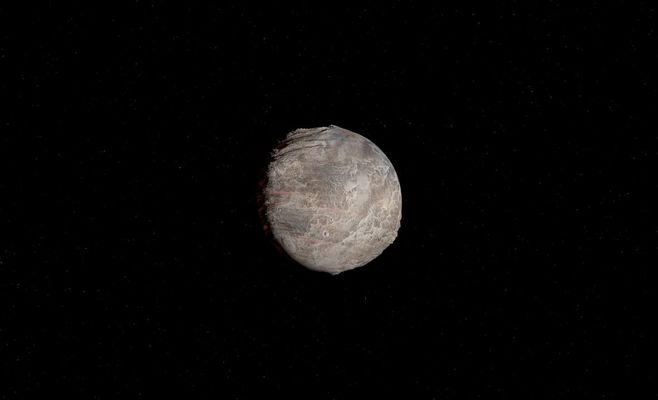
The central goal of the mission is to learn whether Europa really has an ocean beneath its icy shell. Scientists know the moon has an icy shell, a rock core and a mantle, and there are hints of a subsurface ocean, but they are not sure. After multiple flybys, the magnetometer is meant to settle the question, and it could also show how deep the ocean is, how salty it is and how thick the ice above it is.
The Earth flyby is a chance to find and fix calibration problems close to home, while the spacecraft can be checked against something familiar. For skywatchers, it is a rare chance to see one of NASA's largest deep space probes pass by, if they are in the right part of the world.
What comes next?
After the flyby, Clipper heads for Jupiter. The Ganymede braking pass and the orbit insertion burn are planned for April 2030, when the instruments tuned during this encounter will begin their work at Europa.
Read next
NASA's Twin Mars Probes Swing Past Earth for a 9-Minute Speed Boost
How Artemis III Will Test Two Moon Landers in Earth Orbit Before Any Landing
NASA Opens Astronaut Hiring for Moon Missions, Deadline Dec. 3
Around Prague, based on reporting by Universe Today