Science & Space By

Dust From Halley's Comet Will Streak Across the Sky Despite a Bright Moon
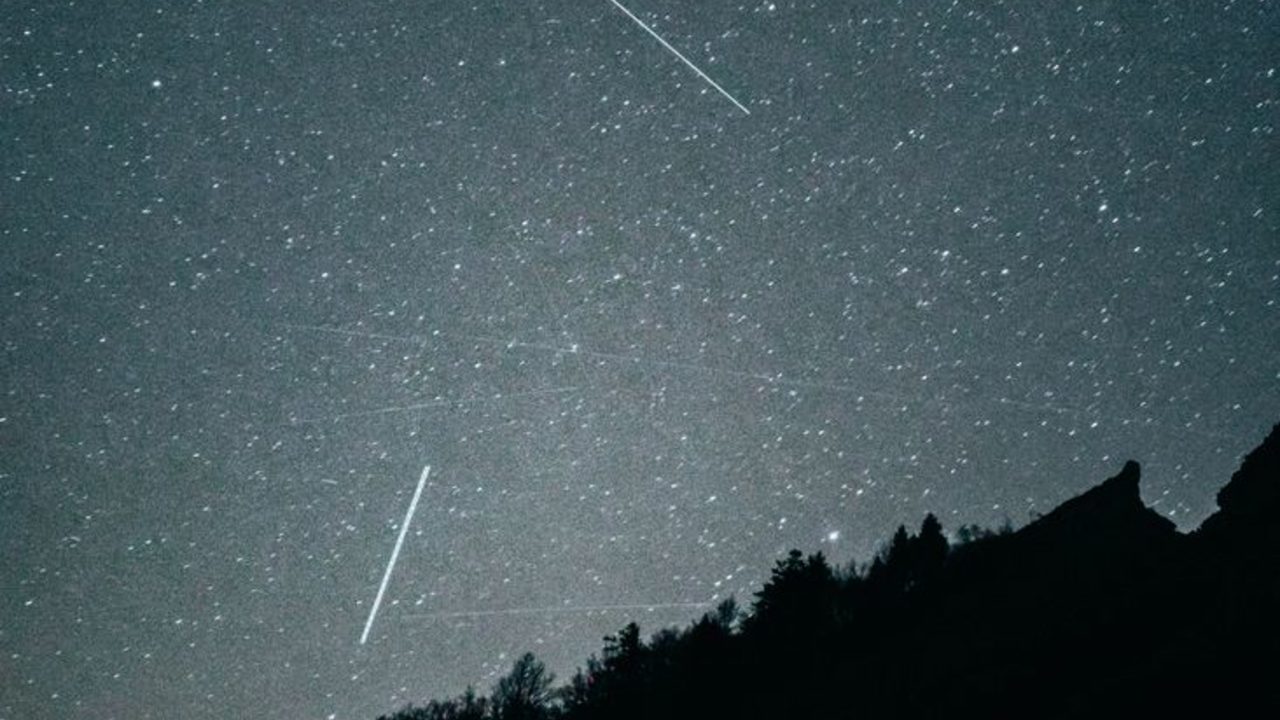
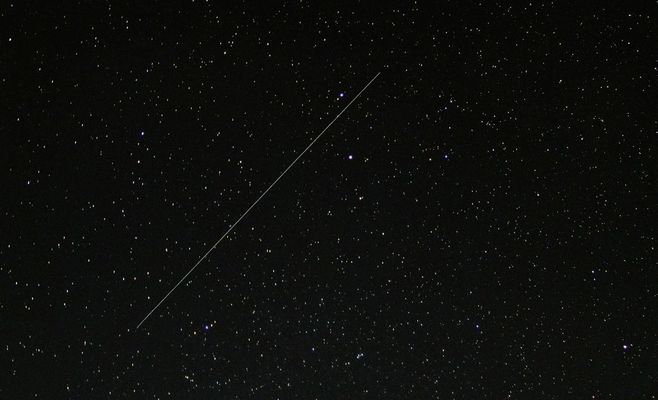
The Orionid meteor shower peaks this week, giving skywatchers a chance to see bits of Halley's comet burn up in the atmosphere. The best viewing is in the dark hours before dawn on Oct. 22, after the bright moon sets, according to The Guardian, BBC News and EarthSky.

Under ideal conditions, observers might see 10 to 20 Orionids per hour. This year's conditions are not ideal, and in the UK the weather forecast adds another hurdle, the BBC reported.

When is the Orionid peak?

The Guardian said the shower is expected to peak during the night of Oct. 21-22. The BBC said it will be at its best in the early hours of Oct. 22. EarthSky cited the RASC Observer's Handbook, which predicts a peak at 18 UTC on Oct. 21, but noted that the Orionids have a broad, plateau-like maximum lasting several nights. Several mornings around Oct. 21 could therefore show some meteors.

Reports differ on how long the shower lasts. The BBC said there are chances to see it until Nov. 7, while EarthSky gave an overall span of Sept. 26 to Nov. 22.

Where do the meteors come from?

The Orionids are caused by dust shed by Halley's comet. Each October, Earth passes through that trail of debris. According to EarthSky, the comet orbits the sun about every 76 years and its nucleus loses 3 to 10 feet of material on each trip through the inner solar system. The nucleus measures 5 by 9 miles.

The particles are tiny, but they hit the atmosphere at about 41 miles per second, or 66 kilometers per second. They heat the surrounding air and create the brief streaks of light we call meteors, The Guardian explained.

How will the moon affect viewing?

A bright waxing gibbous moon will light the sky and hide many of the fainter meteors, all three outlets said. Full moon comes on the night of Oct. 25-26, according to EarthSky, so the moon will intrude more with each passing night.

Conditions improve later. The Guardian and the BBC said the moon sets at about 3 a.m. BST, leaving a few hours of darker sky before dawn. EarthSky advised watching in the hours before dawn, and said that if you watch while the moon is still up, standing in the moon's shadow may help.

What will the weather be like in the UK?

The BBC said this looks like the wettest and windiest week so far this autumn, with a strengthening jet stream pushing low-pressure systems across the country. Wednesday looks wet and windy for many areas.

A brief ridge of high pressure could bring clear spells to many parts of England, Wales and Northern Ireland in the second half of the night into Thursday morning, the BBC said. Western Scotland may also see clear skies for a time. Eastern Scotland looks cloudy and wet, and the far south coast of England could get rain.

How do you watch, and what will you see?

You need no equipment. The BBC said the meteors are visible to the naked eye, and recommended a dark spot with wide open sky, away from city lights. Let your eyes adjust for 20 minutes.

The meteors appear to radiate from a point in the constellation Orion, which the BBC placed near the red supergiant star Betelgeuse. EarthSky put the radiant north of Betelgeuse. You do not need to look at Orion, though. EarthSky said meteors often become visible about 30 degrees from the radiant and can show up anywhere in the sky. The BBC suggested looking slightly away from the radiant, where meteors are more visible.

EarthSky described Orionids as extremely fast and mostly white or faintly yellow. It said perhaps half leave glowing trails that last a few seconds, and that the shower sometimes produces bright fireballs. Occasional meteors may show a green or orange tint.

What does this mean for skywatchers?

Expect a modest show rather than a spectacle. EarthSky said the Orionids are not the year's strongest shower and are not known for surprise outbursts. It quoted the American Meteor Society as saying that rates in exceptional years, such as 2006-2009, reached 50 to 75 per hour, while recent displays have been low to average. EarthSky said it is impossible to know what 2026 will bring and suggested expecting about 10 to 20 per hour.

Those figures assume a dark sky with no moon, so counts this year may be lower, especially before moonset. The most practical window is the pre-dawn darkness after the moon goes down, when Orion is climbing high, The Guardian noted.

Around Prague, based on reporting by The Guardian, BBC News, EarthSky
Share: Telegram WhatsApp

More science news

Light-Based Supersolid Seen at Room Temperature, No Deep Freeze Needed
An international team of physicists says it has created a supersolid, a quantum state that is both crystal-like and frictionless, at room temperature. Until now, such states were observed only in atom
Colombian Fossils Show Giant Sea Reptiles and Sharks Sharing an Ocean as Eras Shifted
Fossils from central Colombia show an ancient ocean where animal groups on the road to extinction lived alongside newer groups that were just beginning to thrive, according to a report from McGill Uni
Berkeley Earth Is 95% Sure 2026 Will Beat Record Heat of 2024
The world is on course for its hottest year on record, according to Berkeley Earth, an independent U.S. research group. It told BBC News that, with two months of the year left, it is 95% confident tha
Dwarf Galaxies Have Lost Most of Their Oxygen, Hubble Study of 37 Finds
Small galaxies near the Milky Way appear to be leaking most of the oxygen their stars create. According to NASA, as reported by Universe Today, a study in The Astrophysical Journal that used the Hubbl
Scientists Find Tiny Orange Amazon Fish in Just Three Pools, Urge Protection
A team of Brazilian and U.S. researchers has described a new species of tiny, brightly marked fish from the Amazon, and they say it may already qualify as endangered. According to ScienceDaily, which
Big Dogs Lose a Key DNA Safeguard 35 Percent Faster Than Small Ones
Larger dogs may age faster partly because they lose control over mobile pieces of DNA more quickly than small dogs do, according to a new study published in Science. The researchers, as reported by Sc

Related news

An international team of physicists says it has created a supersolid, a quantum state that is both crystal-like and frictionless, at room temperature. Until now, such states were observed only in atoms cooled to temperatures extremely close
Fossils from central Colombia show an ancient ocean where animal groups on the road to extinction lived alongside newer groups that were just beginning to thrive, according to a report from McGill University published by ScienceDaily. The r
The world is on course for its hottest year on record, according to Berkeley Earth, an independent U.S. research group. It told BBC News that, with two months of the year left, it is 95% confident that 2026 will beat the previous record set
Small galaxies near the Milky Way appear to be leaking most of the oxygen their stars create. According to NASA, as reported by Universe Today, a study in The Astrophysical Journal that used the Hubble Space Telescope found that much of the
A team of Brazilian and U.S. researchers has described a new species of tiny, brightly marked fish from the Amazon, and they say it may already qualify as endangered. According to ScienceDaily, which relayed a release from Pensoft Publisher
Larger dogs may age faster partly because they lose control over mobile pieces of DNA more quickly than small dogs do, according to a new study published in Science. The researchers, as reported by ScienceAlert, say the finding could point
Researchers who walked across Arabia's Empty Quarter looking for the camps of early humans found ancient lake deposits but no sign that people ever lived beside them. A new study in Nature suggests water alone was not enough to hold prehist
Tiny clumps of waste and dead plankton that drift down through the ocean carry far more carbon to the depths when they are thick and sticky, according to a new study. Researchers at the Scripps Institution of Oceanography at UC San Diego an
Physicists have set a world record for the intensity of ultrashort hard X-ray pulses, according to a release from European XFEL published by ScienceDaily. Each flash lasted an estimated 300 attoseconds and was focused into a spot roughly 10
People all over the planet see essentially the same moon phase at the same moment, according to EarthSky. The moon can still look quite different depending on where you stand, because its orientation in your sky changes with your location a
Tiny protein fibers in semen can help RNA from the surrounding fluid get inside sperm cells and, in laboratory experiments, on into mouse embryos, according to a study in the journal Molecular Cell, as reported by ScienceAlert. The fibers h
Where a nuclear X-ray burst strikes an asteroid may matter as much as the blast itself. A new computer study from Sandia National Laboratories found that the push given to the same asteroid changed nearly fivefold depending on the direction