Science & Space By

Ancient Australians Were Picky Eaters 45,000 Years Ago, Bones Reveal
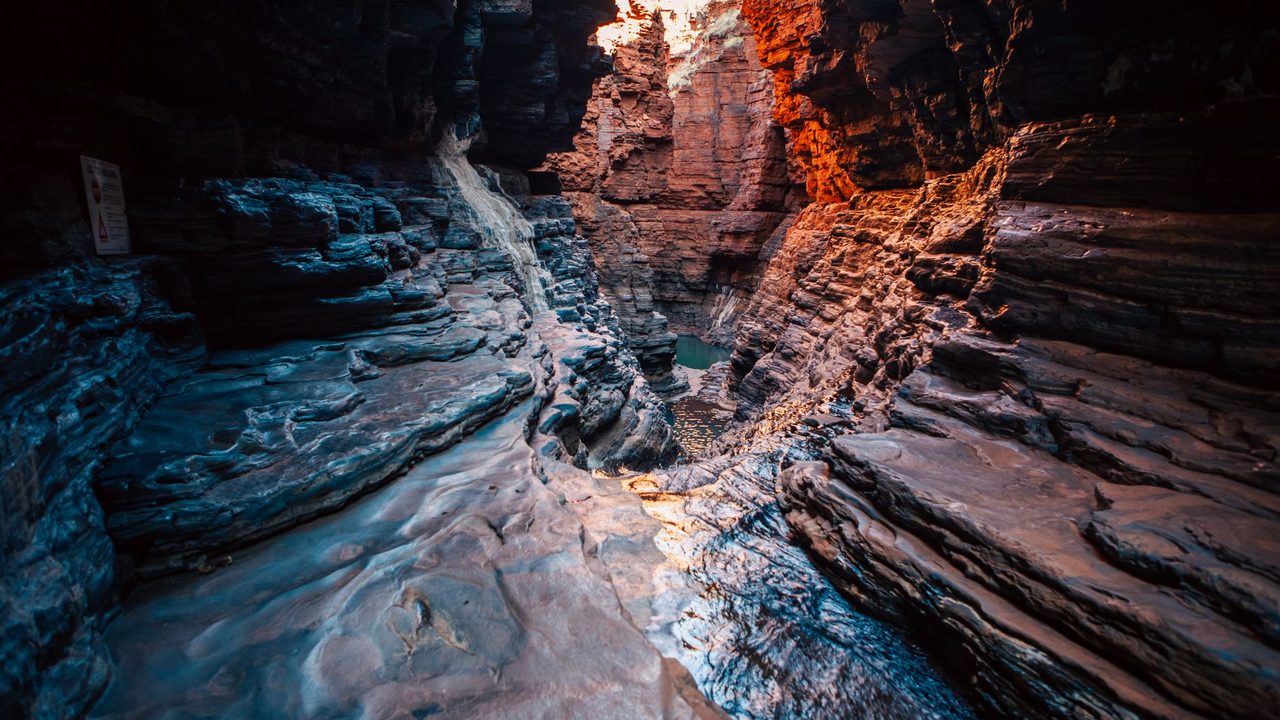
Ancient Australians were not scraping by on whatever they could catch. A decade-long study of animal bones from two sites in Western Australia suggests people living there roughly 45,000 years ago ate a wide range of animals by choice, not because their favorite prey ran out, New Atlas reported, citing the University of Queensland.

The finding challenges a long-held idea that early hunters focused on a few preferred animals and only widened the menu when those became scarce.

What the researchers dug up

A team led by University of Queensland researchers examined animal bones from Barrow Island and from Riwi, a limestone cave near the Great Sandy Desert. Both sites produced a surprisingly varied collection of fossils.

At Riwi, the remains show people eating wallaby, echidna, possum, flying fox, lizards and snakes. Barrow Island had a different menu that was just as varied. Around 45,000 years ago, lower sea levels connected the island to the mainland, and the diet there included wallabies, turtles and reef fish.

Why the state of the bones matters

The variety of species was only part of the case. Associate Professor Tiina Manne said many bones on Barrow Island were found still joined together, which suggests that people ate only the most nutritious parts of an animal and discarded the rest. In her words, people short of food would not behave that way: “they could afford to be choosy.” A broad diet, she argued, reflected choice rather than scarcity.

How flexibility helped in an unpredictable climate

Manne said that in a land of unpredictable rainfall, a wide range of foods signals plenty, and keeping options open was the best strategy. She described how the best prey could change with conditions. When water and vegetation were plentiful, large kangaroos were spread thin across the landscape. In dry conditions they stayed near waterholes and became easier to ambush. Small animals such as bandicoots were also a good option in dry spells because they stayed fat by switching to insects.

Hunters who could shift between prey as conditions changed were better placed to cope, she said. She also pointed to oral histories, which pass on a great deal of ecological knowledge, including subtle signs of how to find prey and which animals are best in each season. According to New Atlas, the results fit with the long and continuing connection Indigenous Australians have with the land and with seasonal change.

Why it matters beyond Australia

The results come from one region with its own climate and animals, so they do not automatically describe ancient diets everywhere. Still, the articulated bones hint that ancient menus may have been more nuanced than archaeologists have long assumed. Manne said the work suggests archaeologists around the world should reconsider how they interpret diet choice and diversity.

For readers, the study shifts the picture of early humans from desperate hunters to strategic ones, people who read their environment, shared knowledge across generations and sustained themselves without being forced into a narrow diet when the best food ran short.

The authors thanked the Mimbi Community and the Gooniyandi people, who facilitated field research and excavations at Riwi, and Thalanyji Ancestors, Country and Descendants, who guided and enabled research on Barrow Island. The study was published in the journal Proceedings of the National Academy of Sciences.

Around Prague, based on reporting by New Atlas
Share: Telegram WhatsApp

More science news

Wormhole Travel Explained: Why Exotic Matter and the Casimir Effect Matter
A wormhole wide enough to cross in about six days is a neat piece of mathematics, but the idea rests on a long chain of assumptions. The calculation by physicist Mauricio Cataldo of the University of
Moon Dust and Old Cardboard Could Insulate a Lunar Base, Study Finds
Researchers at Purdue University have developed an insulating material for future moon bases that combines simulated lunar dust with fiber from cardboard waste, Space.com reported. The material is an
A Seaweed Last Seen as an Adult in 1933 Just Turned Up Off Australia
A copper-colored seaweed that scientists had not seen in its mature form for nearly a century has turned up off the east coast of Australia, ScienceAlert reported. Researchers found it growing in a de
Eating Less Lowers an Aging Protein in Body Fat. Scientists Want to Block It
Yale researchers say they have found a possible shortcut to some of the anti-aging benefits of eating less. According to ScienceDaily, which published a summary from Yale School of Medicine, the work
A Galaxy Ring 1.3 Billion Light-Years Wide Shouldn't Exist. Astronomers Found It
Astronomers have found a ring of galaxies about 1.3 billion light-years across, a structure that does not fit any known way the universe builds things. ScienceAlert reported that the find, named the B
A Spacecraft Just Reached Mercury After an 8-Year Trip. Science Starts in April
The joint European-Japanese BepiColombo spacecraft has entered orbit around Mercury, according to Universe Today. Mission leaders said it completed its orbit insertion on Nov. 21 at 18:27 UTC, making

Related news

A wormhole wide enough to cross in about six days is a neat piece of mathematics, but the idea rests on a long chain of assumptions. The calculation by physicist Mauricio Cataldo of the University of Bío-Bío in Chile describes what Einstein
Researchers at Purdue University have developed an insulating material for future moon bases that combines simulated lunar dust with fiber from cardboard waste, Space.com reported. The material is an aerogel, and the team says it could shie
A copper-colored seaweed that scientists had not seen in its mature form for nearly a century has turned up off the east coast of Australia, ScienceAlert reported. Researchers found it growing in a dense underwater forest near Lord Howe Isl
Yale researchers say they have found a possible shortcut to some of the anti-aging benefits of eating less. According to ScienceDaily, which published a summary from Yale School of Medicine, the work centers on an immune protein that fights
Astronomers have found a ring of galaxies about 1.3 billion light-years across, a structure that does not fit any known way the universe builds things. ScienceAlert reported that the find, named the Big Ring, could force cosmologists to ame
The joint European-Japanese BepiColombo spacecraft has entered orbit around Mercury, according to Universe Today. Mission leaders said it completed its orbit insertion on Nov. 21 at 18:27 UTC, making it the second mission to circle the inne
The rings and gaps in the dust disk around a young star called V1094 Scorpii do not all come from newborn planets, according to a new analysis of existing data from the ALMA telescope array in Chile. Universe Today reported that a Japanese
A proposed mission would send a nuclear-powered spacecraft to the dwarf planet Ceres, land there, pull water out of the ground and bring samples back to Earth. The idea, reported by Universe Today, comes from astrophysicist Pete Worden and
When a bright fireball streaks across the sky, witness reports are only the start. Fireball sightings in Michigan, Ontario and Ohio on a recent Wednesday night were logged with the American Meteor Society, CBS News reported, with viewers de
Four spots on the Moon may hide huge underground tunnels carved by ancient lava, according to a new analysis of the Moon's gravity. Each candidate tunnel is less than 2 kilometers wide and sits beneath around 100 meters of rock, ScienceAler
A ball released anywhere on a specially curved ramp will reach the bottom in the same time. Physicists now say quantum particles hopping through a row of sites can behave in a similar way, according to ScienceAlert. The result comes from ca
Powering a data center in orbit is harder than it sounds, and a new preprint suggests there is no single best answer. Dr. Slava Turyshev of NASA's Jet Propulsion Laboratory compared solar and nuclear power for orbital computing clusters and