Science & Space By

A Seaweed Last Seen as an Adult in 1933 Just Turned Up Off Australia
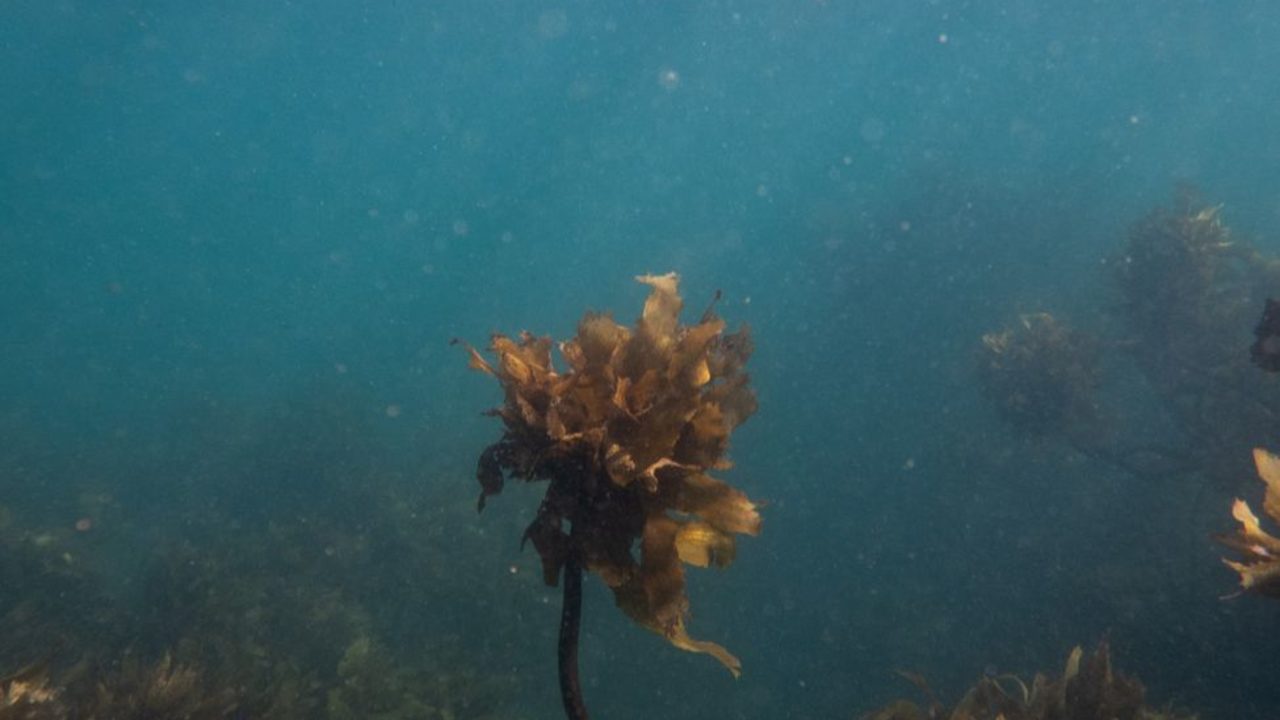
A copper-colored seaweed that scientists had not seen in its mature form for nearly a century has turned up off the east coast of Australia, ScienceAlert reported. Researchers found it growing in a dense underwater forest near Lord Howe Island, in a spot that had been almost bare of seaweed years earlier.

The finding, published in the journal Ecology, is preliminary. The authors say it suggests some seaweed forests may cope with warming seas by retreating into deeper, cooler water.

How a fish survey found a missing seaweed

Botanist A.H.S. Lucas discovered the seaweed, Sargassum howeanum, in 1933 near Lord Howe Island, a small volcanic island off Australia's east coast, and later named it. It was the first and last official sighting of the adult seaweed for a long time. Over the decades, scientists found only immature specimens drifting in the island's shallows, never a large adult with reproductive receptacles.

In 2022, researchers carrying out a fish survey with a baited underwater video camera came across a surprise. When they reviewed the footage, they saw a green mass rising out of the blue water. A patch of seafloor that had been almost barren 13 years earlier now held a dense forest of seaweed.

Some specimens that the team sampled belonged to Sargassum howeanum, the species Lucas had named. The samples were brought up by accident when the seaweed tangled in the video recorders. They measured 53 and 72 centimeters long.

How much the forests have grown

The team went back through survey footage from 2009, 2013, 2017 and 2022. They found that several underwater forests around the island, at depths of up to 38 meters (125 feet), had expanded their coverage 22-fold over the years.

Why it matters: seaweed forests and a warming ocean

Like kelp forests, Sargassum seaweed traps large amounts of carbon dioxide and underpins marine ecosystems, supporting a wide variety of life, according to ScienceAlert. The Sargassum genus has more than 350 species and is among the most widespread canopy-forming seaweeds in the world.

A 2025 research review argued that if these forests struggle with rising ocean temperatures in tropical and warm-temperate regions, the consequences for local ecosystems could be severe. Sargassum forests get far less attention from conservationists than kelp does, the review noted, and monitoring or management programs have tended to overlook them.

The study authors wrote that deeper waters, known as the mesophotic zone, may act as a depth refuge for Sargassum as oceans warm, which makes monitoring there a research priority.

What researchers still do not know

Scientists need long-term data to judge how a species is faring, and without it, it is hard to predict how this seaweed will fare under different warming scenarios. Researchers are only beginning to learn about species like Sargassum howeanum, and it is possible that water temperatures affect seaweed photosynthesis, growth and reproduction.

What happens next

The authors say repeat surveys could test the idea that deeper water shelters the seaweed. The region had a severe marine heatwave in 2024 that caused widespread deaths of coral and algae in the Lord Howe Island lagoon. That spring, average sea temperatures reached 19.88°C (67.8°F) at depths of up to 50 meters, roughly 0.53°C warmer than in 2009.

Study authors and ecologists Matthew Rees and Nathan Knott wrote in The Conversation that understanding these deepwater habitats requires long-term monitoring programs, and that the need is urgent as extreme weather grows more frequent and severe.

Around Prague, based on reporting by ScienceAlert

Share: Telegram WhatsApp

More science news

Eating Less Lowers an Aging Protein in Body Fat. Scientists Want to Block It
Yale researchers say they have found a possible shortcut to some of the anti-aging benefits of eating less. According to ScienceDaily, which published a summary from Yale School of Medicine, the work
A Galaxy Ring 1.3 Billion Light-Years Wide Shouldn't Exist. Astronomers Found It
Astronomers have found a ring of galaxies about 1.3 billion light-years across, a structure that does not fit any known way the universe builds things. ScienceAlert reported that the find, named the B
A Spacecraft Just Reached Mercury After an 8-Year Trip. Science Starts in April
The joint European-Japanese BepiColombo spacecraft has entered orbit around Mercury, according to Universe Today. Mission leaders said it completed its orbit insertion on Nov. 21 at 18:27 UTC, making
A Baby Star's Giant Dust Rings Aren't All Made by Planets, New ALMA Analysis Finds
The rings and gaps in the dust disk around a young star called V1094 Scorpii do not all come from newborn planets, according to a new analysis of existing data from the ALMA telescope array in Chile.
A Nuclear Rocket to Ceres Could Reach the Dwarf Planet in a Little Over a Year
A proposed mission would send a nuclear-powered spacecraft to the dwarf planet Ceres, land there, pull water out of the ground and bring samples back to Earth. The idea, reported by Universe Today, co
How Scientists Track a Fireball With Satellites, Sound Waves and Radar
When a bright fireball streaks across the sky, witness reports are only the start. Fireball sightings in Michigan, Ontario and Ohio on a recent Wednesday night were logged with the American Meteor Soc

Related news

Yale researchers say they have found a possible shortcut to some of the anti-aging benefits of eating less. According to ScienceDaily, which published a summary from Yale School of Medicine, the work centers on an immune protein that fights
Astronomers have found a ring of galaxies about 1.3 billion light-years across, a structure that does not fit any known way the universe builds things. ScienceAlert reported that the find, named the Big Ring, could force cosmologists to ame
The joint European-Japanese BepiColombo spacecraft has entered orbit around Mercury, according to Universe Today. Mission leaders said it completed its orbit insertion on Nov. 21 at 18:27 UTC, making it the second mission to circle the inne
The rings and gaps in the dust disk around a young star called V1094 Scorpii do not all come from newborn planets, according to a new analysis of existing data from the ALMA telescope array in Chile. Universe Today reported that a Japanese
A proposed mission would send a nuclear-powered spacecraft to the dwarf planet Ceres, land there, pull water out of the ground and bring samples back to Earth. The idea, reported by Universe Today, comes from astrophysicist Pete Worden and
When a bright fireball streaks across the sky, witness reports are only the start. Fireball sightings in Michigan, Ontario and Ohio on a recent Wednesday night were logged with the American Meteor Society, CBS News reported, with viewers de
Four spots on the Moon may hide huge underground tunnels carved by ancient lava, according to a new analysis of the Moon's gravity. Each candidate tunnel is less than 2 kilometers wide and sits beneath around 100 meters of rock, ScienceAler
A ball released anywhere on a specially curved ramp will reach the bottom in the same time. Physicists now say quantum particles hopping through a row of sites can behave in a similar way, according to ScienceAlert. The result comes from ca
Powering a data center in orbit is harder than it sounds, and a new preprint suggests there is no single best answer. Dr. Slava Turyshev of NASA's Jet Propulsion Laboratory compared solar and nuclear power for orbital computing clusters and
The European Southern Observatory has publicly condemned a SpaceX plan to launch one million satellites that would act as an orbital AI data center, after the U.S. Federal Communications Commission approved it, according to Universe Today.
Some of Africa's biggest coastal cities are sinking faster than previously thought, according to new research reported by the BBC. Lagos in Nigeria and Alexandria in Egypt stand out: the study found they are subsiding much faster than the U
A tick bite can leave some people unable to eat red meat. The condition, called alpha-gal syndrome, may have affected up to 450,000 people in the United States since 2010, according to Centers for Disease Control and Prevention estimates ci