Everyone Sees the Same Moon Phase, but Not the Same Moon
USD 21,80
Popular
People all over the planet see essentially the same moon phase at the same moment, according to EarthSky. The moon can still look quite different depending on where you stand, because its orientation in your sky changes with your location and even over a single night.
The explanation comes down to Earth's rotation and the different vantage points we have on the sky. Here is how it works.
Is the moon phase really the same everywhere?
Yes. EarthSky describes the moon phase as a whole-Earth phenomenon: the moon presents one phase to our planet at a given time. What varies from place to place is how that phase is tilted and positioned against your horizon. That is a difference in orientation, not a difference in phase.
Why does the moon look different over a few hours?
Earth is turning beneath the sky. As it rotates, the moon appears to change its angle as the night goes on, and, like the sun and stars, it seems to travel in an arc across the sky. EarthSky notes that Earth's rotation makes the stars and the moon drift westward through the night.
The moon also moves in its own orbit around Earth, and that motion is eastward against the background stars. So you can notice a change in the moon's appearance overnight, or even within a few hours, without any change in its phase.
Why does the moon look upside down from the other hemisphere?
People in the Northern and Southern Hemispheres see the moon oriented differently, EarthSky says. Observers in one hemisphere see it apparently upside down compared with observers in the other, which becomes clear if you study the moon's surface features in photos from each.
The direction of the phase's growth flips too. From the Northern Hemisphere, a waxing moon, which runs from new moon to full moon, grows from right to left. From the Southern Hemisphere, a waxing moon grows from left to right.
The reason is the direction you face. In the Northern Hemisphere, people look generally southward to see the moon or sun cross the sky. In the Southern Hemisphere, people look generally northward. Facing opposite ways flips the view.
What are moon phases, really?
EarthSky frames moon phases as a matter of sunrise and sunset on the moon. Astronomers call the boundary between light and dark on the lunar surface the terminator. It marks where the sun is rising or setting on the moon, and it keeps shifting, just as the line of sunrise and sunset on Earth does.
The pace is very different, though. Earth spins about once every 24 hours, while the moon spins on its axis only about once a month. That means the moon's line of sunrise and sunset moves slowly across its face.
What does this mean for skywatchers?
For anyone planning to look at the moon, the main point is that a friend in another hemisphere is seeing the same phase, even if their view looks flipped. Disagreements about which way the moon is tilted, or which side is lit, can come down to latitude and the time of night.
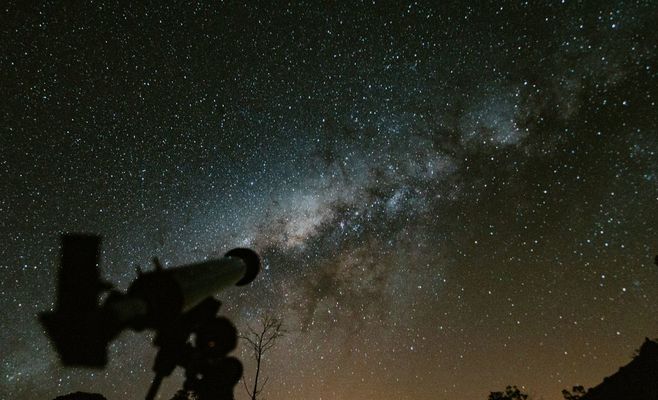
EarthSky suggests watching for yourself. With a telescope on a night when the moon is up, you can follow it for several hours and see the shadows slowly shift as lunar sunrise or sunset creeps across the surface. The outlet also calls it a good way to clear the mind.
The takeaway, in EarthSky's words, is that the moon shows one phase to Earth at a time, while our location on the globe changes how it appears in our sky.
Read next
Moon Rocks That Fell to Earth May Reveal What Apollo Missed
How Artemis III Will Test Two Moon Landers in Earth Orbit Before Any Landing
Earth's Pull May Have Powered Moon Volcanoes Two Billion Years After Birth
Around Prague, based on reporting by EarthSky