Science & Space By

A Spacecraft Just Reached Mercury After an 8-Year Trip. Science Starts in April
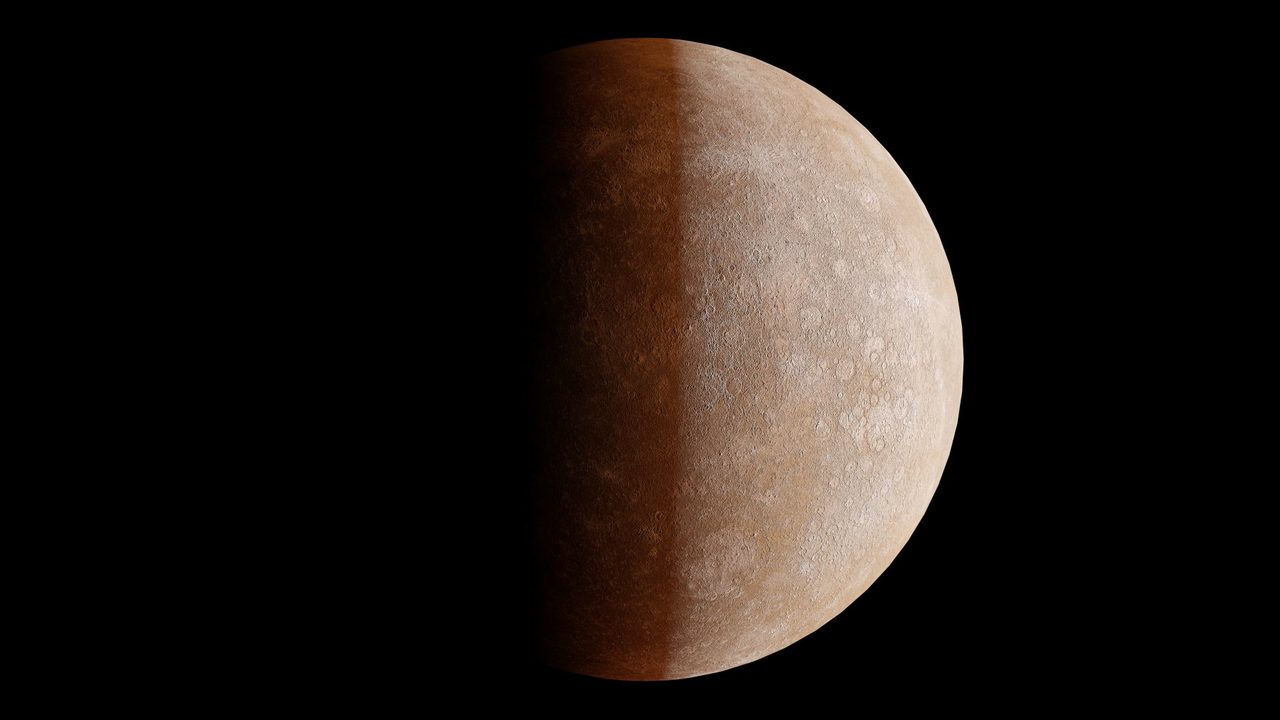
The joint European-Japanese BepiColombo spacecraft has entered orbit around Mercury, according to Universe Today. Mission leaders said it completed its orbit insertion on Nov. 21 at 18:27 UTC, making it the second mission to circle the innermost planet.

The craft is not yet in the orbit it will use for research. Science operations are expected to begin in April 2027, after several months of thruster burns that adjust its path.

BepiColombo by the numbers

Why getting to Mercury takes so long

Universe Today explained that a spacecraft heading toward the Sun speeds up as the Sun's gravity strengthens, so it must slow down enough to be captured by Mercury. Doing that with fuel alone would require so much propellant that the weight and cost would balloon.

That is why BepiColombo and MESSENGER both used planetary flybys to shed speed. MESSENGER made three fewer Mercury flybys than BepiColombo's six.

Two orbiters, two jobs

Unlike MESSENGER, BepiColombo carries two orbiters. They are ESA's Mercury Planetary Orbiter and the Japan Aerospace Exploration Agency's Mercury Magnetospheric Orbiter, called Mio. They are still attached to each other and are scheduled to separate in early December.

After separation, the planetary orbiter will study Mercury's surface features and composition. Mio will study the planet's magnetic field and how it interacts with the solar wind.

Why it matters for science

Mercury is among the least explored bodies in the solar system. Universe Today describes it as a key target for understanding how the inner rocky planets formed and evolved, and what that could mean for finding life beyond Earth.

Geraint Jones, ESA's lead project scientist for the mission, said the team expects BepiColombo to start revealing more about Mercury's interior, surface and surrounding space. For ordinary readers, there is nothing to act on yet: the first results depend on the orbit adjustments and the start of science operations next spring.

What happens next

The team will fire the thrusters several times over the coming months to reach a more permanent orbit. If the mission is extended to December 2029, the team will then check the remaining fuel and decide whether science can continue or whether the spacecraft will be crashed into Mercury's surface. MESSENGER ended its mission that way when its fuel ran out.

Around Prague, based on reporting by Universe Today
Share: Telegram WhatsApp

More science news

A Baby Star's Giant Dust Rings Aren't All Made by Planets, New ALMA Analysis Finds
The rings and gaps in the dust disk around a young star called V1094 Scorpii do not all come from newborn planets, according to a new analysis of existing data from the ALMA telescope array in Chile.
A Nuclear Rocket to Ceres Could Reach the Dwarf Planet in a Little Over a Year
A proposed mission would send a nuclear-powered spacecraft to the dwarf planet Ceres, land there, pull water out of the ground and bring samples back to Earth. The idea, reported by Universe Today, co
How Scientists Track a Fireball With Satellites, Sound Waves and Radar
When a bright fireball streaks across the sky, witness reports are only the start. Fireball sightings in Michigan, Ontario and Ohio on a recent Wednesday night were logged with the American Meteor Soc
Four Giant Tunnels May Be Hiding Under the Moon's Surface
Four spots on the Moon may hide huge underground tunnels carved by ancient lava, according to a new analysis of the Moon's gravity. Each candidate tunnel is less than 2 kilometers wide and sits beneat
Balls on a Curved Ramp Always Land Together. Atoms Can Too, a Preprint Says
A ball released anywhere on a specially curved ramp will reach the bottom in the same time. Physicists now say quantum particles hopping through a row of sites can behave in a similar way, according t
A 1-Megawatt Data Center in Orbit Weighs 43 Metric Tons Before Any Computers
Powering a data center in orbit is harder than it sounds, and a new preprint suggests there is no single best answer. Dr. Slava Turyshev of NASA's Jet Propulsion Laboratory compared solar and nuclear

Related news

The rings and gaps in the dust disk around a young star called V1094 Scorpii do not all come from newborn planets, according to a new analysis of existing data from the ALMA telescope array in Chile. Universe Today reported that a Japanese
A proposed mission would send a nuclear-powered spacecraft to the dwarf planet Ceres, land there, pull water out of the ground and bring samples back to Earth. The idea, reported by Universe Today, comes from astrophysicist Pete Worden and
When a bright fireball streaks across the sky, witness reports are only the start. Fireball sightings in Michigan, Ontario and Ohio on a recent Wednesday night were logged with the American Meteor Society, CBS News reported, with viewers de
Four spots on the Moon may hide huge underground tunnels carved by ancient lava, according to a new analysis of the Moon's gravity. Each candidate tunnel is less than 2 kilometers wide and sits beneath around 100 meters of rock, ScienceAler
A ball released anywhere on a specially curved ramp will reach the bottom in the same time. Physicists now say quantum particles hopping through a row of sites can behave in a similar way, according to ScienceAlert. The result comes from ca
Powering a data center in orbit is harder than it sounds, and a new preprint suggests there is no single best answer. Dr. Slava Turyshev of NASA's Jet Propulsion Laboratory compared solar and nuclear power for orbital computing clusters and
The European Southern Observatory has publicly condemned a SpaceX plan to launch one million satellites that would act as an orbital AI data center, after the U.S. Federal Communications Commission approved it, according to Universe Today.
Some of Africa's biggest coastal cities are sinking faster than previously thought, according to new research reported by the BBC. Lagos in Nigeria and Alexandria in Egypt stand out: the study found they are subsiding much faster than the U
A tick bite can leave some people unable to eat red meat. The condition, called alpha-gal syndrome, may have affected up to 450,000 people in the United States since 2010, according to Centers for Disease Control and Prevention estimates ci
On Nov. 27, 1885, an astronomer made what is regarded as the first known photograph of a meteor. Austro-Hungarian astronomer Ladislaus Weinek recorded the streak of light on a photographic plate in what is now the Czech Republic, Space.com
A physicist in Chile has worked out, on paper, how large a wormhole would have to be for a person to pass through it unharmed. According to ScienceAlert, Mauricio Cataldo of the University of Bío-Bío calculated that a traveler could cross i
Old plumbing pipes, window frames and expired credit cards could one day end up as an ingredient in engine oil. Chemists at Virginia Tech have developed a process that converts polyvinyl chloride, or PVC, into a base material for synthetic