How Scientists Track a Fireball With Satellites, Sound Waves and Radar
USD 22,31
Popular
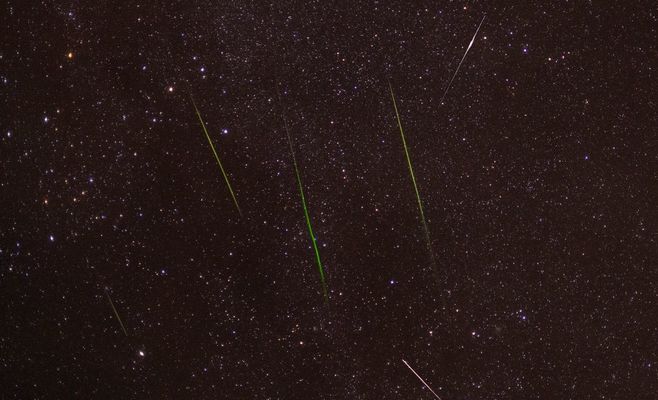
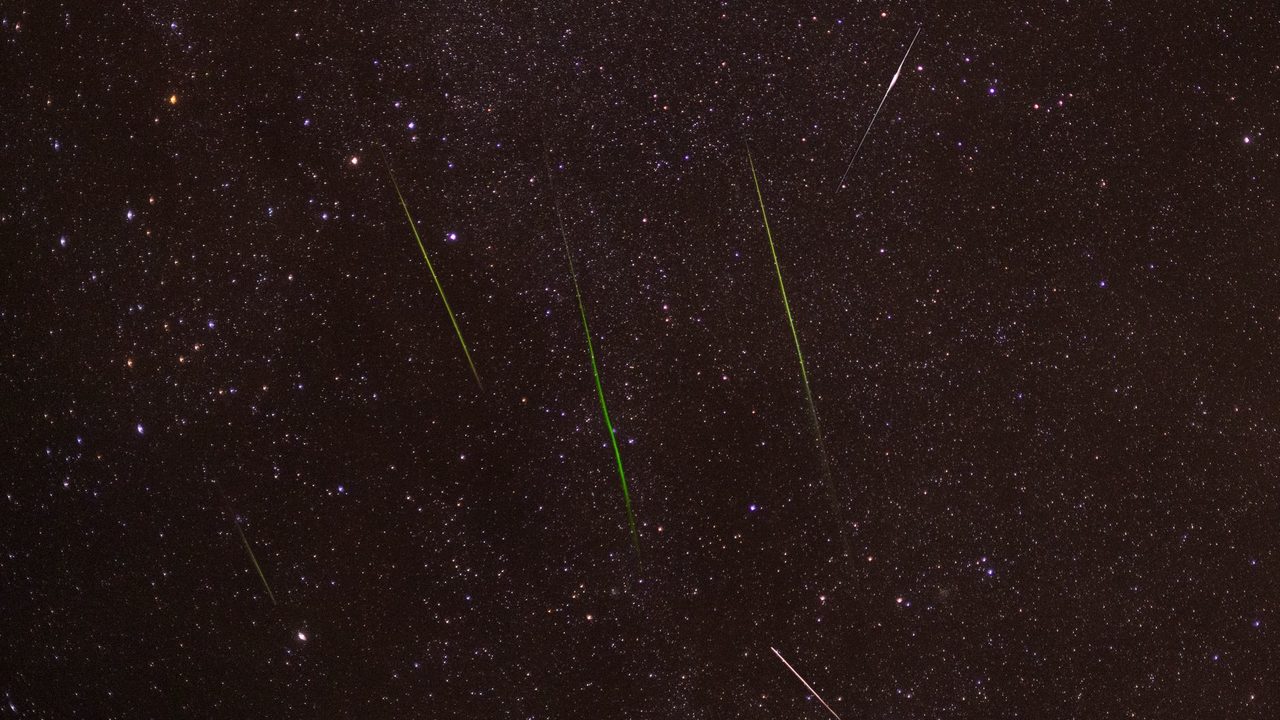
When a bright fireball streaks across the sky, witness reports are only the start. Fireball sightings in Michigan, Ontario and Ohio on a recent Wednesday night were logged with the American Meteor Society, CBS News reported, with viewers describing blue, green and white colors. What happens behind the scenes, according to researchers quoted by Space.com, is a patchwork of military satellites, weather satellites, ground sensors and radar that together turn a flash into a measured event.
Who watches the sky for fireballs?
U.S. government satellite sensors detect many fireballs and report them through NASA's Center for Near-Earth Object Studies, known as CNEOS. Elizabeth Silber, a physicist at the U.S. Department of Energy's Sandia National Laboratories, told Space.com that these detections give a starting point: they establish that an event occurred and often supply its location, time and estimated energy. CNEOS, based at the Jet Propulsion Laboratory in Southern California, computes orbits of asteroids and comets and their odds of striking Earth in support of NASA's Planetary Defense Coordination Office, according to Space.com.
Civil and scientific systems then add independent measurements that help refine and check that first picture, Silber said.
What did weather satellites add in a recent case?
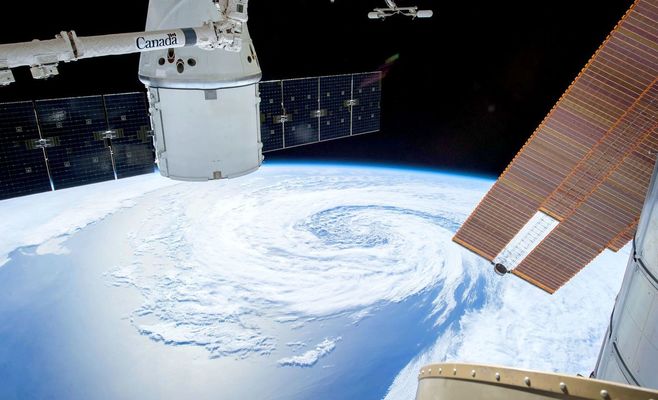
Space.com described an April 1 fireball that exploded high over the South Atlantic off the coast of Argentina. U.S. military and civil sensors both saw it, and its brightness peaked at an altitude of nearly 60 miles (90.5 kilometers). NOAA's GOES-E satellite and Europe's Meteosat Third Generation Imager-1 also recorded it through their onboard lightning imagers, which were not built to detect fireballs.
NASA's Rob Landis, a planetary defense specialist, said that two civilian spacecraft in different positions in geosynchronous orbit made this a rare chance for study. He said the civilian instruments also allow scientists to discuss such events and sensors openly.
What can ground sensors reveal that satellites cannot?
The clearest example is an April 24, 2025 fireball over south-central Alaska, which Space.com said produced one of the most densely recorded seismoacoustic datasets ever obtained for a natural fireball. A network of 37 seismic stations, 16 single infrasound sensors and four infrasound arrays recorded 30 ballistic and multiple fragmentation arrivals. Doppler weather radar detected falling meteorites, and independent video captured the glow.
Silber said this event was not reported by U.S. government sensors in the CNEOS database, so researchers reconstructed it almost entirely from civil and scientific observations. She said seismic and infrasound sensors capture the atmospheric shock waves and can constrain the trajectory, fragmentation and energy, while video gives an independent view of the glowing flight and radar can detect material that survived after the rock slowed and entered dark flight.
Another case: a roughly 12-foot-wide (3.7 meters) space rock crossed the sky over northwest Queensland, Australia, on May 20, 2023, with loud sonic booms, Space.com reported. Researchers determined it broke up catastrophically, producing one of the 20 most energetic events reported by CNEOS since 1988 and the most energetic seen over Australia, equal to the explosion of a 7.1-kiloton bomb.
What these methods still cannot tell you
Silber's bottom line was that no single sensor tells the whole story. Combining independent observations lets scientists move from knowing an event occurred to learning how the object traveled, where it fragmented, how much energy it released and whether material may have reached the ground. Without several data sources, those questions stay open. Whether any particular fireball left pieces on the ground is exactly the kind of detail that depends on this kind of cross-checking.
Why it matters: telling nature from something else
Landis said that, in his view, a lot of smaller material gets through the atmosphere and that these events are mostly harmless natural fireworks to a casual observer. He stressed, however, that it is important to distinguish natural events from human-made ones. Open, civilian data helps with that, because it allows scientists to discuss what they are seeing publicly. For readers who saw a bright light, the takeaway is that sightings reported to groups such as the American Meteor Society become part of the larger record.
What is the meteor shower context?
The American Meteor Society said the Leonid meteor shower is active and expected to be viewable through Nov. 30, with its peak expected Nov. 16 and 17. The society noted that what we see is not fresh material from the comet but debris from earlier returns that happens to be densest at the same time each year.
Earlier on Around Prague: Green Fireball Over Michigan on Thanksgiving Eve: What We Know
Read next
Arctic Laser Station Tracks Satellites With Thousands of Pulses a Second
New Weather Satellite Sensors Aim to Sharpen Forecasts Several Days Out
Green Fireball Over Michigan on Thanksgiving Eve: What We Know