Science & Space By

Fanged ‘Vampire Camel’ With a Giraffe-Like Neck Found in Old Museum Fossils
A previously unknown camel with long, curved fangs once roamed the Great Plains of North America, and its bones have been sitting in museum collections for about a century. ScienceAlert reported that paleontologists have now named it Vampyrocamelus welshi, the "vampire camel."

Despite the name and the teeth, the animal ate plants, according to the report.

A new genus hidden in old collections

The species and genus are described in a monograph set to be published in the New Mexico Museum of Natural History and Science Bulletins. ScienceAlert said the fossils come from the collection of Childs Frick, a paleontologist at the American Museum of Natural History who personally paid for many digs in the early 20th century, with a particular interest in camelids, the family that includes modern camels, llamas and alpacas.

In the new work, researchers reanalyzed tens of thousands of camelid specimens from Frick's collection and updated the camel family tree. Vampyrocamelus is one of the new species to come out of that review.

What the animal was like

Vampyrocamelus lived roughly 10 to 13 million years ago. Its bones are commonly found in Texas and Oklahoma and occasionally in Nebraska, ScienceAlert reported.

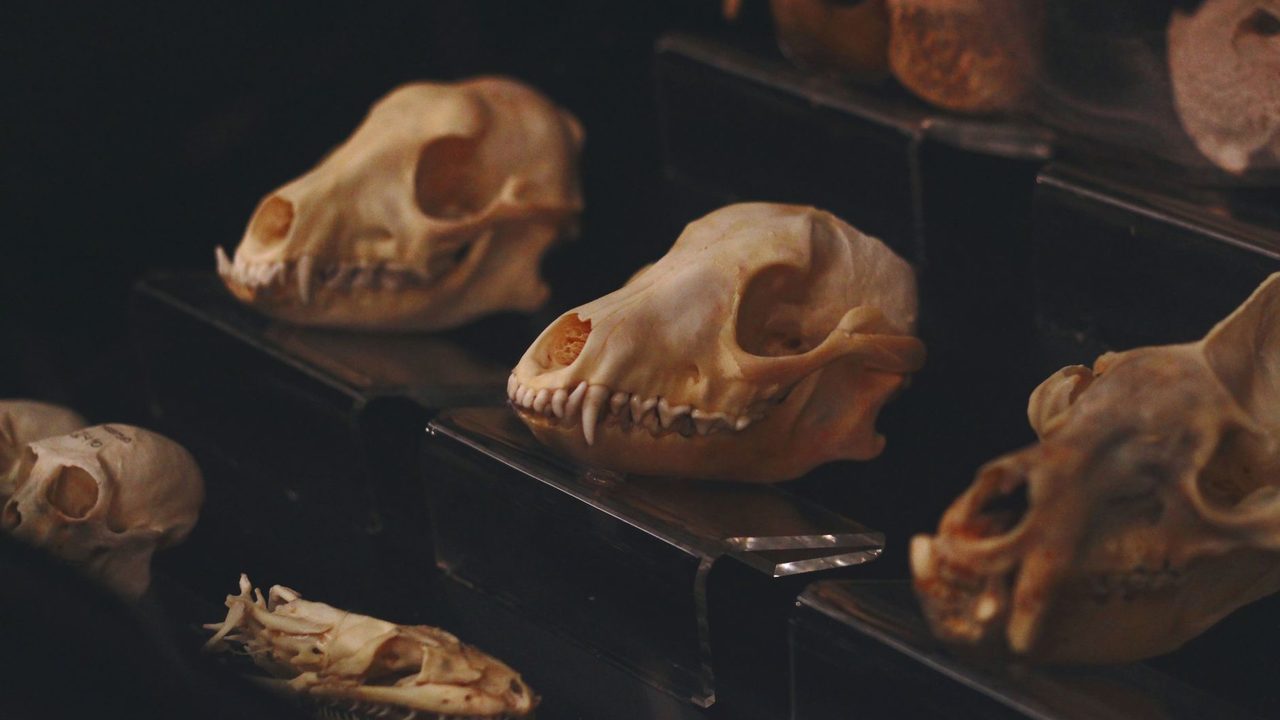
Its skull looks much like that of other known camelids. The defining feature is the canine teeth, which are about 40 millimeters (1.6 inches) long. "The canines are enormous compared to any other known camelid," the researchers wrote, with a long, recurved tip that ends in a sharp point in most specimens. The first upper premolar is also large and curved where it has been preserved.

Little is known about the rest of the skeleton. There are a few broken limb and foot bones, and they seem similar to those of a related genus, Aepycamelus, which looked something like a giraffe. ScienceAlert said Aepycamelus stood on stilt-like legs and may have grazed treetops with a neck that reached up to 3 meters (10 feet) off the ground, and that Vampyrocamelus could have looked and lived in a similar way.

Why the fangs?

The teeth may have helped the animal defend itself against predators, ScienceAlert said, but the study's co-authors consider it more likely that males used them in competition for females. Katherine Marriott, a paleontologist at the American Museum of Natural History, told Science that the males may have used the fangs to attract females, because the females did not have them.

Because so few bones beyond the skull are known, how the animal looked and behaved is still uncertain. Finding more specimens could help.

Why it matters: more discoveries may already be in storage

The team says many bones attributed over the years to Aepycamelus could in fact belong to Vampyrocamelus, ScienceAlert reported. The fangs are the main difference between the two, which makes it hard to tell where a stray leg bone came from. That means existing collections may already hold more material than researchers realize.

ScienceAlert framed the case as a lesson about museum storage: if a new genus can emerge from a century-old jumble of bones, other overlooked animals could be waiting in fossil drawers elsewhere, provided scientists have the time and resources to study what museums already hold.

What to know about the find

Around Prague, based on reporting by ScienceAlert

Share: Telegram WhatsApp

More science news

Astronomers Watch Two Stars Merge in Andromeda, Start to Finish, for the First Time
For the first time, astronomers have watched two stars merge as it happened, according to Live Science. The pair, a supergiant and a star slightly smaller than the sun, orbited each other for thousand
Ancient Storm Deposits Rise and Fall on a 405,000-Year Beat, Study Finds
Layers of rock left behind by powerful ancient storms appear to grow thicker and more common on a cycle of roughly 405,000 years, according to a new paper reported by ScienceAlert. The authors suggest
BepiColombo Fires Its Engine to Settle Into Orbit Around Mercury
A European-Japanese spacecraft is due to enter orbit around Mercury on Nov. 21, more than eight years after it left Earth, Space.com reported. The BepiColombo mission, run jointly by the European Spac
Why Wolves Howl: It Is About Staying Close to the Pack, Not the Moon
Wolves howl mainly to stay connected with one another, not because they see the moon, according to researchers who spoke to Live Science. The sound helps scattered pack members find each other, warns
A Rival to Dark Matter Theory Passes Tests and Puts the Universe at 26.7 Billion Years
A rival to the standard picture of the universe has passed a series of tests, according to Universe Today. Researchers at the University of Ottawa say their model reproduces key observations without d
Two Mars Spacecraft Go Quiet at Once as NASA Chases Radio and Wheel Glitches
Two of NASA's Mars explorers have paused their science work because of technical problems, the agency announced Thursday, Nov. 19, according to Space.com. The Perseverance rover is dealing with a radi

Related news

For the first time, astronomers have watched two stars merge as it happened, according to Live Science. The pair, a supergiant and a star slightly smaller than the sun, orbited each other for thousands of years and then came together in jus
Layers of rock left behind by powerful ancient storms appear to grow thicker and more common on a cycle of roughly 405,000 years, according to a new paper reported by ScienceAlert. The authors suggest the rhythm may be tied to slow, periodi
A European-Japanese spacecraft is due to enter orbit around Mercury on Nov. 21, more than eight years after it left Earth, Space.com reported. The BepiColombo mission, run jointly by the European Space Agency (ESA) and the Japanese Aerospac
Wolves howl mainly to stay connected with one another, not because they see the moon, according to researchers who spoke to Live Science. The sound helps scattered pack members find each other, warns rival packs and builds a sense of group
A rival to the standard picture of the universe has passed a series of tests, according to Universe Today. Researchers at the University of Ottawa say their model reproduces key observations without dark matter or dark energy, and it implie
Two of NASA's Mars explorers have paused their science work because of technical problems, the agency announced Thursday, Nov. 19, according to Space.com. The Perseverance rover is dealing with a radio fault, and the Mars Odyssey orbiter ha
Negotiations at the COP31 UN climate summit in Turkey are deadlocked after running through the night, the BBC reported. Countries have not been able to agree on a new global climate deal, and two fights are holding things up: whether the te
SpaceX launched a classified mission for the U.S. Space Force on Nov. 20, sending an undisclosed payload to orbit from California's central coast, Space.com reported. The rocket's first stage returned safely, but the public did not see the
An X-ray telescope that has traveled to Mercury for eight years has made its first observation of a distant object, and it is working better than scientists expected, according to ScienceDaily, citing the University of Leicester. The instru
A theoretical physicist has described a more general version of one of the strangest objects permitted by Einstein’s equations: the Black Saturn, a black hole shaped like a donut with a second black hole sitting in its center. The work, rep
Severe premenstrual syndrome may not be a single pattern of symptoms. Researchers at Uppsala University in Sweden have identified three distinct symptom timelines in premenstrual dysphoric disorder, or PMDD, according to ScienceAlert. The f
Scientists have found chemical marks on DNA in the brains of people with post-traumatic stress disorder that do not appear in people without the condition, and that also look different from the marks seen in depression, Live Science reporte