Japan Set to Launch Probe to Fetch First Samples From a Mars Moon
USD 21,80
Popular
Japan is scheduled to launch a spacecraft on Oct. 19 that aims to land on Phobos, a moon of Mars, and carry pieces of it back to Earth. According to Space.com, the mission, called Martian Moons eXploration (MMX), would be the first to return to Earth from Mars orbit and would bring back the first samples from the Mars system.
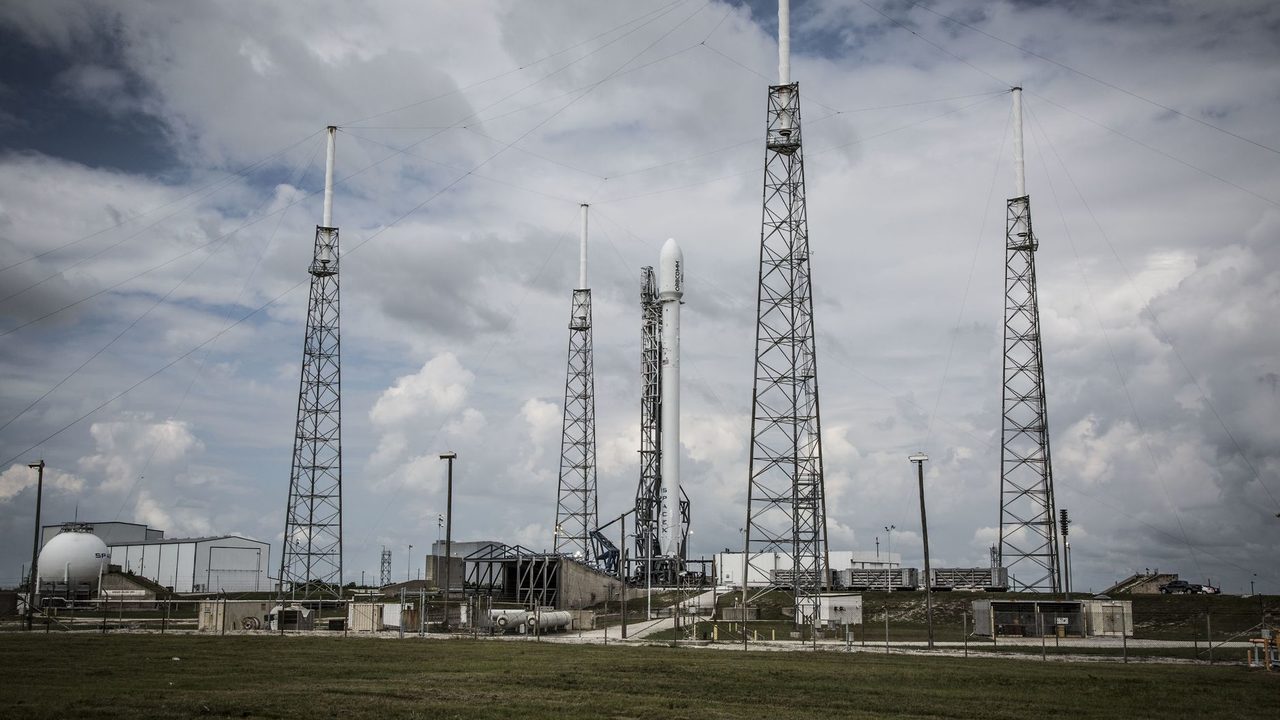
The launch is set for 3:41 p.m. EDT (1941 GMT) on an H3 rocket from Japan's Tanegashima Space Center. That is 4:41 a.m. local time on Oct. 20 in Japan. If all goes according to plan, the sample capsule will land in Australia in 2031.
What MMX is trying to learn
The mission is built to study the origin of Mars' two moons, Phobos and Deimos. Space.com reported that the samples and other data could reveal the moons' composition and geography and, perhaps most important, how they came to exist. The outlet said two leading theories explain their origins, and that they point to very different histories.
Phobos is a small, asteroid-sized moon, about 14 miles (22 kilometers) wide. Its gravity is extremely low, which shapes how the mission is designed.
How the mission is planned to unfold
After launch, MMX faces a 10-month trip to Mars and then about three years around Phobos. The dates below come from Space.com's account of the plan.
- Oct. 19: Launch from Tanegashima on an H3 rocket. A propulsion module gives the spacecraft its boost toward Mars.
- August 2027: MMX enters orbit around Mars, sheds the propulsion module and moves into a quasi-satellite orbit around Phobos. In that orbit it flies in a kind of formation with the moon as both circle Mars.
- As early as December 2028: Sample collection could begin, Lindsay Hays, acting director of NASA's Planetary Science Division, said at an Oct. 15 mission briefing. The spacecraft will attempt two collection landings, descending and returning to orbit as one vehicle.
- Late 2028 or early 2029: During the first of two landing rehearsals, the IDEFIX rover is released about 130 feet (40 meters) above Phobos. Because gravity is so weak, it is expected to fall to the surface without damage, right itself after a few bounces and begin exploring.
- 2030: MMX moves into a higher orbit around Mars that repeatedly crosses Deimos' path, allowing a series of flybys to compare with the Phobos data.
- November 2030: The spacecraft departs for Earth. The exploration module separates, and the return module begins an eight-month journey home with the samples.
- 2031: The sample capsule separates near Earth and enters the atmosphere for a targeted parachute landing in Australia's Woomera region. Japan and its mission partners will recover the contents for laboratory analysis.
The spacecraft and its partners
MMX has three main modules plus a small rover. Mitsubishi Electric of Japan built the modules. The exploration module carries most of the science instruments and the rover, and the return module holds the sample capsule.
IDEFIX, about the size of a microwave, was developed jointly by the French space agency CNES and Germany's DLR. It is named for a dog in the French comic "Asterix," a nod to France's first satellite, launched in 1965. The rover carries cameras and two instruments, RAX and miniRAD, to analyze the composition and temperature of Phobos' surface.
NASA contributes an instrument called MEGANE, a gamma-ray and neutron spectrometer built by the Johns Hopkins Applied Physics Laboratory. France supplies an infrared spectrometer called MIRS. Japan provides cameras, a laser altimeter and a mass spectrum analyzer.
On Phobos, two sampling tools, one that cores into the surface and one that uses pneumatics, are to collect at least 10 grams (0.35 ounces) of material. That material goes into the return capsule before the spacecraft lifts off again.
Why it matters
For readers, the immediate effect is scientific rather than practical. No Mars-system samples have ever been returned to Earth, and laboratory analysis could test ideas about how Mars' moons formed. Those ideas also bear on events in the early solar system billions of years ago, according to Space.com.
The mission is also international, with Japanese, French, German and U.S. contributions. The plan covers roughly five years of flight and operations before the capsule's expected return in 2031, and the timeline depends on every stage going as planned. Phobos landings and sample collection have not yet been attempted by this spacecraft.
Around Prague, based on reporting by Space.com