Science & Space By

Satellites Reveal Two Hidden Magma Sources Under Nicaragua's Masaya Volcano
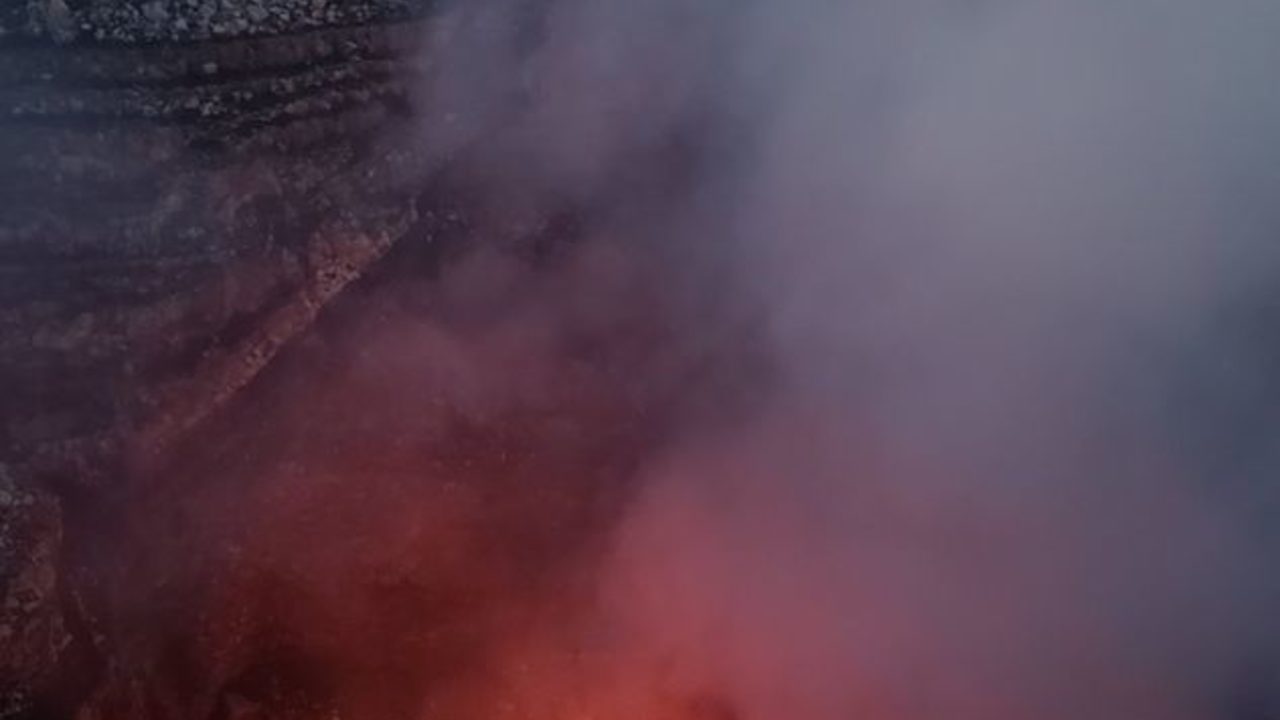
Scientists at Penn State say satellite measurements point to two previously unrecognized magma sources beneath Masaya, an active volcano in Nicaragua known for its lava lake. The finding suggests the volcano's plumbing is more complicated than researchers had thought, according to the university and ScienceDaily.

The result matters because about 2 million people live within 13 miles of the volcano, which is also a popular tourist destination. The researchers say a better picture of what is happening underground could eventually improve monitoring and eruption forecasting.

What the satellites detected

The team analyzed six years of data from the Sentinel-1 satellite, which observes Masaya about once every 12 days. The results were published in Geophysical Research Letters.

Between 2018 and 2024, the ground inside Masaya's caldera first sank and later began to rise. The researchers say this shift could reflect changes in how much magma is stored deep underground, and that fresh magma may have entered a deep reservoir. In general, the ground can sink when magma drains from a reservoir and can rise when new magma adds pressure.

The area around the active Santiago crater and its lava lake behaved differently. It continued to sink throughout the study period. The researchers interpret that as a sign of a separate, shallower magma reservoir acting independently of the deeper one.

How the technique works

The team used interferometric synthetic aperture radar, known as InSAR. The method sends microwave signals from a satellite toward the ground and compares the returning signals taken at different times. Changes in the distance between satellite and surface reveal where the ground is rising or sinking, even by very small amounts.

Radar can collect measurements through clouds, which is a particular advantage in tropical regions such as Nicaragua. Young Cheol Kim, who completed his doctorate in geosciences at Penn State this summer, said cloud penetration is important because many volcanoes sit in tropical areas with frequent cloud cover. The approach lets scientists study processes far below the surface without observing the magma directly.

Why Masaya is closely watched

Masaya sits near Managua, the Nicaraguan capital, and has multiple overlapping craters and calderas. Calderas are large depressions that generally form when the ground collapses after magma leaves an underground chamber.

Lead author Lizzie Johnson, who earned her bachelor's degree in geosciences from Penn State in May, noted that Masaya last produced a major lava flow in 1772. Even so, she said, its steady release of gas often creates dangerously high levels of sulfur dioxide. That gas is potentially harmful and is released when magma is near or at the surface. The researchers say elevated concentrations can create hazardous conditions for visitors and nearby communities even without a major eruption. The caldera is a national park.

Scientists have studied Masaya for years, but the movement of magma through its reservoirs and passageways remains poorly understood, the researchers said. Those systems can change over time, which makes it hard to know exactly what is happening below.

Why it matters for people near the volcano

For residents and visitors, the practical value lies in earlier and better-informed warnings. Kim said continuous monitoring helps scientists establish what normal activity looks like so they can spot changes that might signal heightened activity or a possible eruption. If a warning is needed, he said, it can then be issued in a timely manner.

Johnson said the observations help scientists understand how magma moves beneath Masaya and may improve monitoring and forecasting in the future. The work does not, by itself, predict an eruption. It adds to the understanding of how the volcano's shallow and deep reservoirs may be connected or may operate separately.

What remains uncertain

The interpretation rests on ground movement seen from space, not on direct observation of magma. The researchers describe the deep-reservoir explanation as a possibility and say scientists "believe" the changes reflect shifting magma storage. The study covers 2018 to 2024, and the researchers say magma systems can change over time, which is why they stress continued monitoring.

Around Prague, based on reporting by ScienceDaily

Share: Telegram WhatsApp

More science news

Semen Fibers Shuttle RNA Into Sperm, Then Mouse Embryos, Study Finds
Tiny protein fibers in semen can help RNA from the surrounding fluid get inside sperm cells and, in laboratory experiments, on into mouse embryos, according to a study in the journal Molecular Cell, a
Nuclear Blast vs. Asteroid: Which Side You Hit Changes the Push Nearly Fivefold
Where a nuclear X-ray burst strikes an asteroid may matter as much as the blast itself. A new computer study from Sandia National Laboratories found that the push given to the same asteroid changed ne
Blood Test Study Links Ear Protein Prestin to Tinnitus, With 50% Higher Levels
People with tinnitus had blood levels of an ear protein called prestin that were about 50 percent higher than those of people without the condition, according to a new study. ScienceAlert reported tha
NASA's Swift, Now Burned Up, Mapped 20,000 UV Sources in Andromeda
NASA's Neil Gehrels Swift Observatory fell out of orbit and burned up over Sumatra early on Nov. 4, Live Science reported, ending 22 years of work studying some of the most powerful explosions in the
Simulated Lifeless Earth Gives Alien Hunters a Baseline for Distant Worlds
Scientists have built a computer model that shows how a rocky planet, including Earth, would evolve if life never appeared on it. According to Space.com, the tool is meant to help astronomers judge wh
Physicists Make Exotic Supersolid at Room Temperature, No Deep Freeze Needed
An international team of physicists says it has created an exotic quantum state of matter called a supersolid without the extreme cooling that such states usually demand. According to ScienceAlert, th

Related news

Tiny protein fibers in semen can help RNA from the surrounding fluid get inside sperm cells and, in laboratory experiments, on into mouse embryos, according to a study in the journal Molecular Cell, as reported by ScienceAlert. The fibers h
Where a nuclear X-ray burst strikes an asteroid may matter as much as the blast itself. A new computer study from Sandia National Laboratories found that the push given to the same asteroid changed nearly fivefold depending on the direction
People with tinnitus had blood levels of an ear protein called prestin that were about 50 percent higher than those of people without the condition, according to a new study. ScienceAlert reported that the finding could be a step toward an
NASA's Neil Gehrels Swift Observatory fell out of orbit and burned up over Sumatra early on Nov. 4, Live Science reported, ending 22 years of work studying some of the most powerful explosions in the universe. One of its best-known leftover
Scientists have built a computer model that shows how a rocky planet, including Earth, would evolve if life never appeared on it. According to Space.com, the tool is meant to help astronomers judge whether the gases in a distant planet's at
An international team of physicists says it has created an exotic quantum state of matter called a supersolid without the extreme cooling that such states usually demand. According to ScienceAlert, the results were published in the journal
Archaeologists in northeastern France have excavated a small cemetery from the fifth century that includes two male burials with weapons and two buried warhorses. Live Science reported that the site, near the city of Colmar, may help explai
Archaeologists say a monumental tomb in southern Siberia holds the earliest known evidence of cannabis being used to get high, at least 2,800 years ago. According to The Arkansas Democrat-Gazette, the claim rests on cannabis seeds and prese
Archaeologists say a monumental tomb in southern Siberia has produced the oldest directly dated evidence that people used cannabis for its intoxicating effects. The researchers found cannabis seeds and chemical traces of the plant in preser
As Godzilla Minus Zero reaches theaters, astronomy has its own King Ghidorah. According to Space.com, a huge collection of galaxies called the King Ghidorah Supercluster was named after the three-headed golden monster. Space.com describes i
The Rubin Observatory in Chile has found an object just beyond Neptune that circles the sun on a steeply tilted, retrograde orbit, EarthSky reported. The object, temporarily labeled R631, moves in the opposite direction from most planets, a
Nov. 9 would have been the 92nd birthday of Carl Sagan, the astronomer who became one of the best-known science popularizers through his books and the 1980 television series "Cosmos," according to EarthSky. The anniversary comes as Voyager