Czech reservoirs nearly empty: Husinec in South Bohemia only 2% full
USD 21,74
Popular
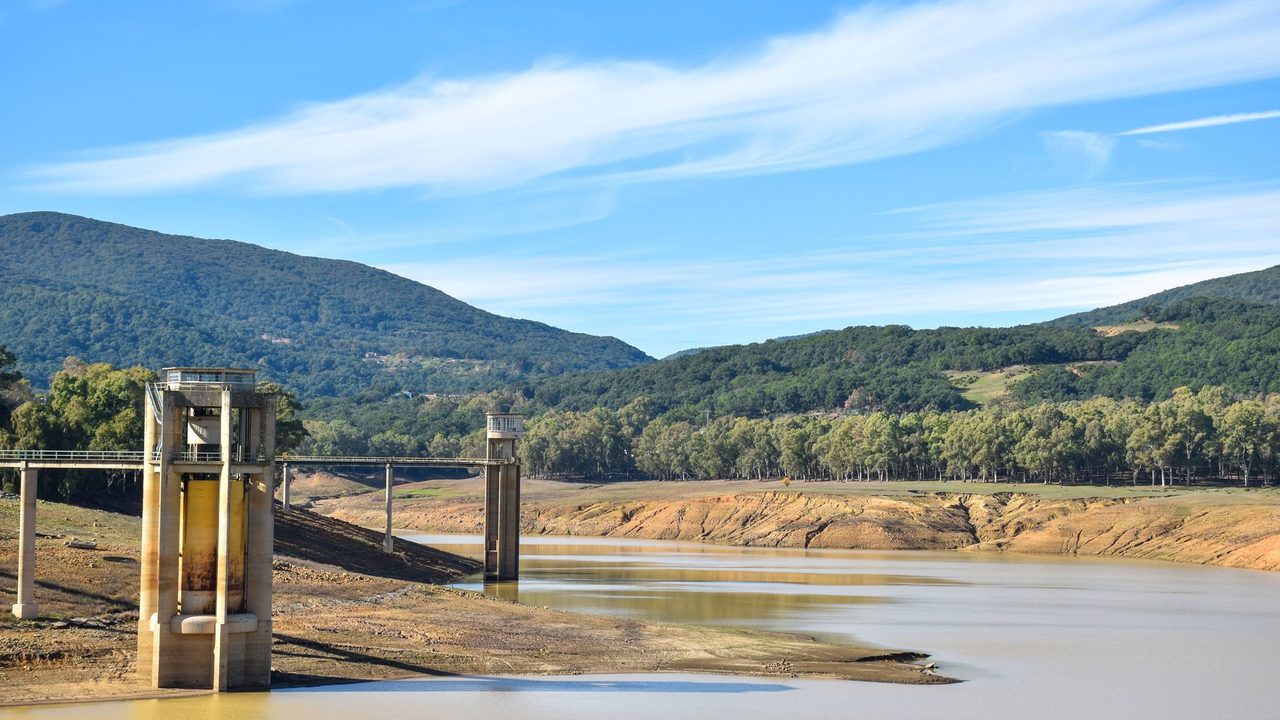
Czech reservoirs remain almost empty. According to the Povodí Vltavy river authority, as of 23 October the worst situation is at the Husinec reservoir near Prachatice: its storage volume is only 2% full. The recent rain has barely improved things.
How low the levels are
Low readings are also being recorded at other large reservoirs. Hracholusky is filled to roughly 34% of its storage volume, Lipno to 46%, Slapy to 56%, and Orlík to less than 20%.
The exposed banks and large stretches of lakebed may give the impression that this is the result of a few dry weeks. In reality the shortage has deeper causes, and the deficit has been building for much longer. There is no simple link between the amount of rainfall and the water that reaches the reservoirs: some of the rain is held back by vegetation, some soaks into the soil and replenishes groundwater, some evaporates, and some runs off through the rivers. Only a fraction of the precipitation ends up in the reservoirs.
One downpour is not enough
The recent heavy rainfall raised hopes of improvement, but so far it has had only a minor effect on the big reservoirs. “Hydrological drought continues across the entire Vltava basin. Any rain will help, but inflows to the reservoirs have risen only slightly or not at all, and unfortunately the deep water deficit persists,” Tomáš Kendík, director of the water management section at Povodí Vltavy, told the outlet.
After a long drought, the first significant rainfall goes first to replenishing the moisture deficit in the soil and the landscape. A few dozen millimetres of rain can ease soil drought and briefly increase river flows, but it will not noticeably raise the level of large reservoirs.
Low reservoir levels are just one visible sign of the problem. According to the Czech Hydrometeorological Institute, almost half of the monitored stretches of watercourses are in extreme hydrological drought, and flows are mostly between 10 and 50% of the October norm.
For rivers and the badly depleted reservoirs to return to normal, water managers need a long period of abundant precipitation. “The ideal scenario is that rain like this keeps coming for several weeks or months, and the water deficit in the landscape is gradually made up. Then a winter with enough snow has to follow, so that its spring melt replenishes groundwater reserves,” Kendík explained.
Around Prague guide on the topic: 8 лучших мест для купания под Прагой: озёра, карьеры и пляжи в часе езды от столицы
Around Prague, based on reporting by novinky.cz