Ancient Underwater Canyons Helped Preserve Earth's Oldest Animals
USD 22,10
Popular
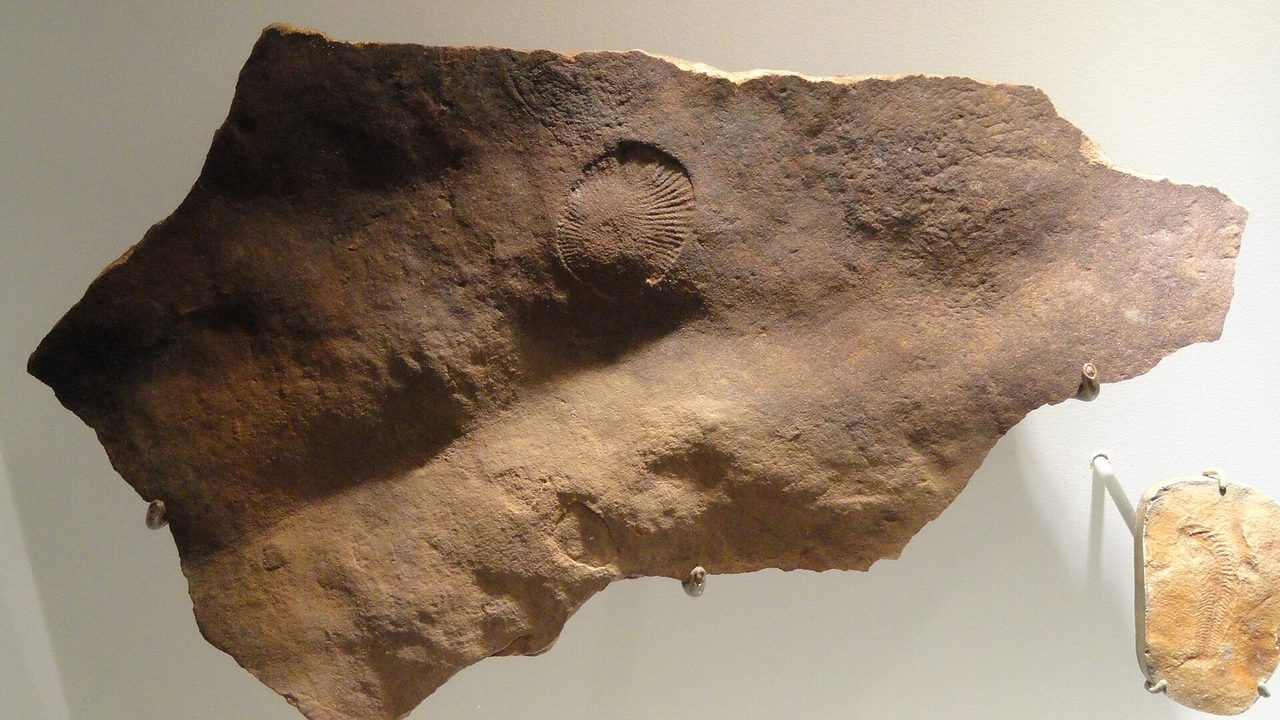
Huge canyons cut into the seafloor more than half a billion years ago may be the reason scientists can study some of Earth's earliest animals at all, according to a new study of rock formations in South Australia. ScienceAlert reported that the canyons filled with sediment as sea levels rose, creating conditions that preserved the soft bodies of creatures that would normally leave almost no trace.
The research, published in Earth and Planetary Science Letters, looks at the Flinders Ranges, a mountainous region known for its diverse and well-preserved fossils from the Ediacaran Period, which lasted from about 635 million to 538.8 million years ago.
Why Earth's first animals are so hard to find
For its first few billion years, life on Earth stayed mostly tiny and was dominated by microbes. That began to change in the Ediacaran Period, about 600 million years ago, when larger and more complex organisms appeared. Known collectively as the Ediacaran biota, they were mainly soft-bodied, and many looked unlike anything alive today.
They did not last. According to ScienceAlert, a mass extinction roughly 550 million years ago set the stage for the Cambrian explosion, and as new animals multiplied, the Ediacaran biota seemingly vanished. Because these creatures left little hard material behind, the fact that scientists know anything about them is remarkable. The new study asks why this particular region preserved so much.
What the researchers found in the rocks
The team mapped geological features across the Flinders Ranges to work out what the landscape looked like about 550 million years ago, how it changed late in the Ediacaran Period and how fossil-bearing sediments built up.
The maps revealed traces of colossal canyons oriented toward the southeast. They plunged to depths of 280 meters (919 feet) and stretched more than 6 kilometers (3.7 miles) across in some places. According to the researchers, the canyons formed largely through underwater erosion, beginning with a major fall in sea level. When the sea later rose, the canyons filled with sediment as the landscape flooded.
The sediment deposits suggest the area was hit by powerful water flows capable of moving large volumes of material. Drawing on modern submarine canyons for comparison, the researchers concluded that underwater erosion is a more likely driver of this process than river dynamics alone.
Within these conditions, a layer of rock called the Ediacara Member of the Rawnsley Quartzite preserved rare clues about the region's ancient inhabitants.
What the authors say
Lead author Karol Faehnrich, a geologist at Adelaide University, said the team found evidence that huge underwater canyons cut across the continental shelf before being rapidly flooded as seas rose again. In his account, that flooding created the conditions that let one of the world's richest collections of Ediacaran fossils survive.
Co-author Diego Garcia-Bellido, a biologist at Adelaide University, said the evidence points to changing sea levels combined with local geological processes shaping the ancient basin. He noted that many Ediacaran fossils exist only as delicate impressions of soft-bodied organisms, and that such fossils survive only when environmental conditions are just right. In his view, the rise in sea levels helped create a window of exceptional preservation.
Why it matters: a better map of where to look
The study does not claim to settle the biggest questions about the Ediacaran biota. It remains unclear how these organisms fit into Earth's family tree, including how far they were ancestors of later animals and how far they were evolutionary dead ends. Scientists also still do not know why they spread so rapidly, or why they later declined.
Earlier research has linked the Ediacaran biota to global sea-level changes, and those changes have been proposed both as a spur to evolutionary innovation and as a factor in fossil preservation. ScienceAlert described that link as speculative: researchers still do not know why the creatures evolved, why they died out or what role sea-level change played in their fortunes.
What the new work adds is a concrete physical explanation for why the fossil record of this period looks the way it does. Understanding how the landscape, coastline and sea level combined to protect fragile bodies helps explain why evidence of some of the planet's first animals survives in South Australia and, by extension, how complete or patchy the early animal record may be. It also separates two questions that are easy to blur: how the animals lived and how their remains came to be found.
Read next
Spinosaurus Likely Spent Nearly All Its Time Underwater, Study Finds
Colombian Fossils Show Giant Sea Reptiles and Sharks Sharing an Ocean as Eras Shifted
New Study Says Rising Mantle Erased 1.2 Billion Years of Grand Canyon Rock
Around Prague, based on reporting by ScienceAlert
Cover photo: Daderot / Wikimedia Commons (public domain)