Eagles in the Sahara Appear to Hunt Baboons as Heavy as Early Human Ancestors
USD 22,18
Popular
Large eagles in the Sahara appear to be killing olive baboons that weigh about as much as some early human ancestors, according to new research reported by Popular Science. The finding challenges the long-held view that primates above a certain size were safe from birds of prey.
The study, published in the American Journal of Biological Anthropology, describes baboon skulls and bones from the Ennedi plateau in northern Chad that carry the marks of eagle attacks.
What did the researchers find?
The team documented the remains of adult male olive baboons (Papio anubis) with talon punctures in the skulls. The shoulder bones showed scrapes and "rakes" that match eagle predation, Popular Science reported.
From the remains, the researchers estimated how much the dead animals weighed. One baboon was over 57.3 pounds (26 kilograms). Popular Science noted that olive baboons in general weigh 40 to 60 pounds, which puts some of them near the size of early hominins.
Which eagles are involved, and why is this surprising?
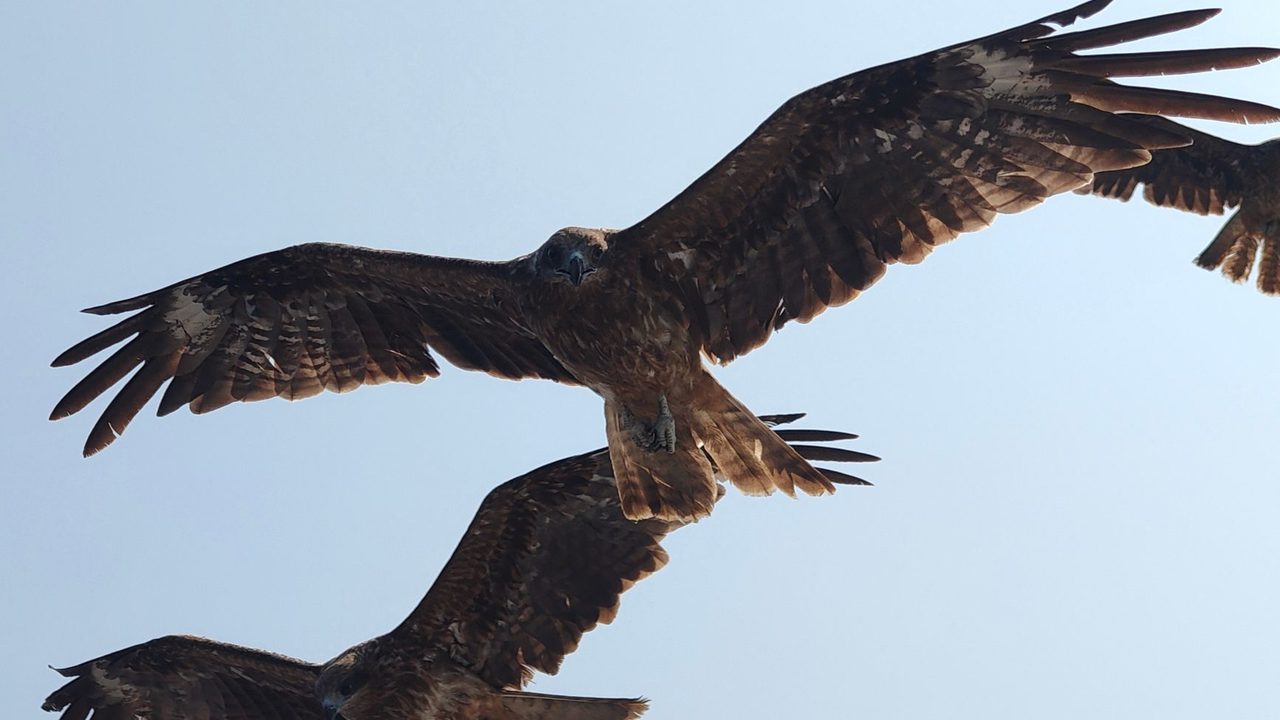
The suspected predator is Verreaux's eagle (Aquila verreauxii), a large raptor with a wingspan of 71 to 86 inches. Until now, no primate heavier than 28.6 pounds (13 kilograms) had been confirmed as raptor prey, according to the report. That led scientists to believe that humans and their hominin ancestors had been out of reach of such eagles for roughly 2.5 million years.
The baboons in this study weigh well above that threshold, so the findings suggest eagles can take larger primates than researchers assumed.
How did the team come across the evidence?
Catherine Hobaiter, a co-author and primatologist at the University of St. Andrews in Scotland, said in a statement that the team saw the eagles while looking for baboons but never suspected the birds were a threat. That changed when they found a skull with a puncture mark, she said, and then more of them.
Dr. Jean Didier Akpona of the African Parks Network, another author, said he had worked in the region for about three years and often saw Verreaux's eagles near the gueltas, which are pockets of water that form in rock formations. He said he had never imagined the birds would target primates of this size until the team found the evidence.
Why does it matter?
The result affects how scientists picture the dangers faced by our distant ancestors. Popular Science reported that early hominins were already known to be vulnerable to crocodiles, big cats and some eagles. The new evidence suggests that eagles may have been a threat to larger-bodied hominins than researchers thought.
It also bears on how primates protect themselves. According to the report, ancestral primates likely defended themselves by mobbing, or charging at, an attacking bird to drive it away. Modern primates in places with eagle predators often travel in large groups that include other primate species. That pattern echoes the early human story, in which hominins lived alongside other hominin species and primates. Conflicts arose, but sticking together had advantages, including mobbing eagles.
The evidence is bones with marks consistent with eagle attacks, and the report describes the eagles as appearing to prey on the baboons. The article does not describe direct observations of attacks.
What is unusual about the Ennedi baboons?
The Ennedi plateau is a rugged sandstone area in the middle of the Sahara, about the size of Switzerland, according to Popular Science. The olive baboons there live in isolation from other primate species.
Hobaiter said the team's first observations in Ennedi overturned many assumptions about what these baboons should be doing, from their diet to their social lives. She said she was eager to see which "rules" they would break next.
What comes next?
The team plans to keep studying the lives of the Ennedi baboons to see what other insights into evolution they may hold, Popular Science reported.
Around Prague, based on reporting by Popular Science