200 mm single-crystal diamond: Diamond Foundry and AI chips
USD 22,18
Popular
US company Diamond Foundry has announced that it has grown the first single-crystal diamond with a diameter of 200 millimeters. According to the company, it is the result of 25 years of development aimed at producing large diamond crystals. If the technology can be brought to industrial scale, diamond could become an attractive material for next-generation semiconductors.
Why chips need diamond
Synthetic diamonds can be made using conventional high-pressure, high-temperature methods, but these are not suitable for large semiconductor single crystals. The alternative is chemical vapor deposition (CVD), in which diamond forms from a carbon-containing gas, most often with the help of microwave plasma.
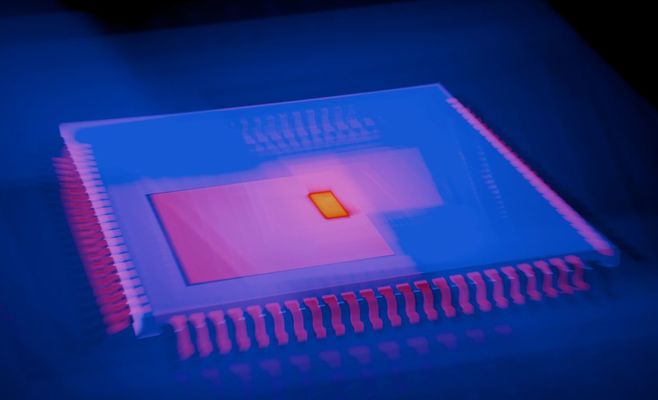
The appeal is not hardness but extreme thermal conductivity: at room temperature, a high-purity single crystal conducts about 2,000 W/(m·K), several times more than copper. Modern AI processors and high-performance computing systems concentrate a great deal of power in a small area, which creates local hot spots that limit performance and speed up wear on components.
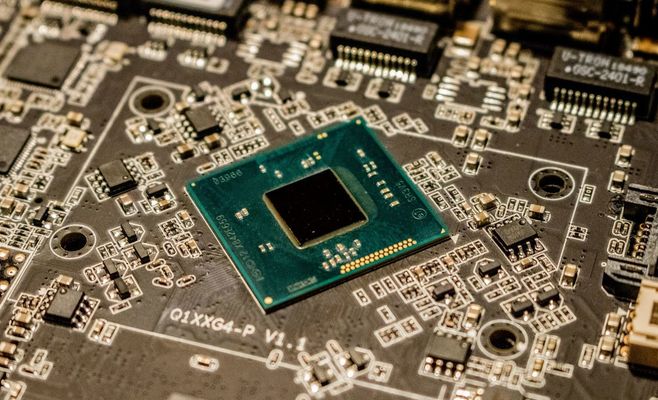
In chip packages, diamond could serve as a heat spreader or a substrate that draws heat away from the hottest zones. Its wide band gap of about 5.47 electronvolts also makes it a candidate for power and high-frequency electronics.
What remains unresolved
Diamond Foundry previously announced a single-crystal diamond wafer 100 millimeters in diameter, made by heteroepitaxy: the crystal grows on a substrate of a different composition and takes on its ordered diamond lattice. Whether the same approach was used for the new 200-millimeter crystal is still unclear.
Growing a large crystal is hard: the ordered arrangement of carbon atoms must be maintained throughout the entire volume during growth, and even small disruptions create defects. The first sample shown, D200mm, is unprocessed and taken straight from the growth process. Making electronic components from diamond remains difficult, mainly because of doping, that is, introducing impurities into the crystal lattice. How diamond will establish itself in semiconductors remains to be seen.
Around Prague, based on reporting by osel.cz