Strange Radio Pulse Every 8 Minutes Traced to a White Dwarf and Sun-Like Star
USD 22,23
Popular
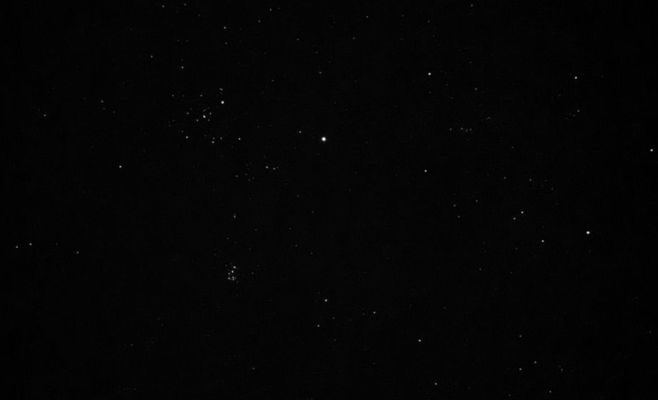
A radio signal that switches on every 8 minutes comes from a rare pair of stars, not from an alien civilization, according to EarthSky. Astronomers say the system, called GPM J071507-114153, pairs a white dwarf with a star similar to our sun.
The team, working with the International Centre for Radio Astronomy Research (ICRAR) in Australia, published its peer-reviewed results in Nature Astronomy on Nov. 12, 2026. EarthSky reported that this is the first confirmed case of a regularly pulsing binary of this kind.
What the researchers found
According to EarthSky, the white dwarf spins once every eight minutes and produces the radio pulses. Its partner is a sun-like star. Most systems known to produce such pulses contain red dwarf stars instead, which is what makes this one unusual.
The pulses in this system are clear enough that astronomers could see the white dwarf moving along its orbit around its companion. That let the team conclude the signals come from a region close to the white dwarf, or possibly from the white dwarf itself. Sam McSweeney of the Square Kilometre Array Observatory (SKAO), the study's lead author, described it that way.
A new kind of object, still poorly understood
The system belongs to a group called long-period transients. These objects emit radio pulses that turn on and off over periods ranging from minutes to hours. Astronomers found the first one in 2021 and about a dozen since then, EarthSky reported.
Several of those objects contain a white dwarf. Until now, however, astronomers could not tell which star in these pairs was actually sending out the radio signals. This is also the first time the second star in such a pair has been confirmed to be sun-like.
How the system was found
The team discovered the system in a large survey with the Murchison Widefield Array, which scanned the entire part of the Milky Way visible from Australia. Pinning down the source required processing more than 100 hours of radio data at the Pawsey Supercomputing Research Centre.
A bonus: weather on a distant star
The white dwarf's pulses also worked as a probe of its companion. The researchers used them to detect eruptions on the sun-like star, similar to those seen on our own sun. ICRAR's Natasha Hurley-Walker, a co-author, said the team also saw the white dwarf pass behind a region with a strong magnetic field. She said this was most likely a stellar prominence, a large loop of plasma erupting from a star's surface.
Hurley-Walker said it is remarkable that radio wavelengths can reveal storms on a star more than 5,000 light-years away.
Why it matters
For general readers, the result removes some of the mystery around a puzzling class of signals. It shows that at least one of these repeating pulses comes from ordinary stellar objects, a white dwarf and a sun-like star, and not from something exotic. It does not explain every long-period transient. The finding comes from a single system, and the exact mechanism that produces the pulses is not described in the report.
The finding also points to a new observing tool. If a pulsing white dwarf can light up magnetic activity on a companion star thousands of light-years away, astronomers may be able to study stellar storms that would otherwise be out of reach.
What comes next
The researchers expect to find more systems like this one. McSweeney said that if precursor telescopes are already making such discoveries, many more star systems and far more detailed views of their signals should follow once the SKAO telescopes are completely built. No completion date was given in the reporting.
Around Prague, based on reporting by EarthSky