SpaceX catches Starship after its first return from orbit
USD 22,10
Popular
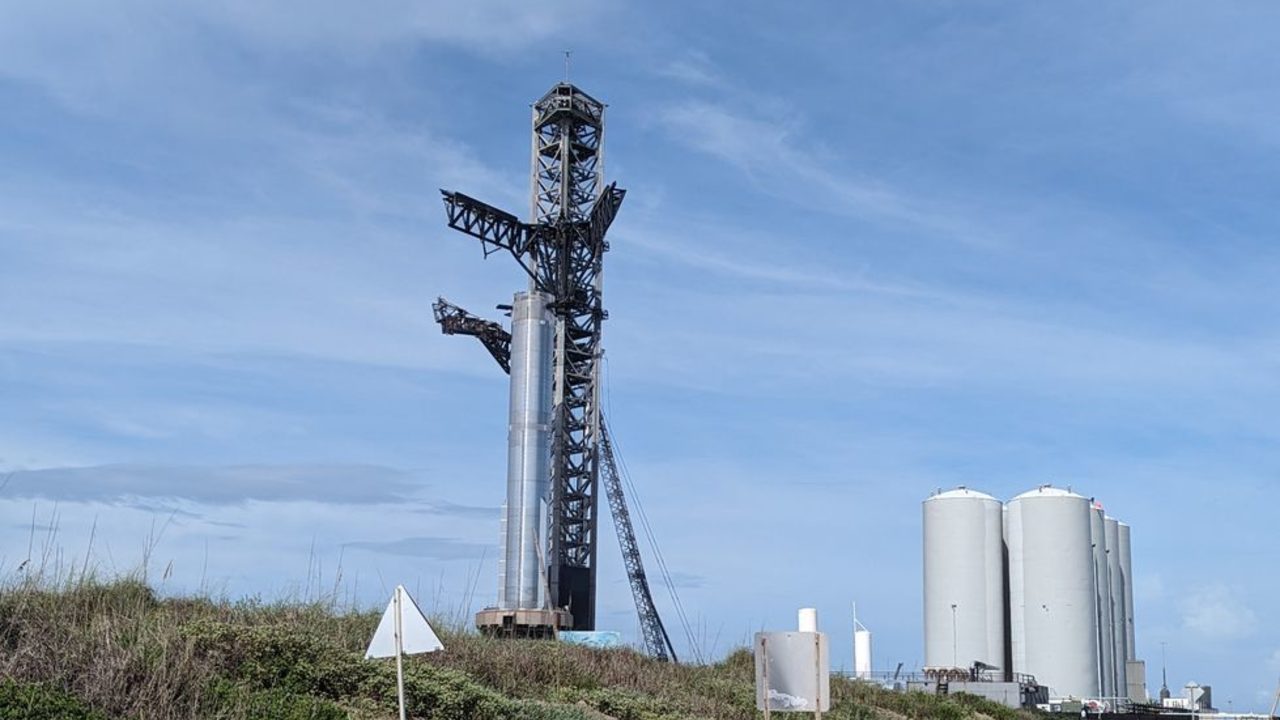
On Saturday, SpaceX caught its Starship spacecraft for the first time after it returned from orbit: at the Starbase site in Texas, a special mechanism on the launch tower grabbed it. The Super Heavy booster could not be saved, so the mission was not entirely flawless.
Bringing the ship back in one piece is only part of the task. SpaceX wants to reuse it: after inspection and preparation, it should fly again. For that the company chose an unusual way of landing: the descending vehicle is caught by two powerful arms on the tower, nicknamed “chopsticks” for their look. SpaceX had already shown this maneuver with the Super Heavy booster, but this time it was the ship itself, the upper part of the stack.
How the 15th test flight went
The 15th test flight began on Friday, Nov. 13, at Starbase on the Texas coast. During the mission, Starship put all 26 Starlink V3 internet satellites into orbit. The whole flight, from launch to the planned catch, was expected to take about 22.5 hours, with the ship circling Earth roughly 14 times.
Three satellites were fitted with cameras to inspect Starship’s heat shield. This footage, together with observations from the ground, helped engineers decide whether the ship was ready to return. The decision to proceed was not automatic: teams checked the condition of the ship, its systems and the tower itself. “All teams gave their approval,” SpaceX broadcast commentator Kate Tice said before the return, as reported by Space.com.
After the deorbit burn, the ship re-entered the atmosphere. Footage showed glowing plasma along its leading edges. The most critical stage was next: a powered descent and precise guidance to the tower’s arms. Elon Musk wrote that the deorbit burn went well.
Why the double catch did not work out
The original plan was even bolder: to catch both stages in a single flight, first Super Heavy a few minutes after launch and the ship itself the next day. The first part failed. The booster veered off over the Gulf of Mexico and was destroyed.
According to SpaceX’s preliminary explanation, Super Heavy ended its return engine burn early after the system reported low fuel. The control system then determined that the booster was not in the right position for a catch and automatically aborted its return to the tower. “The team is still investigating the root cause,” Tice said, as quoted by Space.com.
What comes next for the Starship program
Being able to recover and reuse both parts of the stack is one of the main goals of the Starship program. Returns should speed up preparation for future missions and allow reuse of hardware that would otherwise end up in the sea.
Engineers can now inspect the caught ship in detail to see how it handled the trip to space and the return through the atmosphere. Its condition will show how close SpaceX is to its next goal: sending the same ship to space again.
Around Prague, based on reporting by novinky.cz