How Many Pleiades Stars Can You See? Try the Naked-Eye Test
USD 22,10
Popular
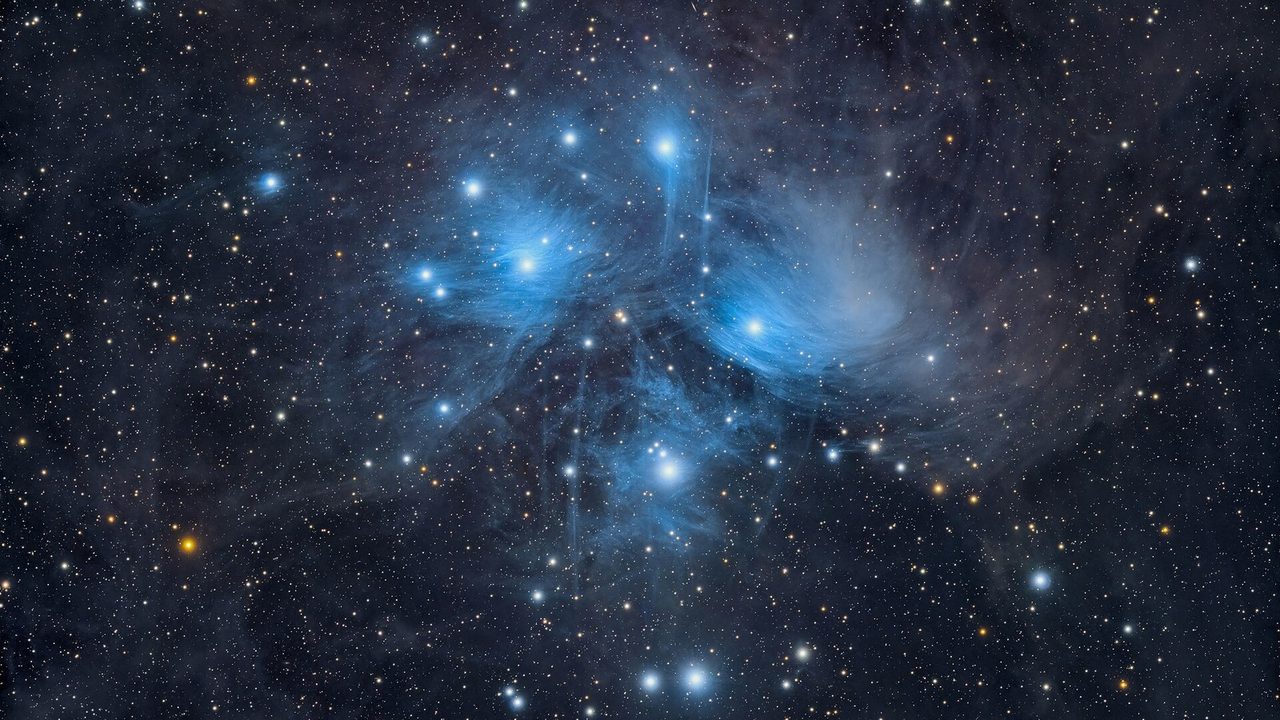
The Pleiades star cluster is becoming easy to find in the evening sky, and Space.com is encouraging skywatchers to count how many of its stars they can see without a telescope. The result depends less on eyesight alone than on how well prepared you are to look at the night sky.
In mid-November the cluster rises in the east in the early evening and climbs higher as the night goes on, according to Space.com.
How to find the Pleiades
The Pleiades, also known as Messier 45 and the “Seven Sisters,” are an open star cluster in the constellation Taurus. Space.com says they sit roughly 444 light-years away. They are one of the closest clusters to the solar system and are about 100 million years old, which makes them some of the youngest stars visible to the naked eye.
To find them, look east after dark for a small, compact group of stars. From mid-northern latitudes, they sit above and to the right of Orion, which rises later. Nearby are orange Aldebaran and the broader, V-shaped Hyades cluster. The Hyades are closer to the sun, but their stars are about 625 million years old.
Why the count is not seven
The nickname creates a trap: many people assume they should see seven stars. According to Space.com, six is a common result under reasonably dark conditions, and the six brightest form a shape like a miniature Big Dipper. People with sharp eyesight under darker skies may see more. The cluster contains about 1,000 stars in all.
The number you can pick out depends on your eyesight, sky brightness, atmospheric conditions and how well your eyes have adapted to the dark.
What it means for your own stargazing
Space.com's writer suggests a simple staged test that anyone can repeat:
- Step outside and count the stars you can clearly distinguish right away, without arguing with yourself over marginal ones.
- Wait about 10 minutes, avoiding phone screens and bright outdoor lights, then count again. Full dark adaptation takes considerably longer, but 10 minutes can make an obvious difference after being in a brightly lit house.
- Try 10x50 binoculars. Stars that were too faint for the naked eye appear, and the cluster looks like a field of stars.
- Use averted vision by looking slightly to one side of the cluster. Fainter stars seem to pop into view as the more light-sensitive part of your eye takes over.
What else is in the sky this week
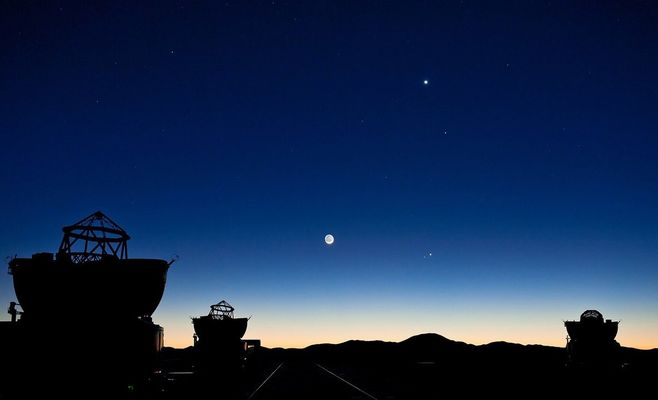
Space.com's guide for Nov. 13-19 lists several other events. The moon returns to the evening sky, waxing from a thin crescent toward first quarter, which it reaches around Nov. 17. Moonlight will become more noticeable during the first half of the night. In twilight, look southwest for the crescent moon with Earthshine, sunlight reflected from Earth onto the moon's night side.
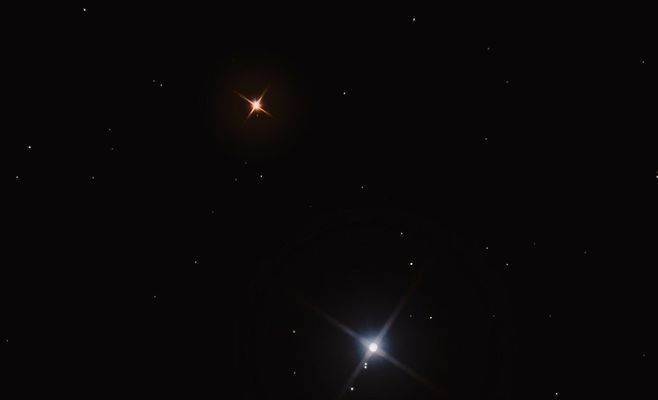
Overnight on Nov. 15-16, Mars and Jupiter appear in conjunction, just over a degree apart. They rise in the east in the evening and climb high into the southern sky in the hours before sunrise.
The Leonid meteor shower peaks the following night, Nov. 17-18. Leo, the constellation that holds the shower's radiant, does not rise until late, so the better viewing comes after midnight and toward the predawn hours.
For a smaller target, Space.com points to Auriga, which is easy to see in the northeast and east on November evenings. Close to its brightest star, Capella, is a triangle of faint stars called The Kids: Epsilon, Zeta and Eta Aurigae.
Read next
Four Planets Line Up in the Pre-Dawn Sky This November: How to See Them
Webb Peers Through Dust to Reveal Young Stars Hidden in a Stellar Nursery
Some White Dwarf Stars Glow Pink and Yellow, Astronomers Find
Around Prague, based on reporting by Space.com
Cover photo: Lviatour / Wikimedia Commons, CC BY-SA 4.0, cropped