Trump and Putin’s diesel deal: five consequences for Ukraine
USD 21,75
Popular
The agreement between Donald Trump and Vladimir Putin on supplying Russian oil products, above all diesel, to the American and global markets is extremely bad news for Ukraine and its allies. Washington has effectively given Moscow the green light to export diesel and eased sanctions. Here is what the deal brings and how events could unfold, in five points.
Putin has Trump on his side
The deal matters to Moscow because it serves its goal: to get closer to America, bypass Europe and make no concessions in the war against Ukraine. Just three weeks ago Trump signed a law passed by Congress that allowed him to tighten sanctions on countries buying Russian oil and gas. But the law only gave him the power to do so; it did not oblige the president. Now he has gone in exactly the opposite direction.
A new crisis between Trump and Zelensky
Ukrainian President Volodymyr Zelensky responded to the deal on social media, calling it a sign of weakness. Trump, it seems, will not forgive him for that: when a journalist in Washington asked what he made of Zelensky’s words, he answered “OK” and walked away.
Last February, Trump and Zelensky clashed in front of the cameras at the White House, and relations have been strained ever since. According to American media, Trump is irritated that Kyiv keeps striking Russian refineries despite his calls to stop. “He is reading the situation wrongly. The attacks on refineries are destroying the goodwill Trump has shown over the past six months,” a White House representative said.
What Ukraine risks over the refinery strikes
Kyiv depends on cooperation with the US in at least two areas: sharing intelligence on Russian ground targets and using Starlink on the front line. Trump has also promised Zelensky a licence to produce missiles for Patriot air defence systems.
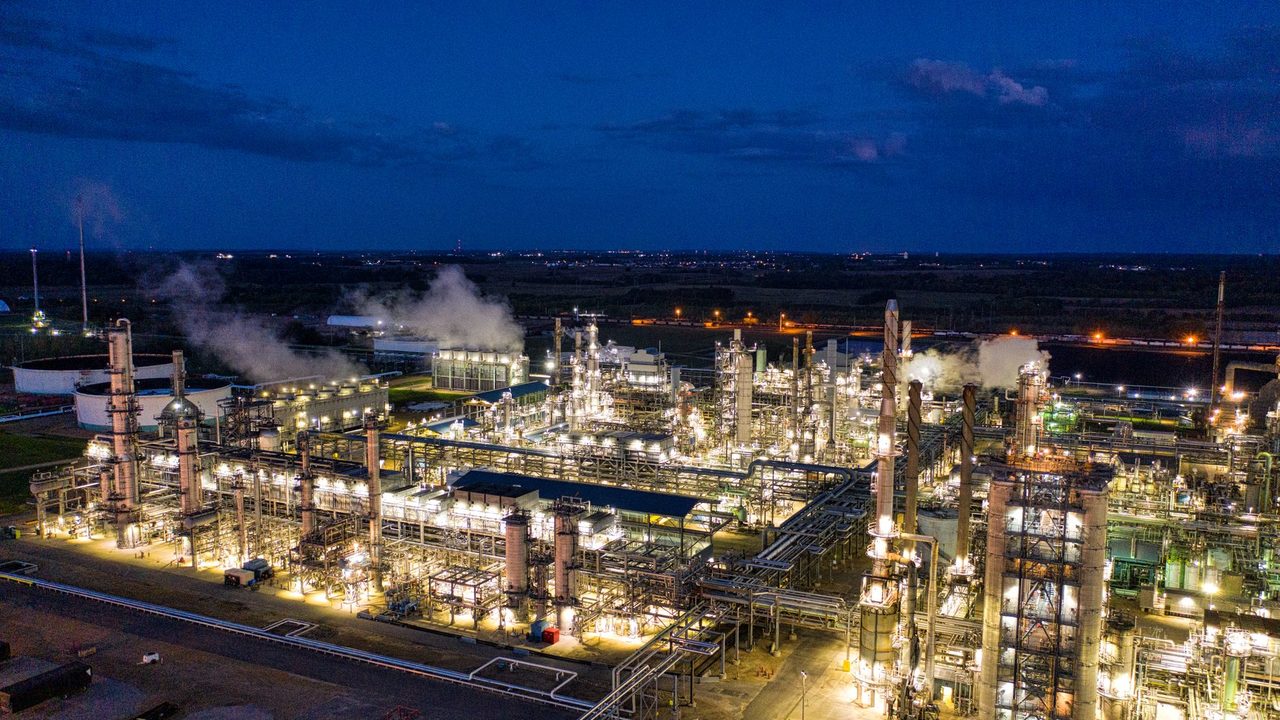
According to American media, negotiators Jared Kushner and Steve Witkoff threatened the Ukrainian delegation at talks in Miami on Friday that the US would stop sharing intelligence if the refinery strikes continue. But on Saturday night Ukrainian drones again hit the refinery in Novoshakhtinsk, near the border with Ukraine. It is a new, modern plant, commissioned only in 2010, and it matters to the Russian army because it is close to Ukraine. “I don’t even remember how many times we have hit it, many times. They have to repair it again and again. It is key to supplying the Russian army in Ukraine,” said Ukrainian energy expert Mykhailo Honchar.
Is Russia able to supply millions of tonnes of diesel? Its capacity has been reduced by Ukrainian raids — some analysts speak of a drop of up to 50% compared with pre-war levels — but it can still export diesel. Its main problem is petrol, which it lacks even for its domestic market. Even without the deal, Russia would probably have started exporting more diesel again, but at lower prices.
Will fuel get cheaper in the US?
High fuel prices in the US are weakening the position of Trump’s Republican Party ahead of the November congressional elections. It looks as though the Democrats could win a majority in both chambers, the House of Representatives and the Senate, which would limit Trump’s freedom of action.
In the form Trump has presented it, the deal is unlikely to bring prices down noticeably before the November elections. “If the US imports Russian diesel, the existing buyers of Russian fuel will have to buy elsewhere, and global prices will stay where they are. It is a bit like rearranging deck chairs on the Titanic,” said Michael Lynch of the Energy Policy Research Foundation.
Czech analyst Petr Lajsek of Purple Trading noted earlier that Russia is an important diesel exporter, but the war in Ukraine is not the main reason for expensive fuel. “The current situation is the result of several shocks at once, and the Middle East poses a far more systemic risk to the global energy market. For drivers the outcome is the same either way: if Russian refining capacity keeps dropping out and supplies through key Middle Eastern areas get complicated, there is still a lot of room for diesel prices to rise,” he said.
Source: seznamzpravy.cz